$41.84K
1
6

$41.84K
1
6
Trader mode: Actionable analysis for identifying opportunities and edge
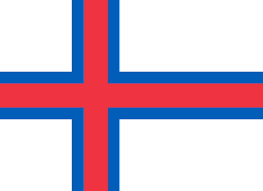
General elections are scheduled to be held in the Faroe Islands on 26 March 2026. This market will resolve to the individual who is formally appointed as Løgmaður (Prime Minister) of the Faroe Islands following the 2026 Faroese general election. To count for resolution, the individual must be formally appointed as Løgmaður following the 2026 Faroese general election. Any interim or caretaker head of government will not count toward the resolution of this market. If no such Prime Minister is a
AI-generated analysis based on market data. Not financial advice.
This prediction market focuses on identifying who will become the next Prime Minister (Løgmaður) of the Faroe Islands following the parliamentary election scheduled for March 26, 2026. The Faroe Islands are a self-governing territory within the Kingdom of Denmark, possessing extensive autonomy over domestic affairs. The Løgmaður is the head of government, typically the leader of the largest party or coalition in the 33-seat Løgting (parliament). The market resolves only to the individual formally appointed after the election, excluding any interim or caretaker appointments. Interest stems from the islands' unique political landscape, where coalition governments are the norm and elections often hinge on nuanced debates about independence, economic management, and social policy. The 2026 election is viewed as a potential inflection point, coming after a period of stable coalition governance under the current administration. Observers are watching to see if the election will maintain the status quo or produce a shift in the balance of power between pro-independence and unionist parties, with direct implications for the Faroes' relationship with Denmark and its economic future.
The Faroe Islands gained home rule from Denmark in 1948, establishing the Løgting as its parliament. The office of Løgmaður was created, with the first being Andrass Samuelsen. For decades, politics revolved around the 'Kingdom Union' between the pro-independence Republic (Tjóðveldi) and the pro-Denmark Union Party (Sambandsflokkurin). This dynamic began to shift in the 1990s and 2000s with the emergence of more centrist parties, making coalition governments complex and often including four or more partners. A significant precedent was set in 2015 when a three-party coalition led by the Social Democrats, Republic, and Progress took office, marking a shift towards pro-independence influence in government. The 2019 election brought a unionist-led coalition under Bárður á Steig Nielsen, but it collapsed in late 2022 following a confidence vote, leading to the current Social Democrat-led coalition under Aksel V. Johannesen. This history of fragile, multi-party coalitions directly informs the uncertainty surrounding the formation of any government after the 2026 vote.
The identity of the next Prime Minister will shape critical policy directions for the Faroe Islands' 54,000 inhabitants. Economically, the government sets policy for the dominant fishing industry, which accounts for over 90% of exports, and manages growing sectors like tourism and potential hydrocarbon exploration. Different parties have varying visions for economic diversification and public spending. Politically, the outcome influences the pace and ambition of the independence movement. A government led or heavily influenced by pro-independence parties like Republic would likely pursue a more assertive sovereignty agenda, potentially testing the limits of the 2005 Takeover Act that outlines devolved powers. Conversely, a unionist-led government would prioritize stable relations with Copenhagen. Socially, the government determines funding for healthcare, education, and infrastructure on the islands, where geographic isolation presents unique challenges. The result also sends a signal about political stability to international partners and investors engaged with the Faroese economy.
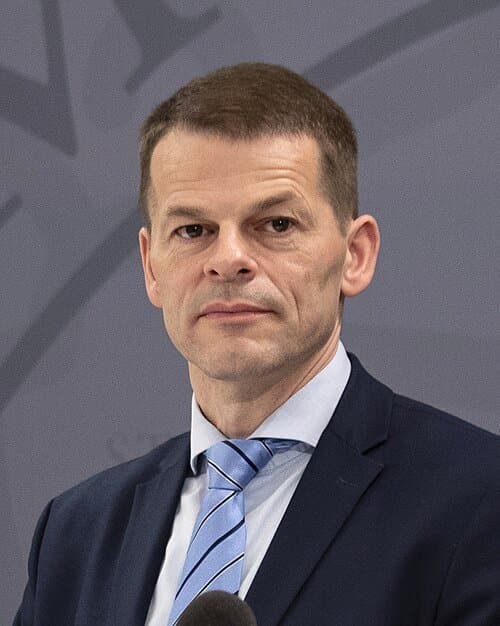
The Faroe Islands are governed by a coalition led by Prime Minister Aksel V. Johannesen of the Social Democrats, in partnership with Republic, Progress, and the Self-Government Party. This government has been in place since December 2022. The political scene is in a pre-electoral phase, with parties beginning to formulate their platforms for the March 2026 vote. Key issues under discussion include managing the high-inflation economy, long-term sustainability of the fishing sector, housing costs, and future constitutional relations with Denmark. No major party has announced a leadership change ahead of the election, suggesting the current party leaders will be the principal candidates for Løgmaður.
After a general election, the Faroese Parliament (Løgting) convenes. The monarch's representative, the High Commissioner, typically asks the leader of the largest party to attempt to form a government. That leader must negotiate a coalition agreement that commands a majority (17 votes) in the 33-seat parliament. Once a coalition is agreed, the Løgting holds a formal vote to elect the Prime Minister.
Yes, but the process is politically complex. The Faroe Islands have extensive self-government. Full independence would require a negotiated settlement with Denmark, likely approved by referendums in both the Faroes and Denmark. The stance of the ruling government in Tórshavn significantly influences whether and how actively independence is pursued.
The main parties are the Social Democratic Party (Javnaðarflokkurin), the Union Party (Sambandsflokkurin), the People's Party (Fólkaflokkurin), Republic (Tjóðveldi), the Progress Party (Framsókn), the Centre Party (Miðflokkurin), and the Self-Government Party (Sjálvstýri). They differ primarily on the independence question and economic policy.
The last general election was held on December 8, 2022. It resulted in a very narrow majority for a four-party coalition led by Social Democrat Aksel V. Johannesen, who became Prime Minister.
The Faroese government controls most domestic policy areas, including taxation, fisheries, education, health, police, and cultural affairs. Denmark retains control over foreign policy, defense, justice, and monetary policy, though the Faroes have separate trade agreements on fishing.
Educational content is AI-generated and sourced from Wikipedia. It should not be considered financial advice.
6 markets tracked

No data available
| Market | Platform | Price |
|---|---|---|
![]() | Poly | 98% |
![]() | Poly | 2% |
![]() | Poly | 2% |
![]() | Poly | 1% |
![]() | Poly | 0% |
![]() | Poly | 0% |


No related news found
Add this market to your website
<iframe src="https://predictpedia.com/embed/IROA47" width="400" height="160" frameborder="0" style="border-radius: 8px; max-width: 100%;" title="Next Prime Minister of Faroe Islands"></iframe>