$556.01K
1
1

1 market tracked

No data available
| Market | Platform | Price |
|---|---|---|
![]() | Poly | 2% |
Trader mode: Actionable analysis for identifying opportunities and edge
This market will resolve to “Yes” if the Trump administration or the U.S. government announces that it is sending, has sent, or will send Tomahawk cruise missiles to Ukraine by October 31, 2025, at 11:59 PM ET. Otherwise, this market will resolve to “No.” A qualifying statement within the specified timeframe will suffice regardless of when the missiles are sent. For the purposes of this market, official policy announcements from the Trump administration or the U.S. government will qualify. Inf
Prediction markets currently give a roughly 1 in 50 chance that the Trump administration will announce it is sending Tomahawk cruise missiles to Ukraine by March 31. In simpler terms, traders collectively see this as very unlikely to happen in the next few weeks. The market on Polymarket shows only 2% of the money bet supports a "Yes" outcome, indicating strong consensus against an imminent announcement.
Two main factors explain the low probability. First, the U.S. has already provided Ukraine with long-range Army Tactical Missile Systems (ATACMS). Sending Tomahawks, which have a longer range and are launched from ships or submarines, would be a significant escalation. Traders likely believe the existing ATACMS shipments meet the current military need without crossing a new threshold.
Second, the political timing does not favor a major new weapons announcement. The market deadline is just weeks after a potential presidential inauguration. A new administration typically reviews policies, suggesting any decision on a major new system like Tomahawks would come later, not immediately.
The main date is the market deadline itself: March 31, 2025. Watch for any official policy statements from the White House or Pentagon before then. Congressional hearings on Ukraine aid could also provide signals. If Ukraine's battlefield situation deteriorates rapidly, pressure for more advanced weapons could increase, but the short timeline makes a shift before April unlikely.
Markets are generally reliable at aggregating known information about near-term political and military decisions, especially when the timeline is short and the decision is binary. For this specific question, the extreme low probability shows traders see few signals pointing to an announcement. The main limitation is that markets can't predict sudden, unpredictable events. A major geopolitical shock could change the calculus, but such events are, by nature, rare and hard to forecast.
The Polymarket contract "Will Trump send Tomahawk to Ukraine by March 31?" is trading at 2¢, indicating a 2% probability. This price reflects an overwhelming market consensus that the event will not occur. With over $550,000 in volume, the market has significant liquidity, meaning this low-price assessment is backed by substantial capital. A 2% chance is the market's way of pricing a highly unlikely but non-zero possibility, often reserved for remote tail-risk scenarios.
Three concrete realities anchor this pessimistic pricing. First, former President Trump's consistent rhetoric prioritizes a rapid negotiated settlement to the Ukraine war, often suggesting U.S. disengagement from unlimited military aid. Supplying long-range Army Tactical Missile Systems (ATACMS) was a debated step for the Biden administration; sending the even more capable Tomahawk land-attack cruise missile would mark a severe escalation Trump has shown no appetite for. Second, the U.S. has not provided Tomahawks to any non-NATO ally, and transferring such a sophisticated weapon system would break a major precedent, likely triggering direct Russian threats. Third, the market's timing is critical. The resolution date is March 31, early in a potential second Trump term. Major, controversial foreign policy shifts typically require more bureaucratic and congressional maneuvering, making an announcement within roughly two months of inauguration extremely improbable.
The odds could shift from 2% only under a dramatic, unforeseen change in the conflict's dynamics or U.S. policy posture. A scenario where Ukraine faces imminent, catastrophic territorial collapse in early 2025 might force a radical reassessment of U.S. tools, but even then, alternatives like faster F-16 deployments or more ATACMS are more likely. A definitive, on-record statement from Trump or a key advisor like Senator Lindsey Graham explicitly advocating for Tomahawk transfers would cause a price spike. However, the opposite catalyst is more probable. Any clear signal from Trump's team reaffirming a focus on peace talks or a freeze in major new weapon deliveries would likely push the price to 1% or lower. The market effectively judges that Trump's stated objective is to end the war, not to escalate U.S. involvement with its most advanced stand-off weapons.
AI-generated analysis based on market data. Not financial advice.
$556.01K
1
1
This prediction market topic concerns whether the United States will provide Tomahawk cruise missiles to Ukraine during a potential second Trump administration. The market resolves to 'Yes' if the Trump administration or U.S. government announces the sending of these missiles by October 31, 2025. The Tomahawk is a long-range, precision-guided cruise missile capable of striking targets up to 1,000 miles away. Its potential transfer to Ukraine represents a significant escalation in Western military aid, as it would provide Ukrainian forces with a deep-strike capability against Russian command centers, logistics hubs, and military infrastructure far behind front lines. The topic gained prominence following the 2024 U.S. presidential election, where former President Donald Trump's stated positions on the Russia-Ukraine war have been a subject of intense speculation. During his first term, Trump's approach to Ukraine was defined by an attempted freeze on military aid in 2019, which led to his first impeachment. His recent public comments have oscillated between claims he could end the war in 24 hours and criticisms of continued U.S. funding. This market directly tests a specific, high-impact policy decision against that ambiguous backdrop. People are interested because it quantifies the probability of a major shift in U.S. foreign policy and military strategy, with profound implications for the war's trajectory, European security, and the global arms trade.
The debate over providing long-range strike weapons to Ukraine has evolved since Russia's full-scale invasion in February 2022. Initially, the U.S. and NATO allies were hesitant, supplying defensive systems like Javelin and Stinger missiles. The policy shifted gradually as the war stalemated. In May 2023, the U.K. became the first country to provide long-range cruise missiles, donating Storm Shadow missiles with a range of approximately 155 miles. France followed with similar SCALP missiles. The United States deliberated for over a year before agreeing in October 2023 to send a limited number of older ATACMS missiles with a 100-mile range. A more significant policy shift occurred in April 2024 when the Biden administration included longer-range ATACMS variants, capable of striking up to 190 miles, in a new aid package. Each escalation followed a pattern: Ukrainian requests, internal Western debate about escalation risks, and eventual provision after Russian battlefield advances or attacks on civilian infrastructure. The Tomahawk, with its subsonic speed, terrain-hugging flight profile, and 1,000-mile range, represents the next logical but much larger step. Its potential transfer is also framed by the precedent of the Trump administration itself approving the sale of Tomahawks to other allies, including Japan and the U.K., during his first term.
The decision on Tomahawk missiles carries strategic weight far beyond a single weapons transfer. A positive decision would signal a maximalist U.S. commitment to enabling Ukrainian victory, potentially altering Russian military calculations by putting all of occupied Ukraine and much of western Russia within reach. It could force Russia to disperse logistics and command centers, degrading its offensive capacity. Conversely, a refusal would reinforce perceptions of U.S. limits and could demoralize Ukrainian forces while emboldening Moscow. Politically, it tests the cohesion of the NATO alliance. Some European capitals fear uncontrolled escalation, while Eastern flank states may push for stronger measures. Domestically, it would become a flashpoint in U.S. political debates over foreign intervention and defense spending. Economically, a transfer would involve significant cost, with each Tomahawk Block V missile costing approximately $2 million, and would likely trigger Russian retaliatory measures affecting global energy and commodity markets. The outcome will shape the future of warfare, demonstrating the impact of advanced Western conventional missiles against a peer adversary's integrated air defenses.
As of late October 2024, no formal U.S. policy decision has been made regarding Tomahawk missiles for Ukraine. The Biden administration has not publicly proposed such a transfer. The issue is largely speculative, contingent on the outcome of the November 2024 U.S. presidential election and the formation of a potential second Trump administration in January 2025. The U.S. military continues to supply Ukraine under existing aid packages, which most recently included additional ATACMS. Public debate among analysts and former officials has increased, with some arguing Tomahawks are a necessary next step to strike Russian airfields and naval bases in Crimea, while others warn of severe escalation risks. The Ukrainian government has not made an official, public request for Tomahawks, focusing its recent lobbying efforts on securing more Patriots and F-16 fighter jets.
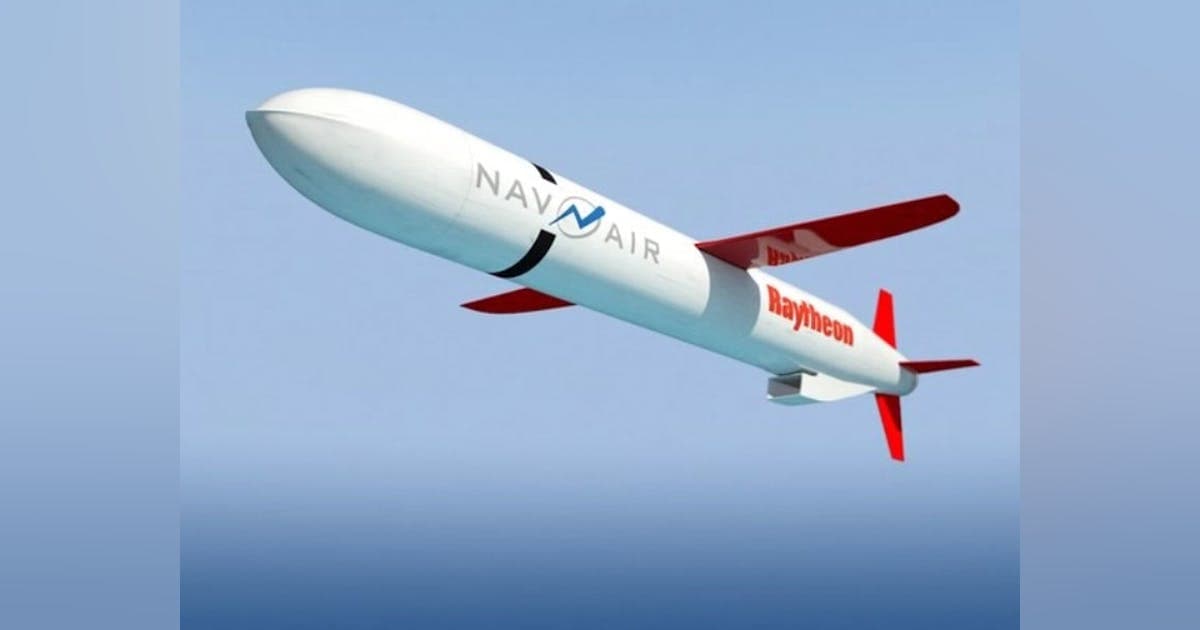
The Tomahawk is a long-range, subsonic cruise missile launched from ships or submarines. It uses GPS and terrain contour matching for precision navigation, can carry a 1,000-pound warhead, and flies at low altitudes to avoid radar. It is designed to strike high-value, fixed targets like command bunkers, air defense sites, and infrastructure.
The U.S. has sold Tomahawks to close allies like the United Kingdom and Japan, but it has never transferred them to a country actively engaged in a large-scale conflict. Such a transfer to Ukraine would be unprecedented in the context of an ongoing war against a nuclear-armed adversary.
The missile's extreme range allows strikes deep inside Russia, which Ukraine has avoided with Western weapons due to restrictions. Russia has stated that attacks on its sovereign territory with Western systems could lead to direct conflict with NATO. Providing a weapon explicitly designed for deep strikes could be seen as crossing a Russian 'red line.'
No. Tomahawks are designed for launch from U.S. Navy vessels and submarines. For Ukraine to use them, the U.S. would need to develop and provide a ground-based launch system, a complex and time-consuming engineering challenge, or conduct the launches itself, which would constitute direct U.S. involvement in the conflict.
Ukraine currently operates the UK's Storm Shadow and France's SCALP cruise missiles (range ~155 miles), and a limited number of U.S.-provided ATACMS ballistic missiles (ranges of 100 and 190 miles). It also uses domestically produced drones that can reach several hundred miles, but with smaller payloads and less reliability than cruise missiles.
Educational content is AI-generated and sourced from Wikipedia. It should not be considered financial advice.

No related news found
Add this market to your website
<iframe src="https://predictpedia.com/embed/IuK75f" width="400" height="160" frameborder="0" style="border-radius: 8px; max-width: 100%;" title="Will Trump send Tomahawk to Ukraine by...?"></iframe>