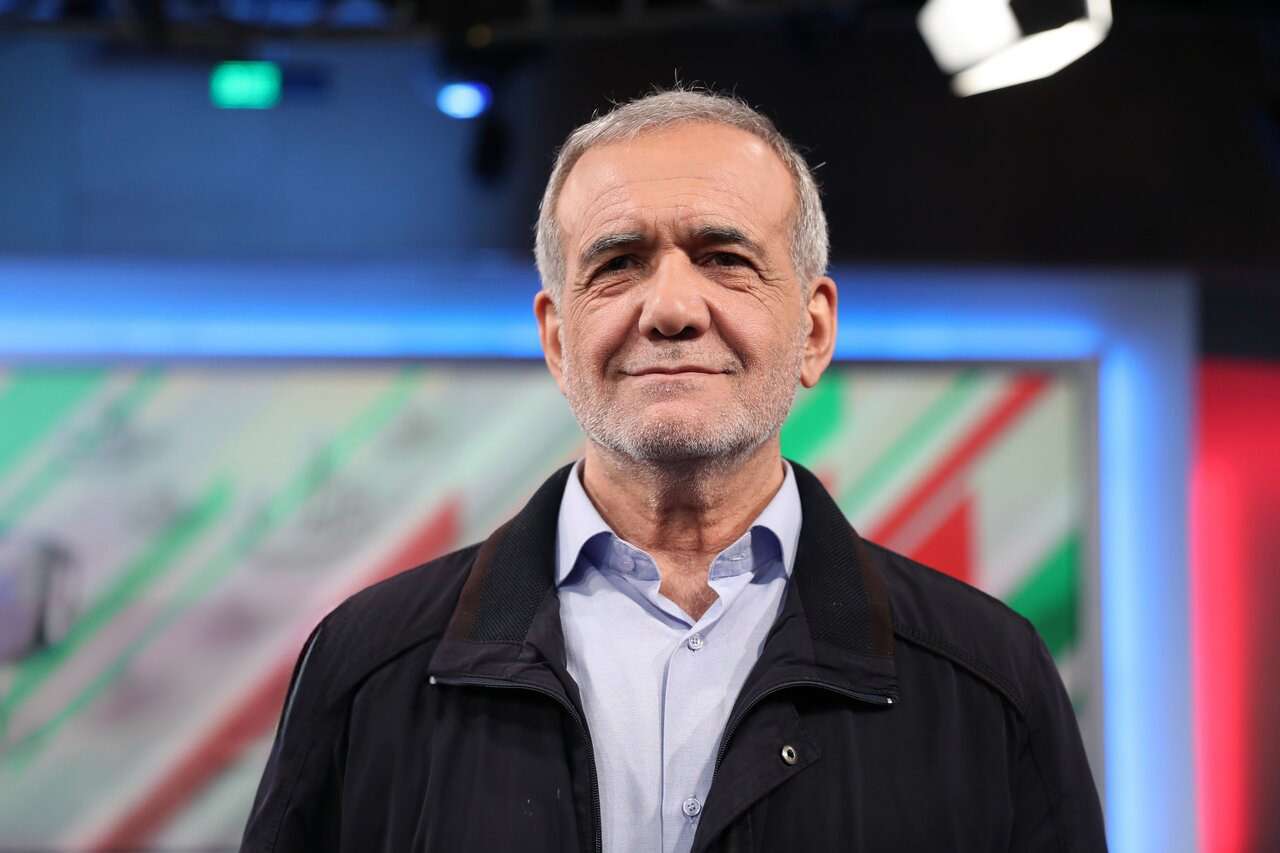
Masoud Pezeshkian out by...?
PM $877.5K
1
1
Masoud Pezeshkian out by...?
PM $877.5K
1
1
Current odds
Snapshot from
As of Oct 26, 2026, 12:00 PM UTC, the highest-priced outcome on Polymarket is December 31 at 9%.
Polymarket
- December 319%
Yes prices. They are not order quotes; check each platform's rules, fees and live prices before trading.
AI Analysis
Trader mode: Market mechanics, assumptions and risks
PM $877.5K
Reported volume · provider units
1
Saved contracts
0
Same-question pairs
Source snapshot: Oct 26, 2026, 12:00 PM UTC
About This Event
This market will resolve to “Yes” if Masoud Pezeshkian ceases to be President of Iran for any period of time between market creation and the specified date (ET). Otherwise, this market will resolve to “No”. An announcement of Masoud Pezeshkian's resignation/removal before this market's end date will immediately resolve this market to "Yes", regardless of when the announced resignation/removal goes into effect. If the specified individual is detained, effectively removed from the specified position, or otherwise permanently prevented from fulfilling the duties of the specified position within this market’s timeframe, it will qualify for a “Yes” resolution. The resolution source for this market will be official information from Masoud Pezeshkian and the government of Iran; however, a consensus of credible reporting may also be used.
This analysis is awaiting a background update, so its prices may be older than the odds above.
Snapshot observed 2026-10-13T08:49:59.526Z. This analysis describes that snapshot and is not a live news update.
What the contract measures
The supplied Polymarket event asks whether Masoud Pezeshkian will cease to be President of Iran for any period between market creation and the specified end date [1]. The market resolves "Yes" if that happens. An announced resignation or removal before the end date resolves the market to "Yes" immediately, regardless of when the announced change takes effect [1]. The excerpt also refers to detention and removal from the position, but it is truncated at that point, so the full conditions are not available in this evidence.
The contract title reads "Masoud Pezeshkian out by December 31?", while the listed end time is 2027-01-01T04:59:00.000Z [1]. The rules specify the date in ET, so the listed UTC time corresponds to late on December 31 in Eastern Time. Readers should rely on the rules and listed end time rather than the shorter title when comparing contracts.
Reading the snapshot
The provider observed the market at 2026-10-13T08:49:59.526Z, and the source was retrieved at 09:07:17.911Z the same day [1]. These are snapshot times. They describe when the data was captured, not a live feed.
The saved sample contains one binary market with a listed status of active. The "Yes" outcome was priced at 0.095 and the "No" outcome at 0.905 [1]. These figures are snapshot prices, not executable quotes, and they should not be read as verified probabilities. The supplied evidence does not include volume or trader counts, so it cannot show how much trading supports these prices or how many participants hold each view.
The sample covers all saved markets for this event, with no partial sampling noted [1]. That does not establish that the provider lists every possible outcome. Since this is a single binary contract, no other outcome prices are available for comparison here.
What remains uncertain
The evidence does not explain why the prices are where they are, and it provides no news or context about the office or its holder. It also does not include other platforms' contracts on the same question, so no cross-platform comparison is possible. Differences in wording, end times, or resolution rules between contracts would matter before comparing prices, and different contracts with different prices do not by themselves indicate an arbitrage opportunity.
References
- Polymarket: Masoud Pezeshkian out by...?. Provider data observed 2026-10-13T08:49:59.526Z.
AI-generated analysis based on market data. Not financial advice.
Saved Oct 13, 2026 UTCThis saved content is awaiting a background update. It may contain outdated claims; use the dated market data and provider rules for the latest available information.
Overview
PredictPedia tracks a Polymarket contract titled "Masoud Pezeshkian out by December 31?" under the politics category. The contract asks whether Masoud Pezeshkian will cease to be President of Iran for any period of time between the market's creation and the specified deadline [1]. The provider lists the end time as 2027-01-01 04:59 UTC, while the contract rules specify December 31 in Eastern Time [1]. That date comes from the contract rules and is not an announced event. The rules are broader than a simple election or term-end question. An announcement of Pezeshkian's resignation or removal before the end date would resolve the market to Yes immediately, even if the announced change takes effect later [1]. The rules also address cases where the named individual is detained or otherwise effectively removed from the position, but the supplied rule text is cut off before those provisions are complete, so this article does not describe them in detail [1]. Anyone reading the contract should check the full provider rules before interpreting those cases. The market is therefore a question about whether a change in who holds the presidency occurs within a defined window, measured by the contract's own resolution wording rather than by a general assessment of political stability. A market's price is a snapshot of trading activity at the time it was observed. It is not a verified probability that the event will or will not happen, and it is not an executable quote.
Historical Context
Wikipedia describes Pezeshkian as having served as president of Iran since 2024 [2]. A related reference notes that Ismail Haniyeh, described as the political leader of Hamas, was assassinated on 31 July 2024 in Tehran after attending the inauguration ceremony for Pezeshkian [3]. The source also records a condemnation of that killing by Nasser Kanaani, identified as a spokesman for Iran's Ministry of Foreign Affairs [3]. These sources are historical background. They do not establish Pezeshkian's status as of the current date, which is covered only by the dated snapshot the application provides.
Why It Matters
The contract measures whether Pezeshkian stops serving as Iran's president at any point before the deadline. Because the rules count any period out of office and treat an announced resignation or removal as sufficient, the contract responds to formal announcements as well as to the change itself [1]. Its value to a reader depends on the provider's rule wording, the listed end time, and the sample scope: this event page includes one saved market, and the sample notice states that the providers may not list every possible real-world outcome [1]. The contract is a single binary question, so no other outcomes from the same event are compared against it.
Snapshot context
The latest published provider snapshot for this topic was observed on 2026-10-13 at 08:49 UTC. It contains listings from Polymarket. Market descriptions and listed closing times define the contracts; they do not establish that the real-world outcome has occurred. This article does not include a separately verified news update. [1]
Frequently Asked Questions
What event would make this market resolve to Yes?
The market resolves to Yes if Masoud Pezeshkian ceases to be President of Iran for any period of time between market creation and the specified date [1]. An announcement of his resignation or removal before the end date resolves the market to Yes immediately, regardless of when that change takes effect [1].
What is the end date of the contract?
The provider lists the end time as 2027-01-01 04:59 UTC, and the contract refers to December 31 in Eastern Time [1]. This is the deadline written in the rules, not a scheduled event.
Who is Masoud Pezeshkian according to the supplied background sources?
Wikipedia describes him as an Iranian politician and heart surgeon who has served as president of Iran since 2024 and belongs to the reformist faction [2].
AI-written background. References identify the evidence used; Wikipedia links under Learn More are additional reading. Prices and provider rules are dated snapshots. This is not financial advice.
Related prediction markets
Prices are catalog snapshots and may have changed. Check each market's rules and observation time.

Who will attend a round of US-Iran peace talks by December 31?
PM $1.85M
Who will Trump publicly insult by October 31?
PM $172.2K · K 651.5K contractsWill Donald Trump publicly insult Kevin Warsh by December 31, 2026?
Kalshi: Will Trump publicly criticize Kevin Warsh before Jan 1, 2027?
Related contracts
Will Donald Trump publicly insult Kevin Warsh by November 30, 2026?
Kalshi: Will Trump publicly criticize Kevin Warsh before Dec 1, 2026?
Related contracts
Will Donald Trump publicly insult Kevin Warsh by October 31, 2026?
Kalshi: Will Trump publicly criticize Kevin Warsh before Nov 1, 2026?
Related contracts
Related or unreviewed contracts may settle differently. Their gap is not an equivalent-contract comparison.
Saved prices; check contract rules.

Who will Trump speak to by October 31?
PM $267.0K
Who will Donald Trump talk to in Oct 2026?
K 26.0K contracts
College Football Coaches Out Before February
K 76.9K contracts
Next leader out of power before 2027?
PM $1.63MMarket Insights
Price gaps of 2 pp+
0
Same-question pairs
0
No outcomes on this page have been reviewed as the same question on both platforms yet.
Price differences do not establish arbitrage. Check each pair's review, current order prices, fees and settlement rules.