$2.42K
1
1

1 market tracked

No data available
| Market | Platform | Price |
|---|---|---|
![]() | Poly | 21% |
Trader mode: Actionable analysis for identifying opportunities and edge
This market will resolve to "Yes" if Israel officially annexes any territory in the West Bank by December 31, 2026, 11:59 PM ET. Otherwise, this market will resolve to "No." Annexation is defined as an official declaration or legal act by the Israeli government claiming sovereignty over territory in the West Bank they were not claiming at the time of this market's creation. Qualifying examples of annexation include the 1980 Jerusalem Law, and the Golan Heights Law, however instances where Isra
Prediction markets currently assign a low 21% probability to Israel officially annexing West Bank territory before the end of 2026. This price indicates the market views formal annexation as unlikely in the near term, though not impossible. With only $2,000 in trading volume, liquidity is thin, suggesting this is a speculative market without strong consensus from high-volume traders.
The low probability reflects significant political and diplomatic constraints. First, any unilateral annexation would severely strain Israel's relations with key allies, particularly the United States, which has historically opposed such moves. The current U.S. administration has reaffirmed support for a two-state solution, creating a major diplomatic barrier. Second, annexation would likely trigger immediate and severe backlash from the Palestinian Authority, neighboring Arab states, and the international community, potentially destabilizing the region further. Third, the Israeli government's coalition, while containing pro-annexation factions, has been preoccupied with the war in Gaza and security concerns, pushing territorial sovereignty decisions to the background.
The odds could rise sharply due to a major shift in the regional political landscape. A change in U.S. foreign policy following the 2024 presidential election, particularly if a new administration adopts a more permissive stance, would be a primary catalyst. A significant escalation in settler activity or violence in the West Bank could also create political pressure for the Israeli government to formalize control. Conversely, progress toward renewed Israeli-Palestinian negotiations, however unlikely, would drive the probability toward zero. The market will be highly sensitive to statements from key Israeli ministers regarding settlement expansion or sovereignty plans in the coming year.
AI-generated analysis based on market data. Not financial advice.
$2.42K
1
1
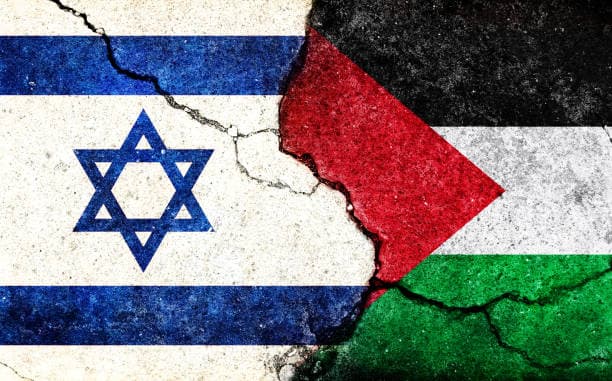
This prediction market addresses whether Israel will formally annex territory in the West Bank by the end of 2026. Annexation refers to the unilateral extension of Israeli sovereignty over land captured during the 1967 Six-Day War, territory that is considered occupied under international law and is central to the Israeli-Palestinian conflict. The question is politically explosive, as annexation would fundamentally alter the geographic and demographic realities on the ground, potentially extinguishing the possibility of a viable, contiguous Palestinian state based on the pre-1967 borders. The topic gained renewed urgency following the Trump administration's 2020 'Peace to Prosperity' plan, which envisioned Israeli sovereignty extending over all settlements and the Jordan Valley, and subsequent coalition agreements in Israel that included provisions for advancing annexation. People are interested in this topic because it represents a potential point of no return in the conflict, with profound implications for regional stability, international law, and the future of millions of Palestinians and Israelis. The outcome is heavily influenced by domestic Israeli politics, the stance of the United States and other international actors, and the broader security situation in the region.
The modern context for annexation begins with Israel's capture of the West Bank from Jordan during the Six-Day War in June 1967. Since then, Israel has maintained military control over the territory while establishing civilian settlements, which are considered illegal under international law by most of the world, though Israel disputes this. A key precedent for annexation is the 1980 Jerusalem Law, which declared a united Jerusalem as Israel's capital, and the 1981 Golan Heights Law, which applied Israeli law to the territory captured from Syria. These were unilateral acts not recognized by the international community. The 1993 Oslo Accords created the Palestinian Authority and divided the West Bank into Areas A, B, and C, with Area C comprising about 60% of the land and remaining under full Israeli control. This arrangement was intended to be temporary, pending a final status agreement. The failure of subsequent peace talks, most notably at Camp David in 2000 and during the Annapolis Process in 2008, has led to a hardening of positions. In recent years, the concept of annexation has moved from the fringe to the mainstream of Israeli right-wing politics, particularly after the Trump administration's 2020 peace plan provided a perceived green light for such action.
Annexation matters because it would likely end any realistic prospect for a two-state solution, a framework supported for decades by the international community as the path to resolving the conflict. It would cement a one-state reality where millions of Palestinians live under varying degrees of Israeli control without equal political rights, raising profound questions about democracy, human rights, and apartheid. The move would have severe diplomatic and economic repercussions. It could trigger widespread unrest or a new Palestinian uprising, destabilize neighboring Jordan, and lead to a crisis in Israel's relations with the European Union and Arab states that have normalized ties. For the Palestinians, annexation would mean the formal loss of land they claim for a future state, potentially leading to the collapse of the Palestinian Authority and a humanitarian and governance crisis in the West Bank. For Israel, while it would satisfy nationalist aspirations for some, it risks international isolation, boycotts, and a long-term demographic challenge to its Jewish character.
As of late 2024, the Israeli government, led by Prime Minister Benjamin Netanyahu, continues to accelerate settlement expansion in the West Bank. While a formal, sweeping annexation declaration has not been made, the government is pursuing a policy of 'de facto' annexation through massive construction approvals, infrastructure development linking settlements to Israel, and the legalization of previously unauthorized outposts. Key ministers like Bezalel Smotrich have been granted expanded powers over civilian affairs in the West Bank, further integrating its administration with Israel proper. The war in Gaza has temporarily shifted the immediate political focus, but figures on the Israeli right continue to frame the conflict as an opportunity to solidify control over the West Bank. International pressure, particularly from the United States, remains a significant restraining factor against a formal annexation proclamation.
Settlement expansion involves building or enlarging Israeli communities in occupied territory, while annexation is the formal, unilateral act of declaring that territory part of Israel's sovereign domain. Expansion creates facts on the ground, but annexation is a legal claim of ownership recognized by Israeli law.
The vast majority of the international community and legal experts consider the annexation of occupied territory to be a violation of international law, specifically the Fourth Geneva Convention, which prohibits an occupying power from transferring its civilian population into the territory it occupies or altering its status.
The most frequently discussed areas for annexation are the Jordan Valley, for its strategic depth and security value, and the major settlement blocs near the 1967 lines, such as Ma'ale Adumim, Gush Etzion, and Ariel. These areas contain the majority of the settler population.
Palestinians living in annexed areas would not automatically become Israeli citizens. They would likely remain as permanent residents without voting rights for the Knesset, or continue to live under a separate military legal system, creating a tiered system of rights within the same sovereign state.
The 2020 Trump administration 'Peace to Prosperity' plan envisioned Israel applying its law to about 30% of the West Bank, including all settlements and the Jordan Valley, effectively endorsing annexation. This marked a significant shift in U.S. policy and encouraged annexation advocates in Israel.
Educational content is AI-generated and sourced from Wikipedia. It should not be considered financial advice.
Share your predictions and analysis with other traders. Coming soon!

No related news found
Add this market to your website
<iframe src="https://predictpedia.com/embed/MYxB8V" width="400" height="160" frameborder="0" style="border-radius: 8px; max-width: 100%;" title="Will Israel annex West Bank territory before 2027?"></iframe>