$545.83K
1
1

1 market tracked

No data available
| Market | Platform | Price |
|---|---|---|
![]() | Poly | 7% |
Trader mode: Actionable analysis for identifying opportunities and edge
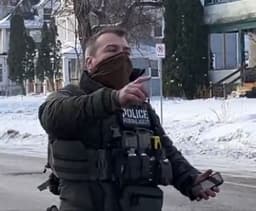
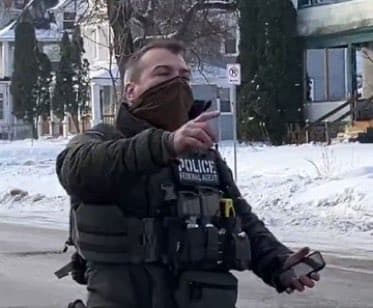
On January 7, 2026, an Immigration and Customs Enforcement (ICE) officer committed a shooting in Minneapolis (see: https://apnews.com/article/minnesota-immigration-enforcement-shooting-crackdown-surge-173e00fa7388054e98c3b5b9417c1e5a). This market will resolve to “Yes” if any Federal or State jurisdiction of the United States formally charges or otherwise announces a criminal indictment of the ICE Officer who fired the shots in the specified shooting, for any alleged crime relating to the shoot
AI-generated analysis based on market data. Not financial advice.
$545.83K
1
1
This prediction market focuses on whether the Immigration and Customs Enforcement (ICE) officer involved in a January 7, 2026, shooting in Minneapolis will face formal criminal charges by March 31, 2026. The incident occurred during an enforcement operation in the city's Cedar-Riverside neighborhood, an area with a significant immigrant population. According to initial Associated Press reporting, the officer fired shots that resulted in injuries to at least one individual. The market resolves to 'Yes' if any federal or state jurisdiction in the United States formally charges or announces a criminal indictment against the officer for any alleged crime related to the shooting. The case has drawn immediate attention due to its intersection of immigration enforcement, police use of force, and federal accountability. Public interest stems from ongoing national debates about ICE's operational transparency and the legal standards governing federal law enforcement actions. The specific March 31 deadline creates a measurable timeline for judicial or prosecutorial action, making the outcome a concrete indicator of how authorities are responding to the incident.
The question of charging federal law enforcement officers for on-duty shootings has a complex legal history. A key precedent is the 1988 Supreme Court case, Graham v. Connor, which established the 'objective reasonableness' standard for evaluating police use of force under the Fourth Amendment. This standard often makes criminal convictions difficult to secure. In the immigration context, high-profile incidents have previously tested accountability. In 2018, a Border Patrol agent was acquitted of murder charges in the shooting of a Mexican teenager across the border in Arizona, highlighting jurisdictional and evidentiary hurdles. More recently, the 2020 prosecution of three Minneapolis police officers for aiding and abetting in the murder of George Floyd resulted in federal civil rights convictions, demonstrating that charges are possible in Minnesota under specific circumstances. Historically, federal officers benefit from qualified immunity in civil suits and a presumption of lawful conduct in criminal matters, requiring prosecutors to clear a high bar to prove criminal intent beyond a reasonable doubt. The last known instance of an ICE officer being criminally charged for an on-duty shooting was in 2011 in Florida; those charges were later dropped.
The outcome of this case will signal how the justice system balances the authority of federal agents with accountability for their actions. A decision to charge would be a rare assertion of state or federal prosecutorial power over an immigration officer's use of force, potentially affecting how ICE conducts operations in communities. Conversely, a decision not to charge could reinforce perceptions of impunity for federal agents and intensify debates about ICE's oversight. For the immigrant communities in Minneapolis and nationally, the result carries significant weight. It will influence trust in local law enforcement and federal authorities, affecting community cooperation with police and shaping the political environment for immigration policy reforms. The case also has direct legal implications, as any charging decision will involve untangling complex questions about federal versus state jurisdiction and the applicability of self-defense laws to enforcement actions.
As of late January 2026, the incident is under active investigation. The Minneapolis Police Department has stated its detectives are investigating the shooting, and the Hennepin County Attorney's Office has confirmed it is reviewing the case. ICE has placed the involved officer on administrative duties pending the outcome of an internal review. No official name for the officer or detailed narrative of events has been released by authorities. Community groups in Minneapolis have held protests calling for transparency and charges. Legal experts note that the first major procedural step will be the completion and presentation of the investigative file to prosecutors, a process that is currently underway.
Yes, a state prosecutor has the legal authority to charge a federal officer for crimes committed within the state's jurisdiction. However, the officer could argue for the case to be moved to federal court or claim immunity, making conviction challenging.
The prediction market would resolve to 'No.' This does not preclude charges being filed after that date. The investigation and potential for federal administrative discipline would likely continue independently of the market's deadline.
Potential charges could range from assault with a dangerous weapon to manslaughter, depending on the severity of injuries and the evidence of intent. Federal civil rights charges are also possible if prosecutors believe the officer willfully deprived someone of their constitutional rights.
Multiple agencies typically investigate. Local police often handle the initial crime scene. ICE's Office of Professional Responsibility conducts an internal review. The Department of Homeland Security Inspector General may also investigate, and the FBI can be involved if a federal crime is suspected.
There is no public record of an ICE or legacy INS officer being convicted at trial for an on-duty shooting in recent decades. Some officers have faced charges that were later dropped or resulted in acquittal, underscoring the difficulty of such prosecutions.
Educational content is AI-generated and sourced from Wikipedia. It should not be considered financial advice.

No related news found
Add this market to your website
<iframe src="https://predictpedia.com/embed/N4pk9B" width="400" height="160" frameborder="0" style="border-radius: 8px; max-width: 100%;" title="ICE shooter charged by March 31?"></iframe>