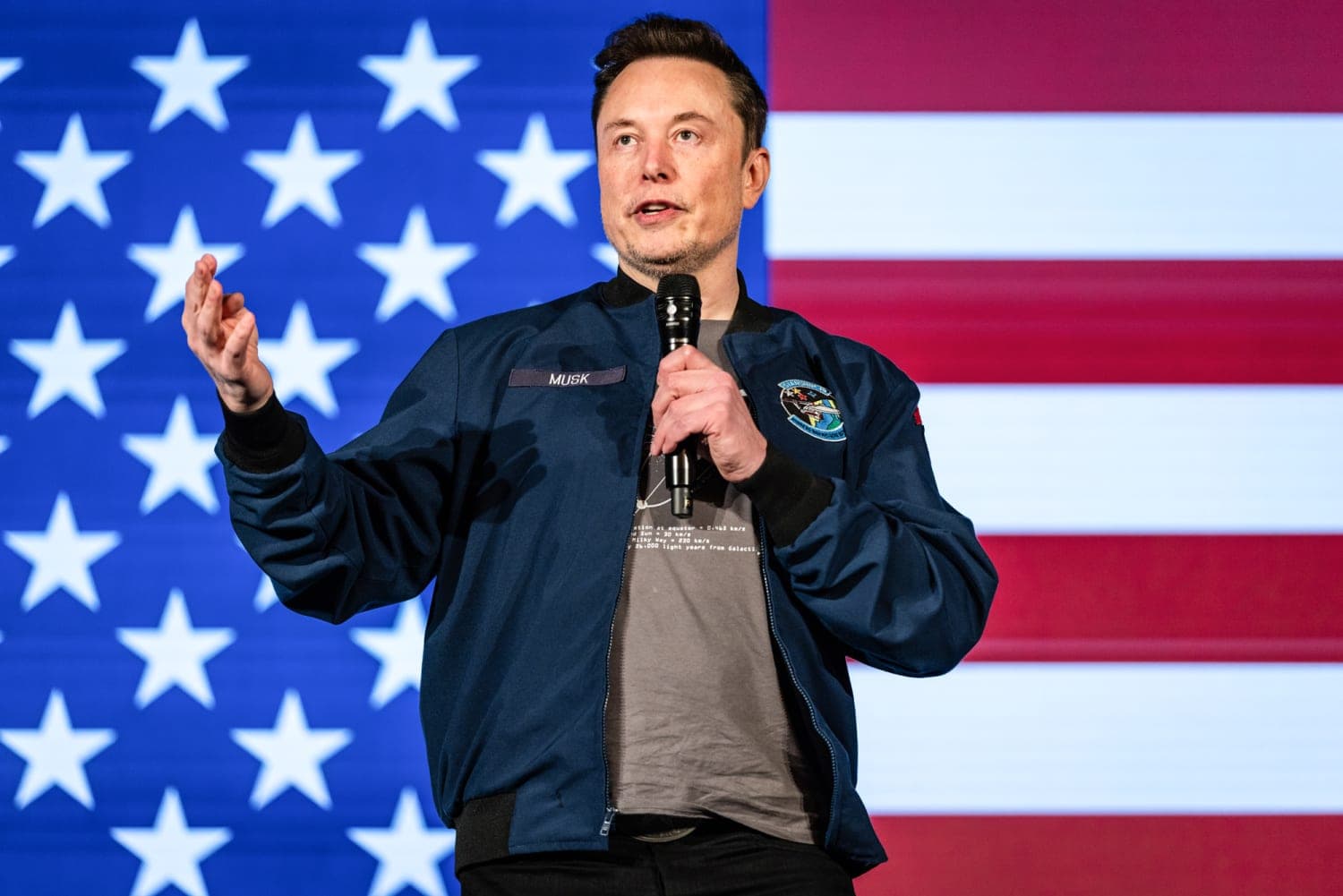
Will Elon register any party before 2027?
$7.09K
1
1
Will Elon register any party before 2027?
$7.09K
1
1
AI Analysis
Trader mode: Actionable analysis for identifying opportunities and edge
About This Event
This market will resolve to "Yes" if Elon Musk formally registers a political party in the United States by December 31, 2026 at 11:59 PM ET. Otherwise, this market will resolve to "No". The registration must be made with a relevant state or federal election authority and reported as such by a consensus of credible media outlets.
AI-generated analysis based on market data. Not financial advice.
This saved content is awaiting a background update. It may contain outdated claims; use the dated market data and provider rules for the latest available information.
Overview
This prediction market asks whether Elon Musk will formally register a political party in the United States by December 31, 2026. Registration must be with a state or federal election authority and be reported by credible media outlets. As of now, Musk has not registered any party, but his political activity has intensified, including his endorsement of Donald Trump in the 2024 presidential election and his involvement in the Department of Government Efficiency (DOGE) during the Trump administration. The question reflects broader speculation about Musk's political ambitions and his potential to disrupt the two-party system, given his vast wealth and influence. Musk has made occasional statements about political parties, including a 2024 remark that he might create a 'Super PAC' or support third parties, but he has not taken formal steps toward party registration. The market's timeframe extends to the end of 2026, covering the 2026 midterm elections, which could be a natural point for such a move. Observers note that Musk's political alignment has shifted from supporting Democrats to backing Republicans, and he has used his platform, X (formerly Twitter), to amplify political messages. The outcome depends on whether Musk decides to formalize his political influence, which would be unprecedented for a tech billionaire in the modern era. His history of unconventional actions, such as buying Twitter and renaming it X, suggests that a party registration is not impossible, but it would require significant organizational effort and legal steps. The market's resolution criteria are clear, but the probability is uncertain, with many factors including legal hurdles, strategic considerations, and Musk's unpredictable behavior. This topic sits at the intersection of politics, technology, and celebrity, making it a unique case study in how wealth and social media can shape political landscapes.
Historical Context
The U.S. has a long history of third-party movements, but none have successfully broken the two-party duopoly. The last significant third-party presidential candidate was Ross Perot in 1992, who won 18.9% of the popular vote as an independent. More recently, the Green Party and Libertarian Party have fielded candidates, but they rarely win electoral votes. In the 2024 election, independent candidates like Robert F. Kennedy Jr. initially ran but later dropped out and endorsed Trump. Musk's potential party would face high barriers, including ballot access laws that vary by state, with some requiring thousands of signatures. Historically, wealthy individuals have tried to create parties, such as Ross Perot's Reform Party in 1995, which eventually faded. The last time a new major party emerged was the Republican Party in 1854, which replaced the Whigs. In modern times, no billionaire has attempted to register a party, making Musk's case unprecedented. The timeline of Musk's political involvement includes his 2022 tweet that he would vote Republican, his 2024 endorsement of Trump, and his creation of the America PAC to support Trump's campaign. His role in DOGE has given him a formal policy platform, but he has not used it to build a party structure. The historical precedent suggests that forming a party is difficult, but Musk's resources and media influence could overcome some obstacles.
Why It Matters
If Musk registers a political party, it could reshape the U.S. political landscape by introducing a third force in a system dominated by Democrats and Republicans. A Musk-led party might attract voters disillusioned with both major parties, particularly on issues like technology, free speech, and government efficiency. The economic implications are significant, as Musk's companies (Tesla, SpaceX, X) could benefit from favorable policies, and a party could influence regulations affecting his industries. Socially, a Musk party might polarize public opinion, given his controversial statements on immigration and diversity. The potential for a split in the Republican vote could alter election outcomes, as seen in 1992 when Perot's candidacy helped Bill Clinton win. For political observers, this market is a proxy for measuring Musk's political ambition and the viability of outsider movements in the digital age. The outcome also affects the 2026 midterms, as a new party could field candidates in key races. Ultimately, the question reflects broader concerns about the influence of billionaires in politics and whether the system can accommodate new entrants. The market's resolution will provide a clear signal on Musk's intentions, but the consequences would extend far beyond the binary yes/no answer.
Frequently Asked Questions
What does it mean to register a political party in the U.S.?
Registering a political party typically involves filing paperwork with a state election authority, such as a secretary of state's office, and meeting requirements like collecting a certain number of signatures or having a minimum number of members. The process varies by state, and federal registration is not required for national parties, but state recognition is necessary for ballot access.
Has Elon Musk ever expressed interest in starting a political party?
Musk has made ambiguous statements, such as joking about creating a 'Super PAC' and criticizing both major parties. In 2024, he endorsed Donald Trump and has supported right-wing parties in Europe, but he has not explicitly announced plans to register a party.
What would be the impact of a Musk political party on the 2026 midterms?
A new party could siphon votes from Republicans or Democrats, potentially affecting close races. If Musk's party fields candidates, it could split the conservative vote, helping Democrats, or it could attract disaffected voters from both sides, creating unpredictable outcomes.
What are the legal requirements for registering a party in the U.S.?
Requirements vary by state, but common rules include gathering a specified number of petition signatures, holding a convention, and filing organizational documents. Some states require a party to receive a certain percentage of votes in the previous election to maintain ballot access.
AI-written background. References identify the evidence used; Wikipedia links under Learn More are additional reading. Prices and provider rules are dated snapshots. This is not financial advice.
Market Insights
Price gaps of 2 pp+
0
Saved price pairs
0
No exact saved pairs with both binary Yes prices are available.
Price differences do not establish arbitrage. Check each pair's review, current order prices, fees and settlement rules.