$556.04M
2
70

$556.04M
2
70
Trader mode: Actionable analysis for identifying opportunities and edge
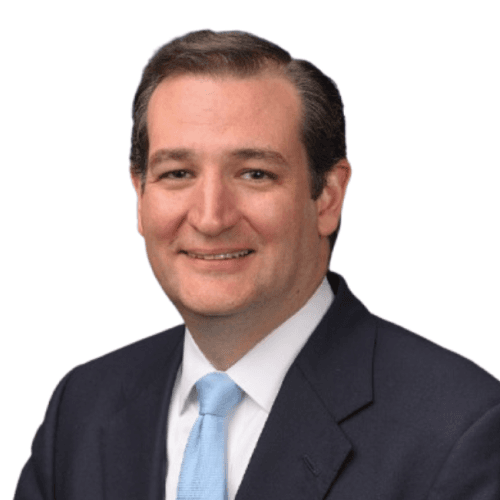
In 2028 If X wins and accepts the nomination for the Presidency for the Republican party, then the market resolves to Yes. Early close condition: This market will close after Republican nominates an individual for the Presidency and they accept that nomination. This market will close after Republican nominates an individual for the Presidency and they accept that nomination.
Prediction markets currently assign J.D. Vance a 39% chance of becoming the 2028 Republican presidential nominee. This price, derived from high-volume trading across Polymarket and Kalshi, indicates the market views his nomination as plausible but not probable. With nearly $556 million in total volume across related markets, liquidity is exceptionally high, suggesting strong trader conviction in the current odds. A 39% probability means the market sees roughly a 2-in-5 chance, positioning Vance as a leading contender in a field that remains undefined.
Vance's status as a frontrunner is tied directly to his political alignment with Donald Trump. As Trump's 2024 running mate, Vance is the immediate heir to the Trumpist faction of the GOP, a bloc that has dominated the party's primaries since 2016. His odds are a direct bet on the enduring power of that movement beyond Trump's own candidacy. However, the 39% price also reflects significant uncertainty. The 2028 election cycle is distant, and Vance's national profile remains untested in a competitive primary. Historical patterns show vice-presidential nominees often struggle to secure their party's top nomination, a factor likely priced into the current probability.
The single largest variable is the outcome of the 2024 presidential election. A Trump victory would position Vice President Vance as a sitting second-in-command for the next four years, dramatically boosting his credibility and name recognition. A Trump loss, however, could trigger a chaotic party realignment. Vance would face competition from other Trump-aligned figures like Florida Governor Ron DeSantis, and the party might reconsider its ideological direction. Key dates to watch are November 5, 2024, for the election result, and the first Republican primary debates in late 2027. Vance's own policy record and campaigning performance over the next three years will either solidify or erode his current frontrunner status.
Polymarket and Kalshi show closely aligned pricing for Vance, with minor spreads typically within 1-2 percentage points. This convergence indicates efficient arbitrage between platforms given the high liquidity. Any persistent divergence would be quickly exploited by traders. The alignment across platforms strengthens the validity of the 39% consensus probability, showing it is not an artifact of a single market's liquidity but a broadly held view.

AI-generated analysis based on market data. Not financial advice.
This prediction market addresses who will secure the Republican Party's nomination for President of the United States in 2028. The market resolves based on official party sources confirming the nominee who will appear on the general election ballot. The outcome is determined by the Republican National Convention, typically held in the summer of 2028, where delegates vote to select their presidential candidate. This process follows primary elections and caucuses held earlier that year across all 50 states, U.S. territories, and Washington D.C. Interest in the 2028 Republican nominee is exceptionally high because it represents the party's first open presidential nomination contest since 2016, with no incumbent Republican president eligible to run. The 2028 election will also occur after a full presidential term from either a second Biden administration or a new Democratic president, setting the stage for a potential party rebranding or continuation of current political trends. Political analysts and bettors are closely watching early maneuvering among potential candidates, fundraising efforts, and shifting alliances within the party's factions. The nomination will signal the Republican Party's future direction on key issues like foreign policy, economic priorities, and social matters, making it a critical barometer for American politics.
The Republican Party's presidential nomination process has undergone significant changes. The modern primary system began after the 1968 Democratic National Convention, with both parties adopting reforms. For Republicans, the process is governed by Rule 40 of the Republican National Committee rules, which requires a candidate to win a majority of delegates in at least five states to have their name placed in nomination at the convention. The last truly contested Republican convention was in 1976, when Gerald Ford narrowly defeated Ronald Reagan. Since then, nominees have typically been determined by the end of the primary season. The 2016 nomination of Donald Trump was an exception, featuring a large field of 17 major candidates and a protracted battle that Trump secured only after winning the Indiana primary in May. Historically, the party has alternated between nominating establishment figures like George H.W. Bush, Bob Dole, and Mitt Romney, and political outsiders like Trump. The party also has a pattern of nominating the runner-up from the previous competitive primary; Reagan (1980), Bush (1988), McCain (2008), and Romney (2012) all followed this path. The 2028 race will test whether this pattern holds or if a new generation of leaders emerges.
The selection of the 2028 Republican nominee will define American political competition for the subsequent decade. The nominee's policy platform will directly influence legislative agendas on taxes, regulation, healthcare, and entitlement programs, affecting businesses, investors, and households. A nominee perceived as moderate could calm financial markets, while a more populist or protectionist pick might increase volatility. The outcome also determines the future of the conservative movement. A victory for a candidate aligned with Trump's style could cement a lasting realignment of the party around populist nationalism. A win for a more traditional conservative might signal a return to pre-2016 party orthodoxy on free trade and foreign intervention. This internal struggle has consequences for America's global alliances, trade relationships, and approach to climate policy. Furthermore, the nominee's demographic appeal and geographic strengths will shape the party's electoral strategy, influencing down-ballot races for Senate, House, and state legislatures. The candidate who emerges will immediately become a central figure in the national conversation for years, shaping judicial appointments, administrative rulemaking, and the tone of political discourse.
As of early 2024, the field for 2028 is entirely undeclared, with all attention focused on the 2024 general election between Donald Trump and Joe Biden. Potential candidates are engaged in low-profile activities like fundraising for their PACs, publishing books, giving paid speeches, and endorsing candidates in the 2024 congressional races to build chits. The Republican National Committee is focused on the 2024 election and has not begun formal planning for the 2028 nomination calendar or debate schedule. The first significant moves are expected in late 2025 or early 2026, following the midterm elections. Several potential contenders, including Governors Youngkin and DeSantis, are term-limited in their current offices in 2025 and 2026 respectively, which will free them to campaign nationally.
The exact calendar is set by the Republican National Committee, but based on recent cycles, the first contest, likely the Iowa caucuses, will be held in January or February of 2028. State primaries and caucuses will then continue through June of that year.
Yes, the 22nd Amendment limits a person to being elected president twice, but it does not limit the number of times one can run. If Trump does not win in 2024, he would be eligible to run again in 2028. His age, which would be 82 on Election Day 2028, is considered a potential factor.
A brokered or contested convention occurs when no candidate arrives with a majority of pledged delegates. Delegates then vote repeatedly until one candidate secures a majority. It is possible but historically rare; the last Republican brokered convention was in 1976.
Delegate allocation rules vary by state. Some states use a winner-take-all system where the statewide winner gets all delegates. Others use proportional allocation, where delegates are divided based on vote share. A few states use hybrid systems. These rules are decided by state parties.
The rules are established by the Republican National Committee (RNC). A special committee drafts the rules for each presidential cycle, which are then voted on and adopted by the full RNC membership at the national convention preceding the election year.
Educational content is AI-generated and sourced from Wikipedia. It should not be considered financial advice.
43 markets tracked

No data available
| Market | Polymarket | Kalshi | Diff |
|---|---|---|---|
![]() | 39% | 36% | 3% |
![]() | 22% | 27% | 5% |
![]() | 4% | 5% | 1% |
![]() | 3% | 4% | 1% |
![]() | 2% | 2% | 1% |
![]() | 2% | 3% | 1% |
![]() | 2% | 2% | 0% |
![]() | 1% | 1% | 0% |
![]() | 1% | 1% | 0% |
![]() | 1% | 1% | 0% |
Different
Similar

In 2028 If X wins and accepts the nomination for the Presidency for the Republican party, then the market resolves to Yes. Early close condition: This market will close after Republican nominates an individual for the Presidency and they accept that nomination. This market will close after Republican nominates an individual for the Presidency and they accept that nomination.

This market will resolve to “Yes” if the named individual wins and accepts the 2028 nomination of the Republican Party for U.S. president. Otherwise, this market will resolve to “No”. The resolution source for this market will be a consensus of official Republican Party sources. Any replacement of the Republican nominee before election day will not change the resolution of the market.


This market will resolve to “Yes” if the named individual wins and accepts the 2028 nomination of the Republican Party for U.S. president. Otherwise, this market will resolve to “No”. The resolution source for this market will be a consensus of official Republican Party sources. Any replacement of

If J.D. Vance wins and accepts the nomination for the Presidency for the Republican party, then the market resolves to Yes. Early close condition: This market will close after Republican nominates an individual for the Presidency and they accept that nomination.


This market will resolve to “Yes” if the named individual wins and accepts the 2028 nomination of the Republican Party for U.S. president. Otherwise, this market will resolve to “No”. The resolution source for this market will be a consensus of official Republican Party sources. Any replacement of

If Marco Rubio wins and accepts the nomination for the Presidency for the Republican party, then the market resolves to Yes. Early close condition: This market will close after Republican nominates an individual for the Presidency and they accept that nomination.


This market will resolve to “Yes” if the named individual wins and accepts the 2028 nomination of the Republican Party for U.S. president. Otherwise, this market will resolve to “No”. The resolution source for this market will be a consensus of official Republican Party sources. Any replacement of

If Tucker Carlson wins and accepts the nomination for the Presidency for the Republican party, then the market resolves to Yes. Early close condition: This market will close after Republican nominates an individual for the Presidency and they accept that nomination.


This market will resolve to “Yes” if the named individual wins and accepts the 2028 nomination of the Republican Party for U.S. president. Otherwise, this market will resolve to “No”. The resolution source for this market will be a consensus of official Republican Party sources. Any replacement of

If Ron DeSantis wins and accepts the nomination for the Presidency for the Republican party, then the market resolves to Yes. Early close condition: This market will close after Republican nominates an individual for the Presidency and they accept that nomination.


This market will resolve to “Yes” if the named individual wins and accepts the 2028 nomination of the Republican Party for U.S. president. Otherwise, this market will resolve to “No”. The resolution source for this market will be a consensus of official Republican Party sources. Any replacement of

If Donald J. Trump wins and accepts the nomination for the Presidency for the Republican party, then the market resolves to Yes. Early close condition: This market will close after Republican nominates an individual for the Presidency and they accept that nomination.
No related news found
Polymarket
$556.04M
Kalshi
$0.00
Add this market to your website
<iframe src="https://predictpedia.com/embed/OUn5Um" width="400" height="160" frameborder="0" style="border-radius: 8px; max-width: 100%;" title="2028 Republican nominee for President?"></iframe>