$546.06
1
7

$546.06
1
7
Trader mode: Actionable analysis for identifying opportunities and edge
This market will resolve according to the minimum Arctic sea ice extent for all days between August 1, 2026 and October 1, 2026, as published by the National Snow and Ice Data Center. This market will remain open until data has been published for October 1, 2026, at which point it will resolve immediately. Any revisions to sea ice extent recorded after data is published for October 1, 2026 will not be considered. The resolution source for this market measures temperatures to thousands of squar
Prediction markets currently assign a low probability to the Arctic sea ice extent falling below the critical 4 million square kilometer threshold this summer. On Polymarket, the contract "Will the minimum Arctic sea ice extent this summer be less than 4m square kilometers?" is trading at 21¢, implying just a 21% chance. This pricing suggests traders view a new, dramatic record low as unlikely within the 2026 season, though not impossible. The market exhibits thin liquidity, with only about $1,000 in total volume spread across related contracts, indicating limited trader consensus.
The low probability is anchored in recent climatological trends and data. The linear trend of Arctic sea ice decline is approximately 12.6% per decade relative to the 1981-2010 average, but year-to-year variability is significant. The current record minimum of 3.41 million square kilometers was set in 2012, and subsequent summers have not breached the 4 million mark, with the 2023 minimum reaching 4.23 million. The market is likely pricing in the persistence of this recent plateau near or just above 4 million, influenced by variable seasonal weather patterns that can temporarily mitigate melt, such as cloud cover or wind patterns dispersing ice.
Furthermore, the resolution timeframe of October 2026 is over two years away, introducing substantial forecasting uncertainty. Traders may be discounting the probability of consecutive extreme melt seasons required to shatter the 4 million barrier, opting for a more conservative baseline expectation consistent with the last decade's observations.
The primary catalyst for a major shift in these odds will be the Arctic melt season data through summer 2026. An unusually warm winter leading into 2026, resulting in thinner preseason ice, would increase downside risk. Similarly, a persistent high-pressure system over the central Arctic during summer 2026, promoting clear skies and strong melt, could cause probabilities to rise sharply as the season progresses. Key monitoring periods will be the spring ice thickness reports from entities like the Polar Science Center and mid-summer extent updates from the National Snow and Ice Data Center. A significant shift in market sentiment will likely occur in the first half of 2026 as seasonal forecasts solidify.
This market is trading exclusively on Polymarket. The thin liquidity across all contracts highlights its niche status. The lack of a comparable market on platforms like Kalshi eliminates arbitrage opportunities and suggests this is a specialized climate betting arena for informed punters rather than a broad sentiment indicator. The low volume means current prices are highly sensitive to new capital or information.
AI-generated analysis based on market data. Not financial advice.
The minimum Arctic sea ice extent each summer represents a critical climate indicator tracked by scientists, policymakers, and industries worldwide. It refers to the smallest area of the Arctic Ocean covered by sea ice during the annual melt season, typically occurring between August and October. This measurement is crucial because it reflects the cumulative impact of atmospheric and oceanic warming, serving as a sensitive barometer for global climate change. The National Snow and Ice Data Center (NSIDC) is the authoritative source for this data, using satellite observations to calculate the daily sea ice extent, defined as the total area where ice concentration is at least 15 percent. The prediction market for the 2026 minimum extent allows participants to forecast this specific climate metric based on ongoing trends and scientific projections. Interest in this market stems from the Arctic's role as a climate change amplifier, where warming occurs at roughly three times the global average rate, a phenomenon known as Arctic amplification. The summer minimum has shown a pronounced long-term decline since consistent satellite monitoring began in 1979, with significant year-to-year variability influenced by weather patterns, ocean currents, and atmospheric conditions. Accurate predictions involve analyzing pre-season ice thickness, summer weather forecasts, and oceanic heat content.
Systematic satellite monitoring of Arctic sea ice began in 1979 with NASA's Scanning Multichannel Microwave Radiometer (SMMR), providing the first consistent, year-round record. This baseline revealed a relatively stable ice cover through the 1980s, followed by an accelerating decline. The historical record shows not just a decrease in extent but a profound transformation in the ice's character. The perennial, multi-year ice that once dominated the Arctic Basin has dramatically thinned and been replaced by younger, seasonal ice that melts more easily. A pivotal moment was the record-shattering minimum of September 2012, which reached 3.39 million square kilometers, nearly 50 percent below the 1979-2000 average. This event demonstrated how a combination of a powerful cyclone and preconditioning from thin ice could lead to extreme loss. The ten lowest minimum extents in the satellite record have all occurred since 2007, underscoring the persistent downward trend. The years 2020 and 2012 vie for the record, with 2020 reaching a second-lowest minimum of 3.74 million square kilometers. This long-term context is essential for the 2026 forecast, as the ice pack continues to exist in a fundamentally diminished state compared to decades past, making it more vulnerable to annual weather variability.
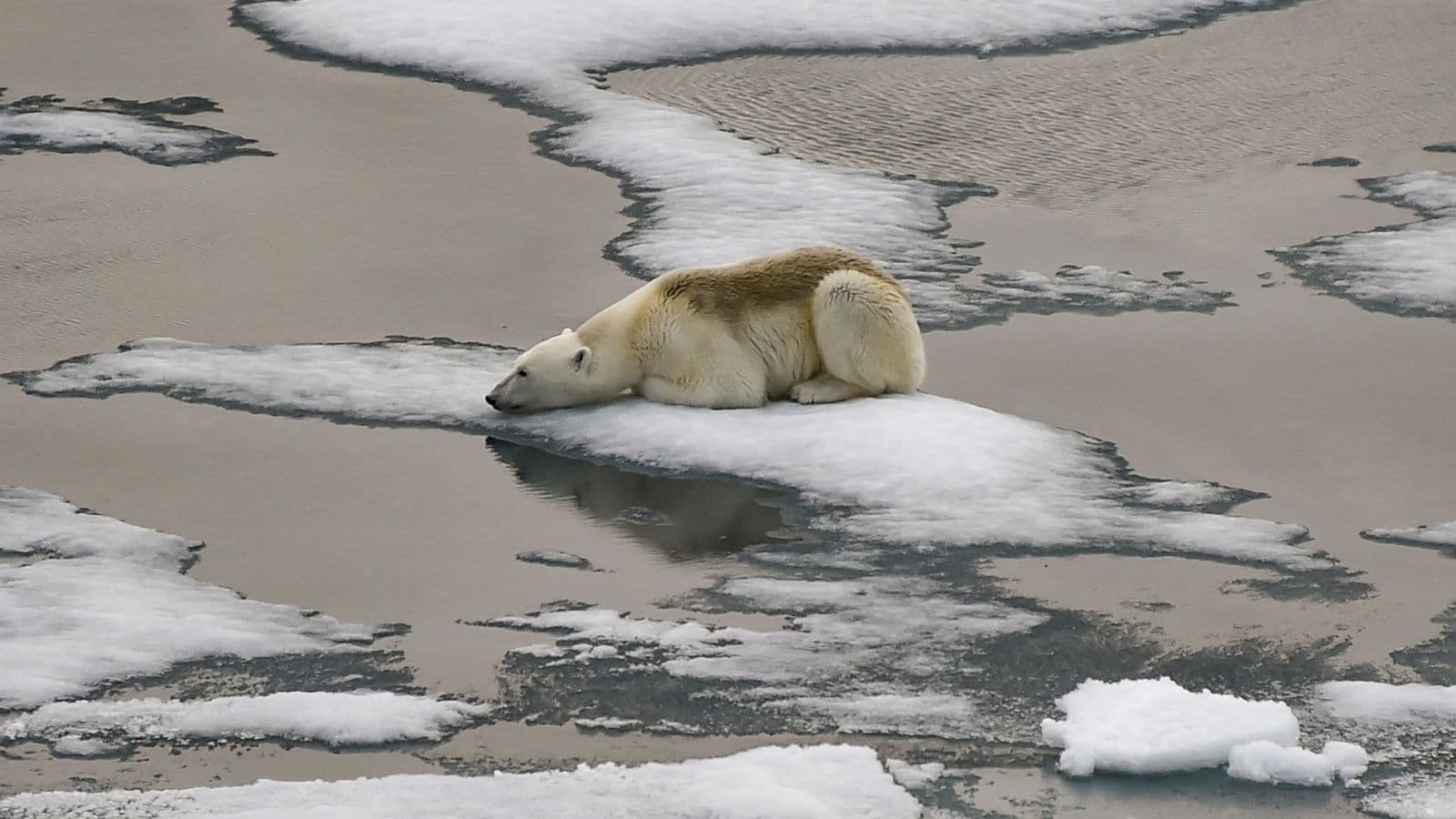
The minimum Arctic sea ice extent has profound global implications. Economically, it directly affects maritime industries by opening new shipping routes like the Northern Sea Route, which can cut transit times between Asia and Europe by weeks compared to traditional canals. This creates geopolitical tensions over control of these emerging waterways and access to Arctic resources, such as oil, gas, and minerals. Ecologically, the loss of summer ice disrupts entire Arctic ecosystems, threatening species like polar bears, seals, and walruses that depend on ice for hunting and breeding. The bright white ice also reflects solar energy back into space (the albedo effect). As ice melts, it exposes darker ocean water that absorbs more heat, creating a feedback loop that accelerates global warming far beyond the Arctic. This influences weather patterns in the Northern Hemisphere, potentially leading to more persistent extreme weather events like heatwaves, cold snaps, and altered precipitation patterns in North America and Eurasia. The fate of the summer ice cover is therefore a central concern for international climate policy, national security, biodiversity conservation, and global economic planning.
As of the latest data preceding the 2026 melt season, the Arctic sea ice continues its long-term decline. The winter maximum extent for March 2024 was among the lowest on record, indicating a thin, vulnerable ice pack entering the melt season. Scientific projections for the coming years suggest a high likelihood of continued low summer minima, with the potential for new record lows depending on summer weather conditions. Research focus has intensified on the role of the 'Atlantification' of the Arctic Ocean, where warmer Atlantic waters are intruding further north and contributing to basal melt. The Sea Ice Prediction Network typically releases its first seasonal outlooks in June, which will provide the first consolidated scientific forecast for the 2026 minimum, incorporating data on spring ice thickness and early summer atmospheric patterns.
It is measured using satellite-based passive microwave sensors. These instruments detect microwave energy emitted by the Earth's surface, and algorithms differentiate between open water and sea ice based on their distinct emissivity. The National Snow and Ice Data Center processes this data to calculate the total area where ice concentration is at least 15 percent.
While the long-term trend is driven by climate warming, annual variability is primarily controlled by summer weather patterns. Factors include the presence of high-pressure systems that promote clear skies and melt, wind patterns that can compact or spread out the ice, and the frequency of cyclones that can break up the ice cover. Pre-conditioning from thin winter ice also plays a major role.
Sea ice extent counts any grid cell of the ocean that has at least 15% ice cover as 100% ice-covered. Sea ice area accounts for the actual percentage of ice within each grid cell and sums these partial amounts. Extent is more commonly reported as it is less sensitive to sensor errors in estimating the exact concentration within a pixel.
The minimum extent usually occurs in mid to late September, after the summer melt season concludes. The exact date varies each year based on weather conditions. The NSIDC defines the melt season for monitoring purposes as running from March 1 to September 30, with data through October 1 used to ensure the absolute minimum is captured.
Research suggests that reduced sea ice may influence the jet stream, potentially making it more wavy and sluggish. This can lead to more persistent weather patterns, such as prolonged cold spells in winter or extended heatwaves and droughts in summer over mid-latitudes. However, the precise mechanisms and impacts remain an active area of scientific study.
Educational content is AI-generated and sourced from Wikipedia. It should not be considered financial advice.
Share your predictions and analysis with other traders. Coming soon!
7 markets tracked

No data available
| Market | Platform | Price |
|---|---|---|
![]() | Poly | 25% |
![]() | Poly | 21% |
![]() | Poly | 20% |
![]() | Poly | 12% |
![]() | Poly | 7% |
![]() | Poly | 3% |


No related news found
Add this market to your website
<iframe src="https://predictpedia.com/embed/OaHdbo" width="400" height="160" frameborder="0" style="border-radius: 8px; max-width: 100%;" title="Min Arctic sea ice extent this summer?"></iframe>