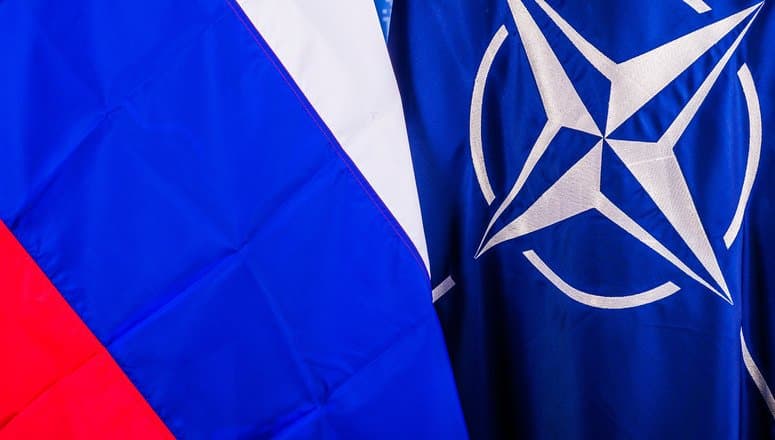
NATO x Russia military clash by...?
$8.86M
1
2
NATO x Russia military clash by...?
$8.86M
1
2
AI Analysis
Trader mode: Actionable analysis for identifying opportunities and edge
About This Event
This market will resolve to "Yes" if there is a military encounter between the military forces of a NATO country and Russia between September 23 and December 31, 2025, 11:59 PM ET. Otherwise, this market will resolve to "No". A "military encounter" is defined as any incident involving the use of force such as missile strikes, artillery fire, exchange of gunfire, or other forms of direct military engagement between NATO and Russian military forces. Non-violent actions, such as airspace violation
This saved analysis is awaiting a background update. Its prices and claims may be outdated; compare them with the dated market data above.
Current Market Outlook
Polymarket gives a NATO-Russia military clash by December 31, 2026 an 18% probability. That is a roughly one-in-five chance, meaning the market sees this as a real but unlikely scenario. The $2.9 million in volume across this single market shows serious liquidity, suggesting informed traders are pricing this carefully rather than speculating wildly.
The market resolves on any direct military engagement involving NATO forces and Russian troops. Non-violent incidents like airspace violations don't count. This matters because NATO and Russia have had close calls before. In November 2022, a Ukrainian air defense missile landed in Poland, killing two people. NATO did not treat that as a clash with Russia. The market is betting the next two years won't produce an incident that crosses that line.
Key Factors Driving the Odds
Three things keep this probability low. First, NATO has spent 2024 and 2025 explicitly avoiding direct confrontation. The alliance supplies weapons and intelligence to Ukraine but draws a hard line at boots on the ground. Any NATO commander who orders forces into direct fire with Russia would be acting against stated policy.
Second, Russia has shown no appetite for expanding the war beyond Ukraine. The Kremlin has avoided strikes on Polish or Romanian border infrastructure even when Ukrainian supply lines run through those countries. Russian doctrine prioritizes avoiding Article 5 activation.
Third, the 18% number reflects real escalation risk without assuming it happens. The war in Ukraine creates thousands of daily opportunities for miscalculation. A Russian missile veering into Polish airspace and hitting a target, or a NATO reconnaissance plane being shot down over the Black Sea, could trigger the resolution. The market prices these tail risks at roughly the correct frequency based on how many near-misses have occurred since 2022.
What Could Change These Odds
The biggest catalyst is a major Russian battlefield breakthrough in Ukraine. If Russian forces breach Ukrainian lines and threaten to reach NATO borders in Poland or Romania, the probability would jump. The market would then price whether NATO intervenes directly versus letting Ukraine collapse.
Watch for NATO's June 2025 summit in The Hague. If the alliance announces a no-fly zone or direct troop deployments to western Ukraine, odds would spike above 50%. Conversely, a ceasefire or peace deal before December 2026 would push the probability toward zero.
The 18% price is reasonable for a scenario where neither side wants war but accidents happen. Anyone betting the over is betting on miscalculation. Anyone betting the under is betting on rational actors maintaining control. History suggests the under is the safer bet, but the margin is thin.
AI-generated analysis based on market data. Not financial advice.
Saved Jul 10, 2026 UTCThis saved content is awaiting a background update. It may contain outdated claims; use the dated market data and provider rules for the latest available information.
Overview
The topic of a military clash between NATO and Russia centers on the potential for direct armed conflict between the North Atlantic Treaty Organization (NATO) and the Russian Federation. NATO is a military alliance of 32 countries, primarily from North America and Europe, founded in 1949 to counter Soviet expansion. Russia, a nuclear-armed state and the successor to the Soviet Union, has had a fraught relationship with NATO since the end of the Cold War. This prediction market specifically asks whether a military encounter, defined as any incident involving the use of force such as missile strikes, artillery fire, or exchange of gunfire, will occur between the forces of a NATO member state and Russia between September 23 and December 31, 2025. The market resolves to 'Yes' only for direct, violent engagements, excluding non-violent actions like airspace violations or cyberattacks. Tensions between NATO and Russia have escalated dramatically since Russia's full-scale invasion of Ukraine in February 2022. NATO has responded by reinforcing its eastern flank, deploying additional troops to countries like Poland, Estonia, Latvia, and Lithuania, and providing military aid to Ukraine. Russia, in turn, has increased its military posture along its borders with NATO members, conducted nuclear exercises, and threatened retaliation against any NATO involvement in the conflict. The risk of a direct clash has been a central concern for defense analysts and policymakers, as any miscalculation or escalation could trigger a broader war between nuclear powers. Recent developments have increased the probability of such an encounter. In 2024 and 2025, there have been multiple incidents of Russian drones and missiles entering NATO airspace, including a reported violation of Polish airspace in March 2024. NATO has also conducted large-scale exercises like 'Steadfast Defender 2024', the largest since the Cold War, involving 90,000 troops. Russia has responded with its own exercises and has deployed nuclear-capable missiles to Belarus and its Kaliningrad exclave. The war in Ukraine remains the primary flashpoint, with NATO countries providing weapons that have been used to strike targets inside Russia, a step that Moscow has warned could be seen as direct involvement. Interest in this topic stems from the catastrophic consequences of a NATO-Russia war. A direct clash could lead to a conventional war in Europe, with potential escalation to nuclear weapons. The prediction market reflects the uncertainty around whether deterrence holds or a spark ignites a wider conflict. Analysts point to the risk of accidents, miscalculations, or deliberate provocations, especially as the war in Ukraine grinds on. The market's timeframe of September to December 2025 covers a period that could see a Ukrainian counteroffensive, Russian escalation, or political changes in key NATO countries like the United States after the 2024 election.
Historical Context
The history of NATO-Russia relations is marked by cycles of cooperation and confrontation. After the Soviet Union's collapse in 1991, NATO expanded eastward, admitting former Warsaw Pact members like Poland (1999) and the Baltic states (2004). Russia viewed this as a breach of informal assurances given during German reunification, though no binding treaty prevented it. The 1997 NATO-Russia Founding Act created a forum for consultation, but trust eroded with NATO's 1999 bombing of Yugoslavia and the 2008 Bucharest summit, where NATO declared that Ukraine and Georgia would eventually join. The first major crisis came in 2008 when Russia invaded Georgia, a NATO aspirant, after a dispute over South Ossetia. The war lasted five days and ended with a ceasefire, but it set a precedent for Russia using force against a neighbor. In 2014, Russia annexed Crimea from Ukraine and backed separatists in eastern Ukraine, leading to NATO suspending practical cooperation with Russia. The alliance responded by increasing its presence in Eastern Europe, establishing the NATO Response Force and deploying battalions to Poland and the Baltic states. The most significant escalation began in February 2022 with Russia's full-scale invasion of Ukraine. NATO responded by reinforcing its eastern flank with additional troops, air defenses, and naval assets. Finland and Sweden, historically neutral, applied for membership, with Finland joining in April 2023 and Sweden in March 2024. This doubled NATO's border with Russia to over 1,300 kilometers. Russia has conducted nuclear exercises and deployed tactical nuclear weapons to Belarus, while NATO has increased its nuclear sharing arrangements. The risk of a direct clash has been a constant concern, with multiple incidents of Russian aircraft violating NATO airspace and a missile strike in Poland in November 2022 that killed two people, though it was later attributed to Ukrainian air defense.
Why It Matters
A NATO-Russia military clash would have catastrophic consequences. A conventional war in Europe could lead to hundreds of thousands of casualties, massive infrastructure destruction, and a humanitarian crisis. The economic impact would be severe, with disruptions to global energy supplies, trade routes, and financial markets. Russia is a major oil and gas producer, and any conflict would likely cause energy prices to spike, triggering a global recession. The last time a major European war occurred was World War II, and a NATO-Russia conflict would be the largest since then, with potential for nuclear escalation. The political ramifications are equally profound. A clash would test the unity of NATO, with some members potentially invoking Article 5, the collective defense clause. It would also reshape global alliances, pushing non-aligned countries like India and China to pick sides. The conflict could destabilize governments in Europe, lead to refugee flows, and increase authoritarianism. For the United States, it would require a massive military commitment, potentially drawing resources away from other priorities like the Indo-Pacific. The outcome could determine the future of European security for decades, either reaffirming NATO's role or leading to its fragmentation.
AI-written background. References identify the evidence used; Wikipedia links under Learn More are additional reading. Prices and provider rules are dated snapshots. This is not financial advice.