$163.29K
2
16

$163.29K
2
16
12 markets tracked

No data available
| Market | Polymarket | Kalshi | Diff |
|---|---|---|---|
![]() | 40% | 55% | 15% |
![]() | 36% | 36% | 0% |
![]() | 22% | 22% | 0% |
![]() | 7% | 6% | 1% |
Trader mode: Actionable analysis for identifying opportunities and edge
Before Nov 3, 2026 If Bernie Sanders publicly endorses X 2026 United States Senate election Y before Nov 3, 2026, then the market resolves to Yes. An endorsement requires a clear, affirmative statement of support for the nominee's election. The statement must be public, not private communications, and specifically reference the race or be clearly in context of the race. The endorsement must come directly from the person or through their official channels. Positive comments without explicit supp
Prediction markets currently give an 83% probability that Senator Bernie Sanders will endorse Congresswoman Cori Bush in her 2026 re-election race for Missouri's 1st district. In simple terms, traders believe there is roughly a 5 in 6 chance this endorsement happens before November 3, 2026. This is a high level of confidence, suggesting it is seen as the expected outcome.
The high probability is based on clear political alignment and past support. Cori Bush is a prominent member of the progressive "Squad" in Congress. Her policy priorities, like Medicare for All and police reform, closely match Sanders' own platform. Sanders has publicly supported Bush before, including during her competitive 2022 primary. Traders likely see a continued alliance as a logical way for Sanders to bolster a key ally in the progressive movement.
Another factor is the political landscape of MO-1. The district, based in St. Louis, is heavily Democratic. The real electoral challenge for Bush has come from within her own party, not from Republicans. An endorsement from a figure like Sanders could be valuable in a potential primary contest, making his public support both strategically useful and ideologically consistent.
The main event to watch is the filing deadline for the Missouri primary, which will likely be in early 2026. If a serious primary challenger to Cori Bush emerges, it could trigger Sanders to make his endorsement earlier to show strength. Conversely, if no significant challenger files, the perceived urgency for an endorsement might decrease, though the high probability suggests traders believe it will happen regardless. Watch for Sanders' public statements or campaign event schedules in Missouri as a leading signal.
Prediction markets have a mixed but generally decent record on political endorsements. They are good at aggregating obvious political alliances, like this one between two aligned progressives. However, they can be less reliable for predicting timing or for situations where personal relationships override public ideology. The main limitation here is that the event is over two years away. A lot can change in politics, and Sanders' own strategic decisions in 2026 could shift. The 83% chance reflects strong current beliefs, but it is not a guarantee.
Prediction markets assign an 83% probability that Bernie Sanders will endorse Cori Bush in Missouri's 1st congressional district primary before November 3, 2026. This price, found primarily on Kalshi, indicates the market views an endorsement as very likely. An 83% chance translates to roughly a 5-to-1 favorite. The specific "MO-1 House election" contract is the clear leader among 16 related markets, which collectively have seen $163,000 in trading volume, providing moderate liquidity for a political prediction this far in advance.
The high confidence stems from a clear ideological and political alliance. Sanders and Bush are two of the most prominent figures in the Democratic Party's progressive left. Bush, a member of the "Squad," has a voting record and public platform that closely aligns with Sanders' long-standing priorities, including Medicare for All and aggressive climate action. Sanders has a history of endorsing and campaigning for aligned progressive candidates in competitive primaries, especially against more moderate Democrats. Missouri's 1st District is a safe Democratic seat, making the primary the decisive contest. Sanders' endorsement would be a logical move to consolidate progressive influence and support a natural ally.
The 17% implied chance of "No" accounts for two main risks. First, the political landscape could shift by 2026. A serious primary challenge to Bush from a candidate further to Sanders' left, while unlikely, could complicate his decision. Second, and more probable, is that Sanders might strategically withhold a formal endorsement if Bush's re-election appears secure without his intervention, preferring to allocate his political capital to more contested races. The market will react to any public statements from Sanders or his team regarding the Missouri race. A direct comment dismissing the possibility of an endorsement would crash the price, while a joint event or fundraising appeal would send it toward 99%.
A notable 14.2% price spread exists between platforms. The "Yes" contract trades near 83% on Kalshi but only around 69% on Polymarket. This discrepancy likely reflects differences in trader demographics and platform liquidity. Kalshi's regulatory status and US focus may attract traders more familiar with US political dynamics, who see the endorsement as near-certain. Polymarket's global, crypto-native user base might be pricing in more general uncertainty or technicalities about endorsement definitions. The spread presents a nominal arbitrage opportunity, but it is constrained by withdrawal fees, platform access, and the low liquidity on the Polymarket side for this specific contract. The Kalshi price is considered the more reliable benchmark due to its higher volume and more direct political trading focus.
AI-generated analysis based on market data. Not financial advice.
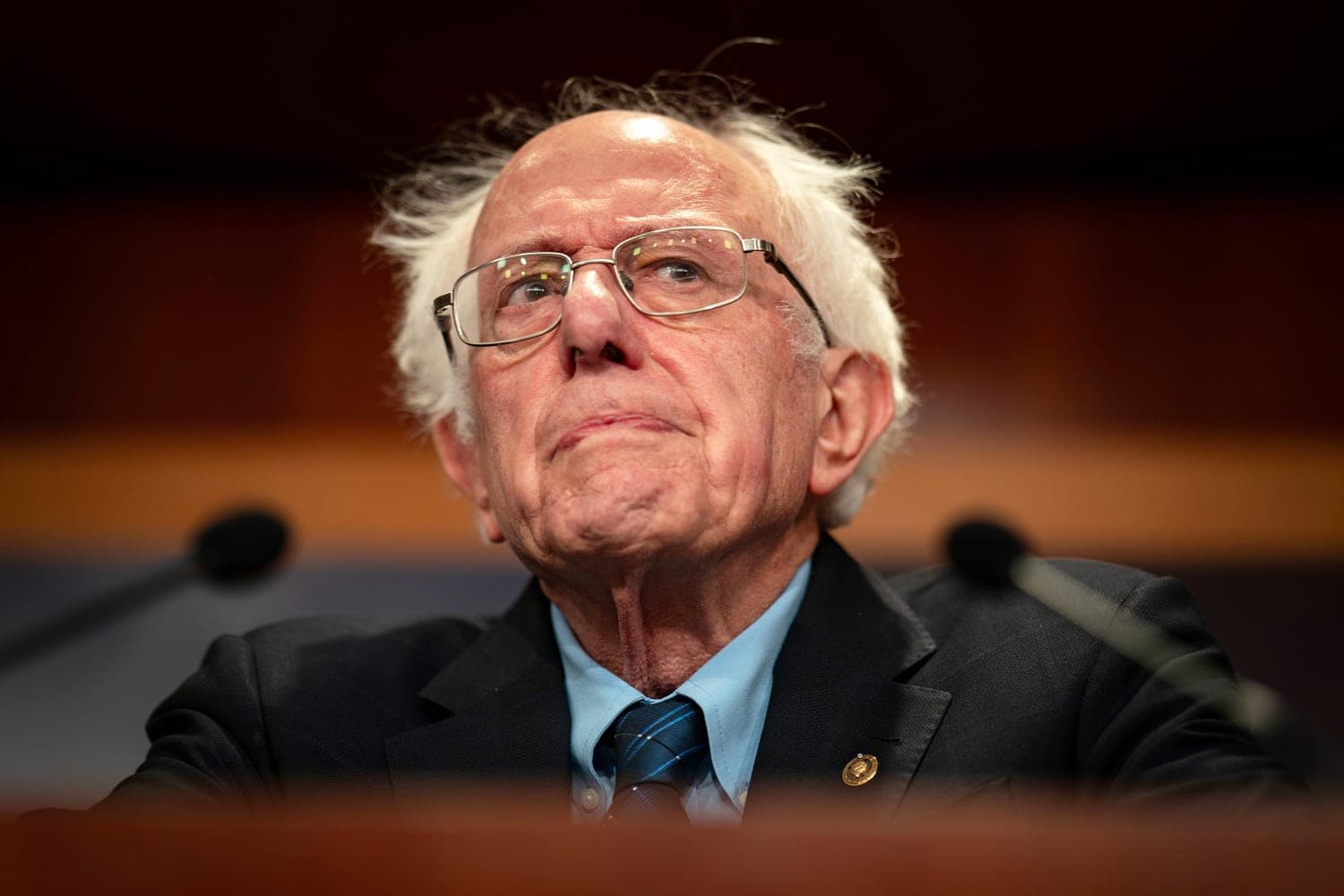
This prediction market focuses on whether Senator Bernie Sanders will publicly endorse a candidate in the 2026 United States Senate elections before November 3, 2026. The market resolves to 'Yes' if Sanders makes a clear, affirmative statement of support for a specific nominee's election through his official channels or public remarks. The endorsement must explicitly reference the Senate race or be made in its clear context, distinguishing it from general positive comments. This topic sits at the intersection of progressive politics, Democratic Party strategy, and the mechanics of political endorsements during midterm election cycles. Sanders, as the leading figure of the progressive wing of the Democratic Party, holds significant influence with a dedicated voter base. His endorsements are closely watched as indicators of which candidates and policy directions the progressive movement will prioritize. The 2026 Senate map, while not yet fully formed, will include races that could determine control of the chamber, making Sanders's potential involvement a subject of speculation among political analysts, party operatives, and activists. Interest stems from Sanders's track record of using endorsements to shape primary contests and his complex relationship with the Democratic establishment, where he sometimes supports mainstream Democrats and other times champions insurgent progressive challengers.
Bernie Sanders's approach to endorsements has evolved since his 2016 presidential run. In the 2018 midterms, Sanders endorsed several successful progressive primary challengers, including Alexandria Ocasio-Cortez in New York's 14th congressional district. He also endorsed mainstream Democrats in competitive general election races, such as Senator Jon Tester in Montana. The 2020 cycle saw Sanders endorse Senator Ed Markey in his contentious Massachusetts Democratic primary against Representative Joe Kennedy III, a race seen as a litmus test for the progressive movement's strength. In the 2022 midterms, Sanders's endorsement strategy was more selective. He endorsed progressive candidates like Summer Lee in Pennsylvania's 12th district and supported Senator Raphael Warnock in Georgia's general election. However, he notably withheld endorsement in some high-profile Democratic primaries where progressive challengers faced incumbent Democrats, reflecting a strategic shift. This history shows a pattern where Sanders weighs the viability of a progressive challenge, the ideology of the incumbent, and the overall importance of Democratic control of the Senate. The 2026 cycle will test whether this pattern continues or if new dynamics emerge.
Sanders's endorsements influence the flow of small-dollar donations and volunteer energy within the Democratic coalition. A Sanders endorsement can provide a candidate with instant credibility among progressive voters and access to a national fundraising network, potentially altering the outcome of a primary. For the Democratic Party, Sanders's choices in 2026 will signal the level of unity or division within its coalition heading into a presidential election year in 2028. If Sanders endorses challengers to sitting Democratic senators, it could trigger internal party conflicts and consume resources needed for the general election. Conversely, his early endorsement of an establishment Democrat could help unify the party and mobilize progressive turnout in a key state. The outcomes of these endorsed races directly affect the legislative agenda in the Senate, impacting policy on issues like healthcare, climate, and economic inequality that are central to Sanders's platform.
As of late 2024, the 2026 Senate election landscape is in its earliest stages. Candidate filings and official declarations will begin in earnest throughout 2025. Bernie Sanders has not made any public endorsements for 2026 Senate races. Political observers are monitoring open seats, such as the one being vacated by Senator Joe Manchin in West Virginia, and potential competitive races in states like Ohio and Pennsylvania, for signs of progressive primary challenges. Sanders's recent public statements have focused on legislative battles and the 2024 presidential election, providing no clear signals about his 2026 Senate strategy.
Bernie Sanders has not endorsed a Republican candidate for federal office. His endorsements are exclusively for Democrats, independents, or third-party candidates who align with his progressive policy goals. He has occasionally praised specific actions or statements by Republicans.
A Bernie Sanders endorsement is a personal statement of support from the senator himself. An Our Revolution endorsement is an organizational decision made by the group's leadership and membership. While the two often align, they are separate processes and do not automatically coincide.
The financial impact varies by race. In competitive 2020 Senate primaries, candidates like Ed Markey reported raising over $1 million in small donations within days of a Sanders endorsement. The amount depends on the race's profile and the candidate's existing fundraising base.
Sanders endorses both. His record shows he supports progressive incumbent Democrats, like Senator Elizabeth Warren, and will sometimes endorse mainstream Democratic incumbents in competitive general elections. He also endorses progressive challengers in primaries against more moderate Democrats, particularly on issues like climate change and healthcare.
Educational content is AI-generated and sourced from Wikipedia. It should not be considered financial advice.

Different
Similar

Before Nov 3, 2026 If Bernie Sanders publicly endorses X 2026 United States Senate election Y before Nov 3, 2026, then the market resolves to Yes. An endorsement requires a clear, affirmative statement of support for the nominee's election. The statement must be public, not private communications, and specifically reference the race or be clearly in context of the race. The endorsement must come directly from the person or through their official channels. Positive comments without explicit supp

This market will resolve according to the candidate Bernie Sanders announces that he will vote for or endorses for the listed election. If Bernie Sanders does not announce an endorsement by the day before the scheduled election at 11:59 PM ET, this market will resolve to "No". The resolution source for this market will be official information from Bernie Sanders or one of his representatives, or a consensus of credible reporting of Bernie Sanders' endorsement.


This market will resolve according to the candidate Bernie Sanders announces that he will vote for or endorses for the listed election. If Bernie Sanders does not announce an endorsement by the day before the scheduled election at 11:59 PM ET, this market will resolve to "No". The resolution sourc

If Bernie Sanders publicly endorses Dan Osborn in the 2026 United States Senate election in Nebraska before Nov 3, 2026, then the market resolves to Yes. Secondary rules: An endorsement requires a clear, affirmative statement of support for the nominee's election. The statement must be public (not p


This market will resolve according to the candidate Bernie Sanders announces that he will vote for or endorses for the listed election. If Bernie Sanders does not announce an endorsement by the day before the scheduled election at 11:59 PM ET, this market will resolve to "No". The resolution sourc

If Bernie Sanders publicly endorses James Talarico in the 2026 United States Senate election in Texas before Nov 3, 2026, then the market resolves to Yes. Secondary rules: An endorsement requires a clear, affirmative statement of support for the nominee's election. The statement must be public (not
No related news found
Add this market to your website
<iframe src="https://predictpedia.com/embed/OvYMOa" width="400" height="160" frameborder="0" style="border-radius: 8px; max-width: 100%;" title="Who will Bernie Sanders endorse before the midterms?"></iframe>