$1.15M
1
10

$1.15M
1
10
Trader mode: Actionable analysis for identifying opportunities and edge
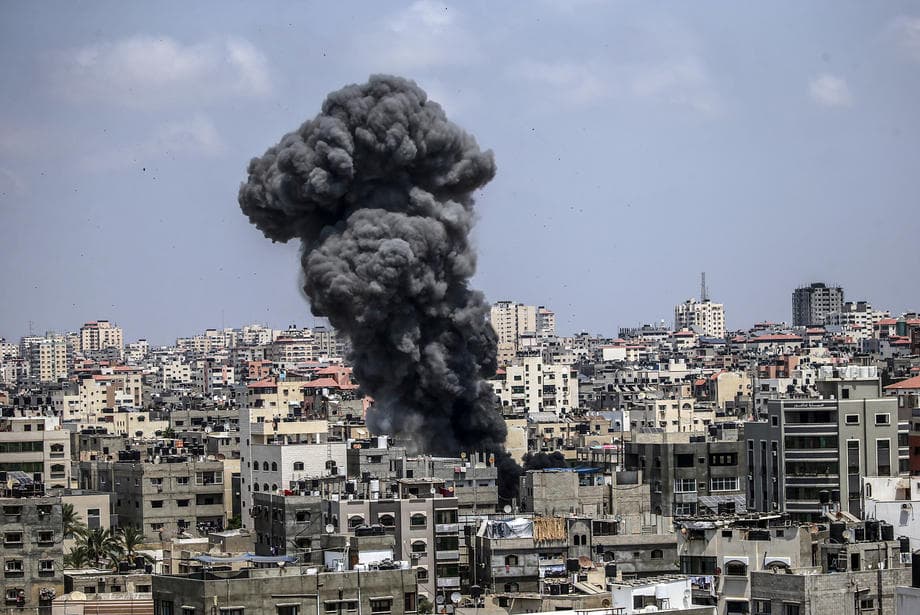
This market will resolve to "Yes" if Israel initiates a drone, missile, or air strike on Gaza soil on the listed date Israel Standard Time (IST). Otherwise, this market will resolve to "No". For the purposes of this market, a qualifying "strike" is defined as the use of aerial bombs, drones, or missiles (including cruise or ballistic missiles) launched by Israeli military forces that impact Gaza ground territory. A strike on any area within the terrestrial territory of the Gaza Strip counts, i
Prediction markets currently price a 53% probability that Israel will conduct an aerial strike on Gaza soil on January 6, 2026. With over $1.1 million in total volume across related date-specific markets, this reflects high liquidity and significant trader engagement. A 53% chance indicates the market views the event as essentially a coin flip, with no clear consensus on the outcome for that specific day. This pricing sits in the "Uncertain" range, suggesting traders are weighing near-daily military realities against the potential for isolated calm.
The primary factor is the historical and ongoing conflict rhythm. Since the major hostilities of 2023, the Israel-Gaza border has experienced periods of sporadic strikes, often in response to rocket fire or intelligence on militant activity. The market price reflects this persistent, low-level conflict state where a strike on any given day is plausible but not automatic. Second, the specific definition of a "strike" including drones, missiles, or aerial bombs captures a broad spectrum of military actions, from targeted assassinations to retaliatory bombardments, increasing the statistical likelihood compared to a definition requiring a large-scale operation. Third, the high market liquidity suggests informed traders are incorporating real-time geopolitical analysis and possibly intelligence cues into their positions.
The odds for this specific date are highly sensitive to immediate precursors. A major rocket barrage from Gaza or a high-profile militant action in the days prior to January 6 would likely cause the "Yes" probability to surge significantly. Conversely, credible diplomatic progress, such as a ceasefire negotiation reaching a critical phase, or a period of notable calm in the preceding week, could push the price sharply toward "No." The market will react dynamically to news, with the most volatile period being the 24-48 hours before the resolution date. Traders are effectively betting on whether the persistent tension will manifest in a kinetic event on this precise calendar day.
AI-generated analysis based on market data. Not financial advice.
This prediction market topic concerns the likelihood of Israeli military strikes on the Gaza Strip on specific dates. The market resolves based on whether Israel initiates drone, missile, or air strikes that impact Gaza territory during Israel Standard Time on the listed date. This topic exists within the broader context of the ongoing Israeli-Palestinian conflict, specifically the recurrent military confrontations between Israel and armed groups in Gaza, primarily Hamas and Palestinian Islamic Jihad. The market mechanism allows participants to speculate on daily military escalation risks, reflecting real-time assessments of geopolitical tensions, retaliatory cycles, and ceasefire durability. Recent interest stems from the aftermath of the October 7, 2023, Hamas-led attack on Israel, which triggered a major Israeli military campaign in Gaza, Operation Swords of Iron. Since then, the conflict has entered a volatile phase with intermittent negotiations, localized clashes, and the persistent threat of broader flare-ups. Observers monitor daily for strikes as indicators of conflict intensity, humanitarian impact, and the stability of truce agreements. These markets serve as aggregated sentiment indicators on war dynamics.
The context for daily strikes on Gaza is rooted in decades of conflict. Israel captured the Gaza Strip from Egypt in the 1967 Six-Day War. It maintained a military occupation until its unilateral disengagement in 2005, withdrawing settlers and troops. In 2007, Hamas seized control of Gaza from the Palestinian Authority after winning elections in 2006. This led to a land, sea, and air blockade imposed by Israel and Egypt, citing security concerns. Since Hamas's takeover, there have been several major Israeli military operations. Operation Cast Lead lasted from December 2008 to January 2009. Operation Pillar of Defense occurred in November 2012. The seven-week Operation Protective Edge took place in the summer of 2014. Operation Guardian of the Walls was fought in May 2021. Each involved intensive Israeli air strikes and artillery fire on Gaza, followed by fragile ceasefires. The period since October 7, 2023, represents the most intense and destructive chapter in this history. This pattern of escalation, retaliation, and temporary calm creates the cyclical conditions where the probability of daily strikes fluctuates based on tactical events and diplomatic movements.
Daily strikes on Gaza have profound humanitarian and regional consequences. Each confirmed strike carries the risk of civilian casualties, further destruction of critical infrastructure like hospitals and schools, and the deepening of a severe humanitarian crisis. The UN has warned of famine conditions in parts of Gaza, and military operations directly impede aid delivery. Politically, strikes influence the viability of ceasefire negotiations and hostage release deals. They test the stability of the Israeli war cabinet and affect Israel's international standing, including its relations with key allies like the United States and its exposure to proceedings at the International Court of Justice. Regionally, each escalation risks drawing in other actors, such as Hezbollah in Lebanon or Houthi forces in Yemen, who have shown willingness to open secondary fronts in solidarity with Gaza. The economic costs are staggering, with the World Bank estimating billions in immediate reconstruction needs, while Israel incurs significant daily military expenditures and economic disruption from mobilized reserves.
As of mid-2024, the conflict has transitioned from large-scale, intensive maneuvers to a phase of targeted, localized operations, particularly in Rafah and central Gaza. Israeli forces continue to conduct raids based on intelligence to dismantle Hamas battalions and infrastructure. Hamas and other armed groups persist in launching sporadic rocket attacks from Gaza. Ceasefire and hostage release negotiations, mediated by Qatar, Egypt, and the U.S., have been stalled and revived multiple times, creating a volatile backdrop. The International Court of Justice has issued provisional orders concerning Israel's conduct, adding a layer of international legal pressure. The daily occurrence of Israeli strikes remains highly contingent on immediate tactical developments, intelligence on senior Hamas figures, and the status of the fragile negotiation tracks.
The Gaza Strip is a 365-square-kilometer Palestinian territory on the Mediterranean coast, home to approximately 2.2 million people. It has been under the de facto governance of the Hamas militant group since 2007, following a violent rift with the Fatah-led Palestinian Authority. Israel and Egypt maintain a blockade on its borders.
Israel states it conducts strikes in Gaza for self-defense, primarily in response to rocket or mortar attacks launched by Hamas and other armed groups. Additional objectives include targeting militant infrastructure, assassinating senior commanders, degrading weapons manufacturing capabilities, and gathering intelligence. These actions are framed as necessary to protect Israeli civilians.
Hamas is an Islamist militant and political organization founded in 1987. Its charter calls for the establishment of an Islamic state in historic Palestine, which includes present-day Israel. It is designated as a terrorist organization by Israel, the United States, the European Union, and others. It has governed Gaza since 2007 and maintains a military wing that fights against Israel.
The primary source for Palestinian casualties is the Gaza Health Ministry, which is administered by the Hamas-led government. Its figures are generally considered credible by the UN and other international bodies, though they do not distinguish between combatants and civilians. The Israel Defense Forces report their own military casualties and estimates of militants killed.
Egypt and Qatar serve as critical mediators. Egypt shares a border with Gaza at Rafah and is a key conduit for humanitarian aid and a venue for negotiations. Qatar, which hosts Hamas's political office, provides substantial financial aid to Gaza and has been instrumental in brokering ceasefire and hostage release talks between Israel and Hamas.
Educational content is AI-generated and sourced from Wikipedia. It should not be considered financial advice.
Share your predictions and analysis with other traders. Coming soon!
10 markets tracked

No data available
| Market | Platform | Price |
|---|---|---|
![]() | Poly | 53% |
![]() | Poly | 52% |
![]() | Poly | 51% |
![]() | Poly | 50% |
![]() | Poly | 48% |
![]() | Poly | 35% |
![]() | Poly | 4% |


No related news found
Add this market to your website
<iframe src="https://predictpedia.com/embed/P9epag" width="400" height="160" frameborder="0" style="border-radius: 8px; max-width: 100%;" title="Will Israel strike Gaza on...?"></iframe>