$90.52K
1
1

1 market tracked

No data available
| Market | Platform | Price |
|---|---|---|
![]() | Poly | 47% |
$90.52K
1
1
Trader mode: Actionable analysis for identifying opportunities and edge
This market will resolve to “Yes” if Miguel Díaz-Canel ceases to be the President of Cuba for any period of time between November 18, 2025 and June 30, 2026, 11:59 PM ET. Otherwise, this market will resolve to “No”. An announcement of Miguel Díaz-Canel's resignation/removal before this market's end date will immediately resolve this market to "Yes", regardless of when the announced resignation/removal goes into effect. The resolution source for this market will be the government of Cuba, howev
Prediction markets currently estimate about a 69% chance that Miguel Díaz-Canel will no longer be Cuba's leader by the end of this year. In simpler terms, traders collectively see it as roughly a 2 in 3 probability that he will be removed from his position as First Secretary of the Communist Party of Cuba before December 31. This indicates a market leaning toward a leadership change, but with significant uncertainty remaining.
Several factors are contributing to these odds. First, Cuba is experiencing its worst economic crisis in decades, with severe shortages of food, medicine, and fuel. This has led to unprecedented public protests, which have continued despite government crackdowns. The pressure on the government is historically high.
Second, Díaz-Canel does not possess the same revolutionary-era legitimacy as his predecessors, Fidel and Raúl Castro. He was selected as a successor from within the party apparatus. His perceived handling of the economic crisis and protests may have weakened his standing within the powerful political and military elites who ultimately decide leadership.
Finally, the Cuban government has recently implemented some limited economic reforms and shuffled cabinet positions, which some observers interpret as signs of internal discord and attempts to manage instability. The market may be pricing in the possibility that the ruling party could decide a leadership change is necessary to regain control.
There is no scheduled election or party congress that would formally decide leadership before the year's end. Therefore, any change would likely be an internal party decision prompted by a sudden escalation. Key signals to watch include the scale and frequency of new street protests, especially if they occur in Havana. Another signal would be any unusual public appearances or, conversely, prolonged absences of Díaz-Canel from state media. Statements from high-ranking military officials or the retired Raúl Castro could also indicate shifting power dynamics.
Prediction markets can be good at aggregating dispersed information, especially about political events where insiders may have knowledge. However, forecasting an irregular, internal regime change in a closed, one-party state like Cuba is exceptionally difficult. The market is likely weighing visible signs of crisis against the regime's historical resilience and tight control. While the odds suggest a belief that the current pressure is unsustainable, the Cuban leadership has survived many past crises. The high trading volume shows real interest, but the outcome remains highly speculative.
Prediction markets assign a 69% probability that Miguel Díaz-Canel will be removed as the leader of Cuba by December 31, 2026. This price, translating to a 69c share for "Yes," indicates the consensus leans toward his departure within the next two and a half years. However, this is not a near-certain bet. A 69% chance suggests the market sees this outcome as likely, but significant uncertainty remains given Cuba's historically stable, single-party political system.
Two primary forces are compressing the odds against Díaz-Canel. First, Cuba's economic crisis is the most severe in decades. GDP contracted in 2023 and 2024, with inflation eroding real wages. Protests over food and power shortages in 2024 demonstrated public frustration that the state struggled to contain. Second, the market likely prices in a potential managed transition. Díaz-Canel, who succeeded Raúl Castro in 2021, is the first Cuban leader not from the Castro family. His tenure has been defined by economic hardship. Prediction markets may be betting the Communist Party could replace him as a political sacrifice to manage public discontent, even without a change in the governing system.
The odds could fall if the government announces a major economic stabilization package backed by a key foreign partner, such as a new debt or energy agreement with a country like China or Russia. Visible economic improvement before late 2026 would reduce pressure for a leadership change. Conversely, the 69% probability could rise sharply toward certainty following a specific catalyst. A new, widespread wave of protests that surpasses the scale of the 2021 demonstrations would be a primary risk. An explicit signal from within the Communist Party, such as a high-profile resignation or a public critique from a major political figure like former leader Raúl Castro, would also force the market to reprice the likelihood of an imminent departure.
AI-generated analysis based on market data. Not financial advice.
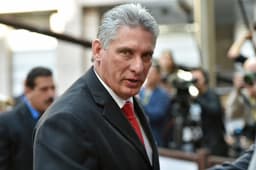
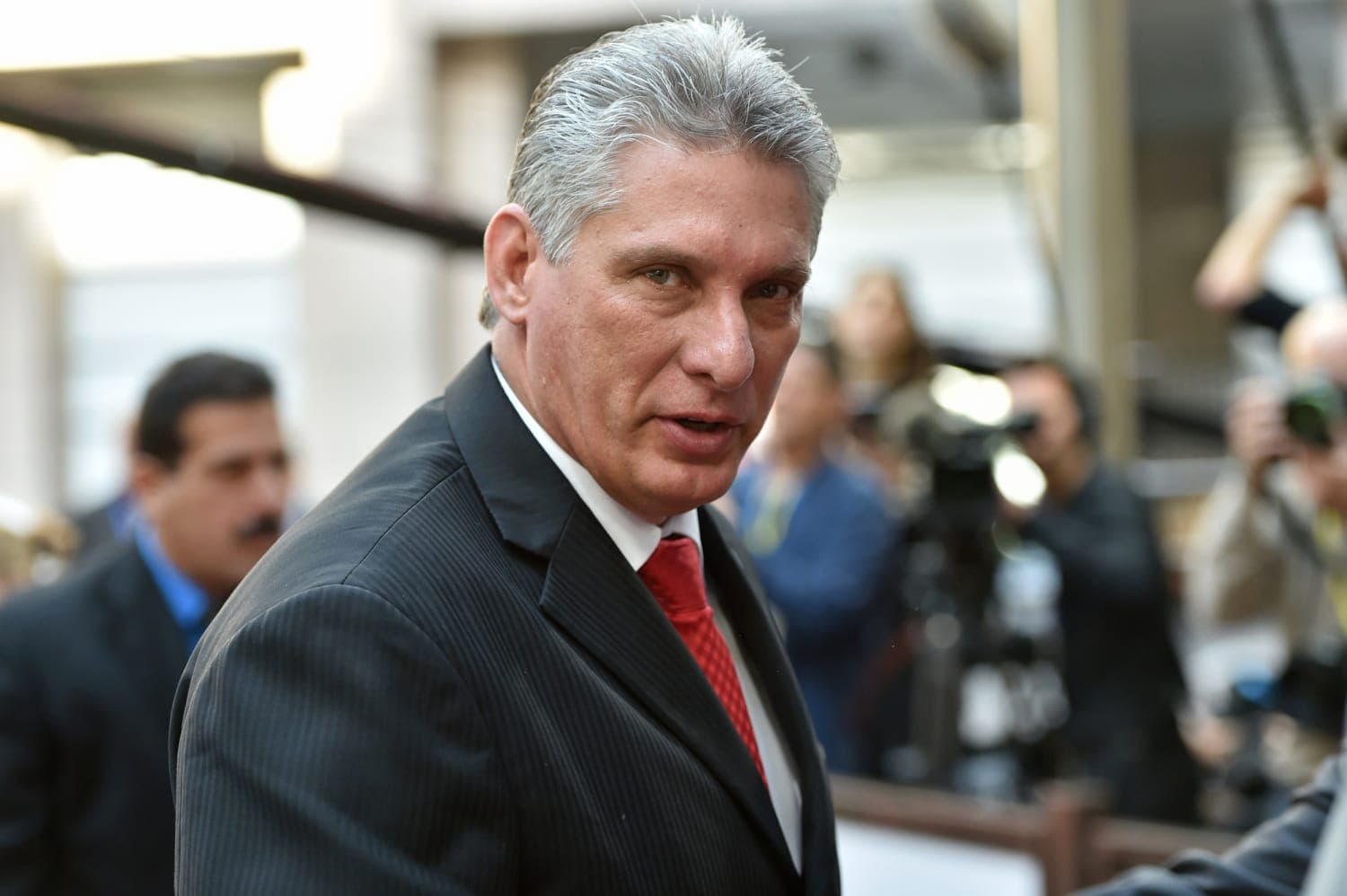
This prediction market asks whether Miguel Díaz-Canel will cease to be President of Cuba between November 18, 2025, and June 30, 2026. The market resolves to 'Yes' if he is removed from office, resigns, or announces his resignation during that period. The resolution source is the Cuban government. Díaz-Canel became President in 2018, succeeding Raúl Castro, and began a second five-year term in April 2023. His presidency has coincided with Cuba's worst economic crisis in decades, marked by severe shortages, inflation, and power outages. This has fueled unprecedented public protests, most notably in July 2021, which directly challenged the government. Interest in this market stems from the extreme pressure on Cuba's political system. The combination of economic collapse, migration waves, and social unrest has led analysts to question the stability of the leadership. While the Communist Party of Cuba maintains a firm grip, the prediction market reflects speculation about whether systemic pressures could force a change at the top, either through a managed transition or a more dramatic political event.
Cuba has been governed by the Communist Party since the 1959 revolution, with leadership concentrated in the hands of Fidel Castro and later his brother Raúl. This created a system where political transitions were rare and meticulously controlled. Fidel Castro led the country for 49 years until illness forced him to cede power to Raúl in 2008. Raúl Castro initiated a process of limited economic reforms but maintained strict political control. The transition from Raúl Castro to Miguel Díaz-Canel in 2018 was historic, as it was the first time a non-Castro held the presidency. However, it was not a transfer of ultimate power. Raúl Castro remained First Secretary of the Communist Party until 2021, ensuring continuity. This precedent shows that leadership changes in Cuba are planned by the party elite, not driven by elections or public pressure. The current crisis, however, is more severe than any faced by the Castros since the 1990s 'Special Period' following the collapse of the Soviet Union, testing the system's resilience.
The question of Díaz-Canel's tenure matters because it is a proxy for the stability of Cuba's entire political system. His removal outside of a planned party process would signal a profound rupture, potentially opening a period of significant uncertainty. For the Cuban population, a change in leadership could alter the government's approach to the economic crisis, affecting policies on private enterprise, currency unification, and foreign investment. Internationally, a political shift in Havana would impact relations with key allies like Russia, China, and Venezuela, as well as the contentious relationship with the United States. The U.S. maintains a comprehensive economic embargo, and any major political change in Cuba would force a reevaluation of American policy. For the Cuban diaspora, particularly in Florida, leadership changes are watched closely as indicators of potential political opening or further repression.
As of late 2024, Miguel Díaz-Canel remains in office facing severe challenges. The Cuban economy shows no signs of recovery, with continued shortages of fuel, medicine, and food. The government has implemented some austerity measures and raised prices for state services, which has increased public frustration. There have been no official indications from the Communist Party or government of any planned leadership change. The political apparatus appears to remain unified behind Díaz-Canel, at least publicly. However, small-scale protests continue to occur sporadically across the island, often focused on power outages and food scarcity.
The President is not directly elected by the public. Candidates are nominated and voted on by the National Assembly of People's Power, which is itself dominated by the Communist Party of Cuba. The process is controlled by the party leadership.
According to Cuba's constitution, the First Vice President, currently Salvador Valdés Mesa, would assume the role of President until the National Assembly elects a new one. In practice, the Communist Party's Politburo would decide on the successor.
No. Since the 1959 revolution, changes in the head of state have only occurred due to death (Fidel Castro's transfer of duties was due to illness) or a planned succession, as when Raúl Castro handed the presidency to Díaz-Canel.
Recent protests are primarily driven by economic hardship: lack of food and medicine, prolonged power blackouts, and low wages. Some protests have also included calls for political change, which is unprecedented in recent decades.
The military leadership has publicly expressed support for Díaz-Canel and the Communist Party. The armed forces are a pillar of the state, and their continued loyalty is considered essential for the government's stability.
Educational content is AI-generated and sourced from Wikipedia. It should not be considered financial advice.
No related news found
Add this market to your website
<iframe src="https://predictpedia.com/embed/Q8RvKS" width="400" height="160" frameborder="0" style="border-radius: 8px; max-width: 100%;" title="Miguel Díaz-Canel out as President of Cuba by June 30?"></iframe>