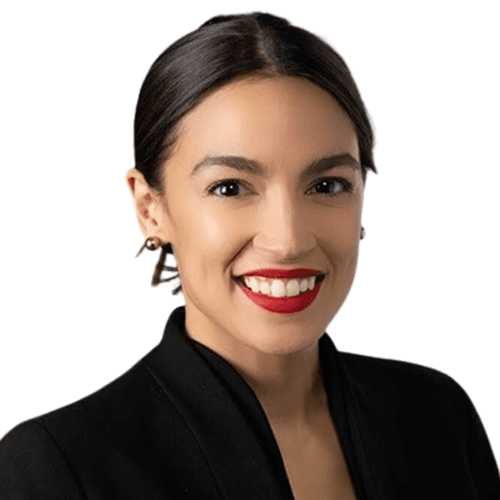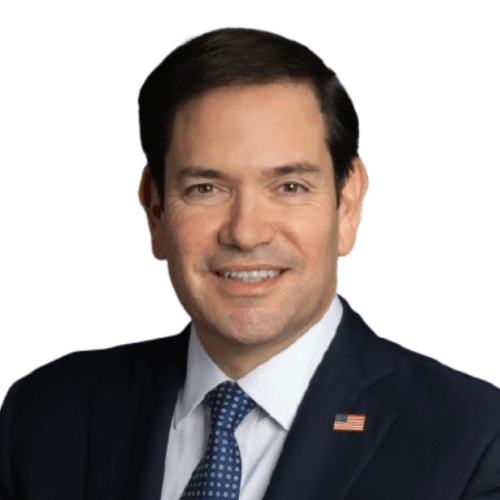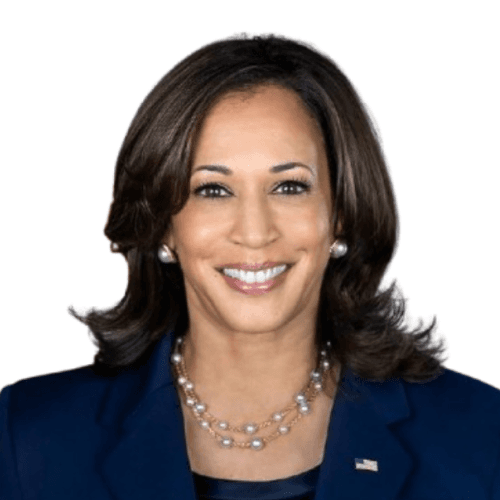
Presidential Election Winner 2028
$789.44M
2
86
Presidential Election Winner 2028
$789.44M
2
86
AI Analysis
Trader mode: Actionable analysis for identifying opportunities and edge
About This Event
The 2028 US Presidential Election is scheduled to take place on November 7, 2028. This market will resolve to the person who wins the 2028 US Presidential Election. Otherwise, this market will resolve to “No.” The resolution source for this market is the Associated Press, Fox News, and NBC. This market will resolve once all three sources call the race for the same candidate. If all three sources haven’t called the race for the same candidate by the inauguration date (January 20, 2029) this mar
This saved analysis is awaiting a background update. Its prices and claims may be outdated; compare them with the dated market data above.
Snapshot observed 2026-10-13T03:00:06.088Z. This analysis describes that snapshot and is not a live news update.
What the contract measures
The two platforms list overlapping names, but their contracts resolve differently. The Kalshi event asks who will be "inaugurated as President for the term beginning in 2029," and a Yes outcome resolves "if X is the next person inaugurated" [1]. Its early close condition ends the market once a person is inaugurated "pursuant to the next presidential election" [1]. The provider excerpt says the listed end time was not supplied, though the saved market records show an end date of 2029-11-07T15:00:00.000Z.
The Polymarket event resolves to "the person who wins the 2028 US Presidential Election." It states that the election is scheduled for November 7, 2028, and that resolution occurs "once all three sources call the race for the same candidate," naming the Associated Press, Fox News, and NBC [2]. The excerpt is cut off before the full fallback rule for a race not called by the January 20, 2029 inauguration date, so that rule cannot be described from this evidence. The listed end time is 2028-11-08T04:59:00.000Z [2].
Because the two contracts use different resolution sources, close times, and inauguration-based wording, their prices are not interchangeable.
Reading the snapshot
The data was observed at 2026-10-13T03:00:06Z and retrieved at 05:53 UTC the same day. These are snapshot prices, not live quotes or verified probabilities, and they are not executable prices.
Each provider event includes only a partial sample. Kalshi shows 12 of 32 markets, and Polymarket shows 12 of 54 [1][2]. Each sample was selected by highest Yes price, so the included names are not the full field, and the sample does not reveal prices for omitted candidates. The rankings for the two events should not be combined.
Some names appear in both samples with different prices. In the Kalshi sample, J.D. Vance is priced at 0.195 Yes. In the Polymarket sample, the Vance contract is priced at 0.2215 Yes. Jon Ossoff is at 0.125 on Kalshi and 0.1035 on Polymarket. These gaps reflect different contracts, so they should not be read as an arbitrage opportunity or averaged into a single figure. The evidence does not explain why the prices differ.
Volume data is not part of this evidence, so it cannot support any claim about liquidity or the number of traders.
What remains uncertain
The evidence does not explain why prices are where they are, how many traders hold each view, or how these prices have compared with past outcomes. It also contains no recent news about the race. The Kalshi listed end time is not supplied in the excerpt, and the Polymarket resolution language is truncated. Readers should check each platform's full rules before comparing contracts, and should treat these figures as a snapshot from the observation time above.
References
- Kalshi: 2028 U.S. Presidential Election winner?. Provider data observed 2026-10-13T03:00:06.088Z.
- Polymarket: Presidential Election Winner 2028. Provider data observed 2026-10-13T03:00:06.088Z.
AI-generated analysis based on market data. Not financial advice.
Saved Oct 13, 2026 UTCOverview
PredictPedia tracks a contract titled Presidential Election Winner 2028, in the Politics category. The contract concerns the United States presidential election scheduled for November 7, 2028, with winners scheduled to be inaugurated on January 20, 2029 [3]. Two providers list versions of this question, Kalshi and Polymarket, and their rules differ in important ways. The Kalshi version asks who will win the 2028 U.S. Presidential Election. Its rule says that if a named person is the next person inaugurated as President for the term beginning in 2029, the market resolves to Yes [1]. The Kalshi rules also include an early close condition: the market closes and expires once a person has been inaugurated as President following the next presidential election [1]. A named candidate's contract therefore depends on who is inaugurated for that term, not only on who is projected to win. The Polymarket version describes the 2028 U.S. Presidential Election as scheduled for November 7, 2028, and says the market resolves to the person who wins that election, with all other outcomes resolving to No [2]. Its stated resolution source is the Associated Press, Fox News, and NBC. The market resolves once all three sources call the race for the same candidate [2]. The supplied text for this provider is cut off before it finishes describing what happens if the three sources have not made the same call by the inauguration date of January 20, 2029, so this article does not state that outcome. The two providers also show different end times. Polymarket lists an end time of November 8, 2028 at 04:59 UTC [2]. Kalshi's listing does not supply an end time, while its market records show a date of November 7, 2029 at 15:00 UTC [1]. A listed date is a provider field, not an announced event date or a resolution date. Because the Kalshi and Polymarket wording differs, a candidate can be priced differently across the two providers for reasons unrelated to the candidate's chances. The prices shown in this section are snapshots taken from the provider data at the time it was observed. They are not executable quotes, and they are not verified probabilities. Each provider event also includes only a partial sample of its markets: 12 of 32 for the Kalshi event and 12 of 54 for the Polymarket event. Within each event, markets were ordered by Yes price, so the omitted candidates are not known to have lower prices, and the two events should not be ranked against each other.
Why It Matters
The contract measures a single outcome for a future election, which is the identity of the winner as defined by each provider's rules. The Kalshi rule links resolution to the person inaugurated as President for the term beginning in 2029 [1]. The Polymarket rule links resolution to the winner of the November 7, 2028 election, confirmed by a three-source call [2]. Under either provider, the Yes price for a named candidate is a market snapshot that reflects trading activity at a point in time, and it should be read alongside each provider's resolution wording. The 2028 election is scheduled, not yet held, so no result is available for this contract.
Snapshot context
The latest published provider snapshot for this topic was observed on 2026-10-13 at 06:00 UTC. It contains listings from Kalshi and Polymarket. Market descriptions and listed closing times define the contracts; they do not establish that the real-world outcome has occurred. This article does not include a separately verified news update. [1]
Frequently Asked Questions
What must happen for the Kalshi version of this contract to resolve Yes?
The Kalshi rules say the market resolves to Yes if the named person is the next person inaugurated as President for the term beginning in 2029 [1]. The rules also say the market closes and expires after a person has been inaugurated following the next presidential election [1].
How does the Polymarket version determine a winner?
The Polymarket rules say the market resolves to the person who wins the 2028 U.S. Presidential Election, and that the resolution source is the Associated Press, Fox News, and NBC. It resolves once all three sources call the race for the same candidate [2]. The election is scheduled for November 7, 2028 [2][3].
Why might two providers show different prices for the same candidate?
The two providers use different contract wording and different resolution details, including different listed end times [1][2]. Prices are snapshots rather than executable quotes or verified probabilities, so a difference in price is not by itself an opportunity to trade.
Does a price on this contract show how likely a candidate is to win?
The supplied data shows the price of each contract at a snapshot time, not a verified probability of winning [1][2]. Because each event includes only a partial sample of markets, the prices shown are not a complete picture of the field.
AI-written background. References identify the evidence used; Wikipedia links under Learn More are additional reading. Prices and provider rules are dated snapshots. This is not financial advice.
Market Insights
Price gaps of 2 pp+
2
Saved price pairs
22
Largest saved gap: 3.2 percentage points.
Price differences do not establish arbitrage. Check each pair's review, current order prices, fees and settlement rules.