Spain snap election called by...?
$186.31K
1
1
Spain snap election called by...?
$186.31K
1
1
AI Analysis
Trader mode: Actionable analysis for identifying opportunities and edge
About This Event
This market will resolve to "Yes" if the next Spanish general election is scheduled between May 28 and December 31, 2025, 11:59 PM ET. Otherwise, this market will resolve to "No". This market is about whether a date for the next Spanish election is announced within the stated timeframe. The date the election is scheduled to take place on will have no effect on the resolution to this market. The primary resolution source for this market is official information from the Government of Spain howev
Current Market Outlook
Polymarket traders give a 3% probability to a snap election being called in Spain by August 31, 2026. That is a near-total dismissal of early elections happening this year. The market has seen $186,000 in volume, which is moderate for a niche political event. For context, a 3% price implies the market sees this as a tail risk, not a plausible base case.
Key Factors Driving the Odds
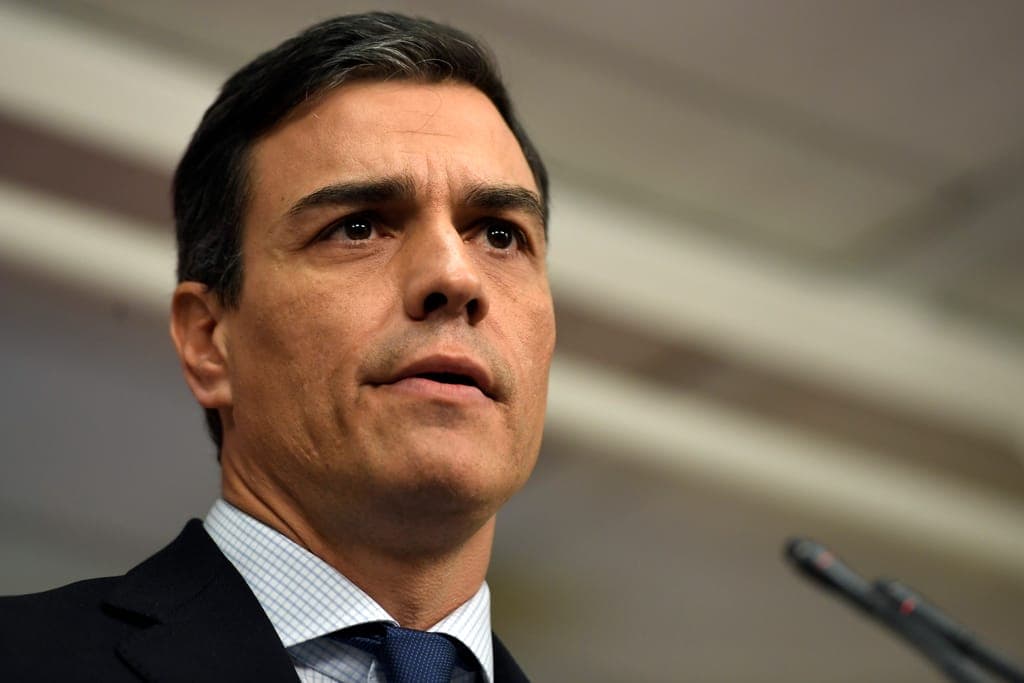
Spain’s current government coalition is fragile but functional. Prime Minister Pedro Sánchez’s PSOE party governs in alliance with Sumar, relying on support from Catalan separatist parties like ERC and Junts. The 2023 investiture vote required Junts’ backing in exchange for concessions including an amnesty law for Catalan independence activists. That deal is holding, at least for now.
The next scheduled general election is not until 2027. Calling a snap election would require Sánchez to dissolve parliament early, which he has no incentive to do. His coalition controls the legislative agenda, and no major scandal or economic crisis has emerged that would force early elections. The 2025 budget passed without collapse. Polling shows the opposition PP leading but without a clear path to a majority, meaning a snap election would likely produce another hung parliament.
What Could Change These Odds
A snap election becomes possible if Junts or ERC withdraws support over a specific legislative fight. The amnesty law is currently being challenged in the Constitutional Court, and an adverse ruling could destabilize the coalition. Another trigger would be a corruption scandal directly implicating Sánchez or his inner circle. Neither scenario is priced in at current levels.
The market resolves based on the announcement of an election date, not the election itself. A surprise announcement by Sánchez in early 2026, perhaps to capitalize on a temporary polling bump, would send this market to 100%. But with 35 days left to resolution and no visible pressure, 3% looks fair.
AI-generated analysis based on market data. Not financial advice.
Overview
This prediction market focuses on whether the Spanish government will call a snap general election between May 28 and December 31, 2025. The market resolves to 'Yes' if an election date is announced within that window, regardless of when the election actually occurs. The resolution depends on official announcements from the Government of Spain, such as a Royal Decree dissolving the Cortes Generales (the Spanish parliament) and setting a new election date. The market does not require the election itself to happen before the end of 2025, only the announcement of the date. Spain's political landscape has been volatile since the 2019 general elections, which produced a fragmented parliament. Prime Minister Pedro Sánchez of the Spanish Socialist Workers' Party (PSOE) formed a coalition government with Unidas Podemos in January 2020, the first coalition government since Spain's transition to democracy. That government faced challenges including the COVID-19 pandemic, economic recovery, and regional tensions in Catalonia. In 2023, Sánchez called a snap election for July 23 after his party suffered losses in local and regional elections. The result was a hung parliament, but after months of negotiations, Sánchez secured a new term in November 2023 with support from Catalan and Basque separatist parties, including Junts and the Republican Left of Catalonia (ERC). Recent developments have increased speculation about another snap election. The current government, a coalition of PSOE and Sumar (a left-wing alliance), holds a slim majority dependent on support from multiple regional parties. Key legislation, including the 2024 budget, passed with narrow margins and required concessions to separatist groups. In early 2025, tensions over the amnesty law for Catalan separatists, passed in May 2024, strained relations between the government and Junts, which withdrew support for some bills. Economic data showed Spain's GDP growing at 2.5% in 2024, above the eurozone average, but inflation and housing costs remained concerns. Polls in early 2025 indicated the conservative People's Party (PP) leading by 3-5 points, but without a clear majority. Interest in this topic stems from the political uncertainty in Spain, a major European economy. A snap election could shift policy on issues like taxation, regional autonomy, and European Union relations. The market attracts traders who follow Spanish politics, economic indicators, and coalition dynamics. The specific timeframe, May 28 to December 31, 2025, aligns with the end of the European Parliament elections in June 2025 and the approaching end of the current legislature in August 2025. The market's outcome depends on whether Sánchez and his coalition partners find it politically advantageous to call an early election or whether external pressures force one.
Historical Context
Spain has a history of snap elections. Since the 1978 Constitution, governments have called early elections multiple times, often due to political crises or loss of parliamentary support. The 2015-2016 period saw two general elections in six months after the rise of new parties like Podemos and Ciudadanos broke the traditional two-party system. In 2019, Spain had two general elections (April and November) as parties failed to form stable coalitions. The 2023 election was called early after Sánchez's PSOE lost control of many regional governments. The current government's fragility mirrors the 2019-2023 period, when the coalition faced repeated challenges. The amnesty law for Catalan separatists, passed in May 2024, was a key condition for Junts and ERC support. This law aimed to normalize relations with Catalonia but faced legal challenges and public opposition. The government's ability to pass legislation has been tested, with several bills failing or passing by single votes. For example, the 2024 budget passed with a 176-172 vote in December 2023. Past snap elections have often been driven by the Prime Minister's calculation of political advantage. Sánchez called the 2023 election after local losses, hoping to regain momentum. The result was a hung parliament, but he secured a new term. Similar dynamics apply now: polls show the PP leading, but not enough to govern without Vox. Sánchez may call an election if he believes his coalition can improve its position or if he faces a no-confidence motion. The European Parliament elections in June 2025 could also serve as a bellwether, potentially triggering a snap general election if results are unfavorable for the government.
Why It Matters
A snap election in Spain would have significant economic implications. Spain is the eurozone's fourth-largest economy, with a GDP of €1.5 trillion in 2024. Political uncertainty could affect investor confidence, bond yields, and the implementation of EU recovery funds. Spain received €163 billion in Next Generation EU funds, and delays in reforms could disrupt disbursements. The election could also shift fiscal policy, with the PP proposing tax cuts and the current government focusing on social spending. Politically, a snap election could reshape Spain's party system. The PP and Vox could form a right-wing government, reversing policies on gender equality, climate change, and regional autonomy. Alternatively, a stronger PSOE-Sumar coalition could push for more progressive reforms. The outcome would also affect European Union politics, as Spain is a key member on issues like migration, climate policy, and EU enlargement. Socially, the election could reignite tensions over Catalan independence, especially if Junts or ERC lose influence. The amnesty law's implementation could become a campaign issue, polarizing voters.
Current Status
As of February 2025, no snap election has been called. The government is focused on passing the 2025 budget, which is under negotiation with Junts and ERC. Sánchez has stated he intends to serve a full term until August 2027, but political analysts view this as unlikely given the narrow majority. The European Parliament elections on June 6-9, 2025, are seen as a potential trigger: if the government parties perform poorly, Sánchez might call a snap election to regain momentum. In February 2025, Junts demanded a confidence vote on the government, which Sánchez rejected. The PP has filed a motion of no confidence, but it is expected to fail due to lack of support. The market's resolution depends on any announcement before December 31, 2025.
Frequently Asked Questions
When is the next Spanish general election scheduled?
The next general election is not yet scheduled. The current legislature runs until August 2027, but a snap election could be called at any time. The prediction market focuses on whether a date is announced between May 28 and December 31, 2025.
Educational content is AI-generated and sourced from Wikipedia. It should not be considered financial advice.