$5.17M
2
70

$5.17M
2
70
Trader mode: Actionable analysis for identifying opportunities and edge
In 2026 If X wins the Eurovision Song Contest, then the market resolves to Yes. Early close condition: This market will close and expire early if the event occurs. This market will close and expire early if the event occurs.
Right now, prediction markets give Finland roughly a 1 in 4 chance of winning the 2026 Eurovision Song Contest. With about $5 million wagered across dozens of related questions, this shows strong public interest. The market is essentially saying Finland is a possible contender, but far from a sure bet. The most likely outcome, according to the collective wisdom of thousands of traders, is that another country will take the crown.
Finland’s current odds are shaped by recent history and the contest’s voting patterns. Finland’s 2023 entry, Käärijä, finished a very close second, generating huge popular support. This recent near-win keeps Finland in the conversation as a country with the potential to finally secure another victory. However, Eurovision winners are notoriously hard to predict years in advance. The actual song, performer, and staging for 2026 are complete unknowns. The market’s modest probability for Finland reflects this uncertainty, balancing their past success against the fact that every year starts as a clean slate. The contest’s complex voting, which mixes public televotes with national juries, also makes sustained momentum difficult.
The most important signals are still far off. National selection processes for the 2026 contest will begin in late 2025. Key dates to watch will be when Finland announces its participant and, crucially, when that entry’s song is first released to the public. Market odds will likely shift significantly once the competing songs from all countries are known in the months leading up to the contest. A frontrunner often emerges only after all songs are presented at the pre-contest rehearsals in spring 2026.
For events like Eurovision, prediction markets are fairly reliable in the short term, often accurately identifying favorites in the weeks before the final. However, forecasts made this far in advance are highly speculative. They reflect general sentiment about a country’s potential rather than a specific prediction. The market is good at aggregating existing public and fan enthusiasm, but it cannot account for an unknown future song that could become a surprise hit. Treat these early odds as a snapshot of current narrative momentum, not a definitive forecast.
The prediction market for Finland winning the 2026 Eurovision Song Contest is priced at 24 cents, indicating a 24% probability. This positions Finland as a clear frontrunner among the 70 markets tracked for this event, which collectively show over $5 million in trading volume. A 24% chance in a field of roughly 37 countries means the market views a Finnish victory as a plausible but not dominant outcome. It suggests Finland is the favorite, but the contest remains highly open.
Finland's status as the favorite is directly tied to its recent competitive history and national selection strategy. The country finished second in 2023 with Käärijä's "Cha Cha Cha," a result that demonstrated massive popular appeal. In 2024, Finland's Windows95man secured a respectable 7th place, proving consistent performance. The Finnish broadcaster YLE has shifted to using the established UMK national final, which reliably produces modern, televote-friendly entries that resonate across Europe. This consistent pipeline of credible acts builds market confidence in their 2026 prospects more than for countries with unpredictable selection methods.
The most significant factor will be the reveal of Finland's actual 2026 entry and performer, which typically occurs in early 2026. A weak song selection or an unpopular artist chosen in UMK could cause this probability to collapse. Conversely, a standout entry could push odds above 30%. Broader contest dynamics will also shift prices. The host country for 2026 remains unconfirmed, and a major nation like Sweden or Italy returning with a strong entry could draw market share away from Finland. Odds for all countries will see high volatility once national selections begin in late 2025.
This is a cross-platform event on Kalshi and Polymarket. The 24% price for Finland is the consensus across both platforms, with no major arbitrage opportunity. The high liquidity and aligned pricing indicate efficient information sharing between traders. The unified market depth, with $5 million in volume, means this price is a solid consensus view, not an artifact of low liquidity on a single exchange. Traders are effectively using both platforms to establish a single, liquid market for this outcome.
AI-generated analysis based on market data. Not financial advice.
This prediction market topic concerns the outcome of the 71st Eurovision Song Contest, scheduled for 2026. Participants are betting on whether a specific country, artist, or song, denoted as 'X', will win the competition. The market resolves to 'Yes' if X is declared the winner during the live final. The contest is organized annually by the European Broadcasting Union (EBU) and is one of the world's longest-running and most-watched non-sporting television events. The 2026 contest will follow the format established in recent years, featuring two semi-finals and a grand final where the winner is determined by a combination of public televotes and national juries of music professionals. Interest in this market stems from Eurovision's massive global audience, which exceeded 160 million viewers in 2024, and its reputation for unpredictable results influenced by musical trends, stagecraft, and geopolitical voting patterns. Early speculation about potential 2026 contenders typically begins over a year in advance, analyzing national selection processes, artist announcements, and song releases. The market allows participants to hedge opinions on artistic merit, political alliances within Europe, and the evolving tastes of the international voting public.
The Eurovision Song Contest began in 1956 with seven participating countries. Switzerland won that first contest. The competition has grown to include over 35 countries annually, including non-European nations like Australia which debuted as an invited participant in 2015. Historically, Ireland and Sweden hold the record for most wins, with seven victories each. Sweden's most recent win was in 2023 with Loreen's 'Tattoo', making her the first female artist to win the contest twice. The voting system has undergone significant changes. From 1975 to 1997, each country used a national jury. Televoting was introduced in 1997 and became widespread. The current system, adopted in 2016, splits each country's points between a national jury and public televote, a change implemented to reduce bloc voting and increase suspense. The contest's history is marked by political moments, such as Ukraine's 2022 win with Kalush Orchestra's 'Stefania' during the Russian invasion, which underscored the event's cultural significance beyond music. Past winners have had varied career trajectories, with some like ABBA (Sweden 1974) and Céline Dion (Switzerland 1988) achieving global superstardom, while others fade from international prominence.
A Eurovision victory carries substantial economic and cultural weight for the winning nation. The host country typically invests tens of millions of euros in infrastructure and event staging, but also gains significant tourism promotion and global media exposure valued in the hundreds of millions. For the winning artist and songwriters, victory can launch international careers and generate major streaming revenue and licensing deals. The contest also functions as a soft power arena. A country's performance and reception on the Eurovision stage can influence international perceptions, particularly for smaller or geopolitically isolated nations. Success is often framed as a national achievement. For the music industry, Eurovision is a unique platform that can dictate European pop trends and introduce non-English language music to a massive audience. The financial ecosystem around the contest includes broadcast rights, sponsorship, and merchandise, contributing to the EBU's funding for public service media collaboration across Europe.
As of late 2024, the winner of the 2025 contest has not been determined. Therefore, the host country and city for the 2026 Eurovision Song Contest are unknown. National broadcasters are in the early planning stages for their 2025 selection processes, which will determine the artists and songs competing in the year preceding the 2026 market. The European Broadcasting Union has not announced any major rule changes for the 2026 edition. Speculation about potential 2026 contenders is purely hypothetical at this stage, often based on countries perceived as 'due' for a win or those with strong recent track records. The official participants list for 2026 will not be confirmed until late 2025.
The winner is chosen by a 50/50 combination of professional juries and public televotes from all participating countries. Each country awards two sets of points: one from their national jury and one from their public vote. The song with the highest combined total wins.
Ireland and Sweden are tied for the most wins, each having won the Eurovision Song Contest seven times. Ireland's wins were concentrated between 1970 and 1996, while Sweden's wins span from 1974 to 2023.
Eligibility is based on membership in the European Broadcasting Union, not geography. This has allowed countries like Israel, Azerbaijan, and Australia to participate. Australia has competed as an invited guest since 2015.
If the winner is unable or unwilling to host, the EBU invites another broadcaster to step in. This occurred in 2023 when the United Kingdom hosted on behalf of Ukraine, which won in 2022 but could not host due to the war.
France, Germany, Italy, Spain, and the United Kingdom are known as the 'Big Five'. They are the largest financial contributors to the EBU and are automatically pre-qualified for the Grand Final each year, regardless of their previous year's result.
Educational content is AI-generated and sourced from Wikipedia. It should not be considered financial advice.

36 markets tracked

No data available
| Market | Polymarket | Kalshi | Diff |
|---|---|---|---|
![]() | 25% | 23% | 2% |
![]() | 13% | 17% | 4% |
![]() | 14% | 15% | 0% |
![]() | 7% | 11% | 5% |
![]() | 9% | 9% | 0% |
![]() | 5% | 5% | 1% |
![]() | 2% | 4% | 2% |
![]() | 2% | 4% | 1% |
![]() | 3% | 3% | 0% |
![]() | 2% | 3% | 1% |
Different
Similar

In 2026 If X wins the Eurovision Song Contest, then the market resolves to Yes. Early close condition: This market will close and expire early if the event occurs. This market will close and expire early if the event occurs.

This market will resolve to the country whose candidate for Eurovision 2026 wins. If at any point it is impossible for the listed candidate to win Eurovision 2026 based on the rules of the competition (i.e. they are eliminated), this market may immediately resolve to "No". If no winner is announced by July 31, 2026, 11:59 PM ET, this market will resolve "Other". All ties will be broken according to EBU's official Eurovision rules. The primary resolution source for this market will be official


This market will resolve to the country whose candidate for Eurovision 2026 wins. If at any point it is impossible for the listed candidate to win Eurovision 2026 based on the rules of the competition (i.e. they are eliminated), this market may immediately resolve to "No". If no winner is announce

If Finland wins the Eurovision Song Contest, then the market resolves to Yes. Early close condition: This market will close and expire early if the event occurs.


This market will resolve to the country whose candidate for Eurovision 2026 wins. If at any point it is impossible for the listed candidate to win Eurovision 2026 based on the rules of the competition (i.e. they are eliminated), this market may immediately resolve to "No". If no winner is announce

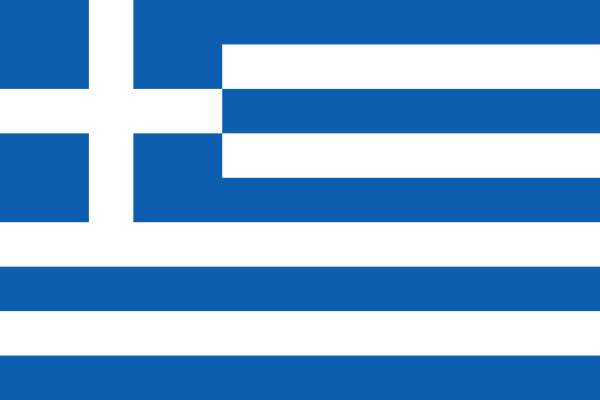
If Greece wins the Eurovision Song Contest, then the market resolves to Yes. Early close condition: This market will close and expire early if the event occurs.


This market will resolve to the country whose candidate for Eurovision 2026 wins. If at any point it is impossible for the listed candidate to win Eurovision 2026 based on the rules of the competition (i.e. they are eliminated), this market may immediately resolve to "No". If no winner is announce

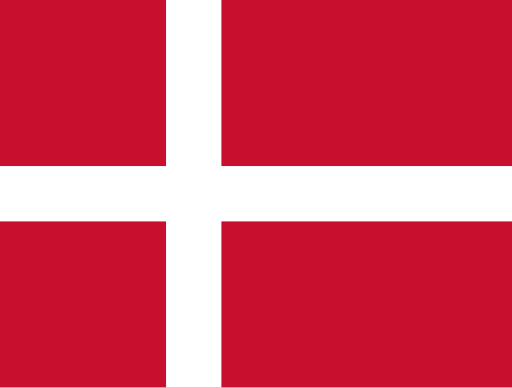
If Denmark wins the Eurovision Song Contest, then the market resolves to Yes. Early close condition: This market will close and expire early if the event occurs.


This market will resolve to the country whose candidate for Eurovision 2026 wins. If at any point it is impossible for the listed candidate to win Eurovision 2026 based on the rules of the competition (i.e. they are eliminated), this market may immediately resolve to "No". If no winner is announce

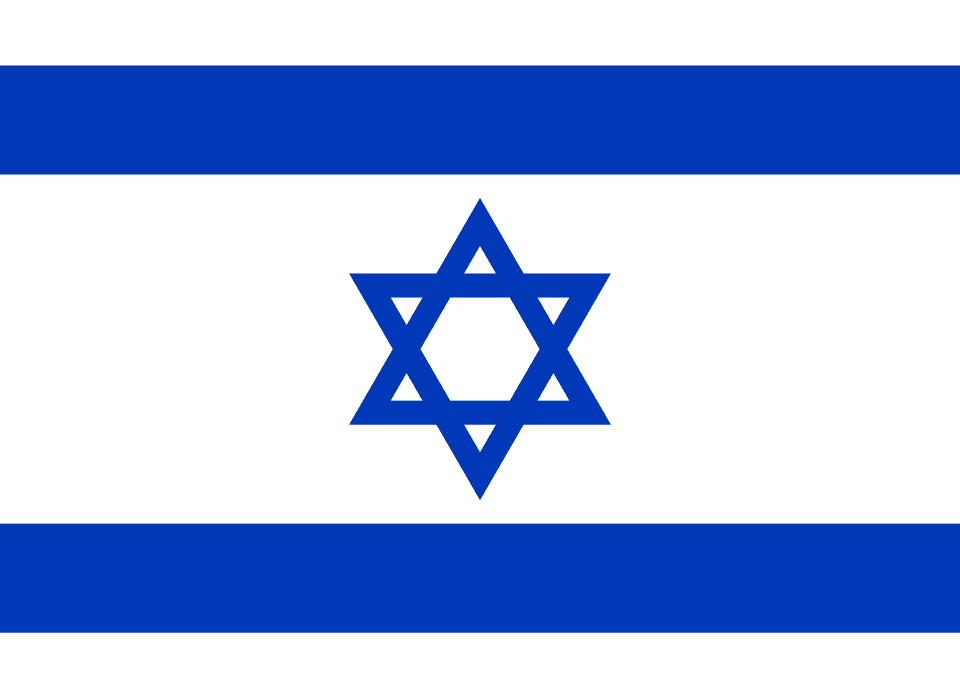
If Israel wins the Eurovision Song Contest, then the market resolves to Yes. Early close condition: This market will close and expire early if the event occurs.


This market will resolve to the country whose candidate for Eurovision 2026 wins. If at any point it is impossible for the listed candidate to win Eurovision 2026 based on the rules of the competition (i.e. they are eliminated), this market may immediately resolve to "No". If no winner is announce

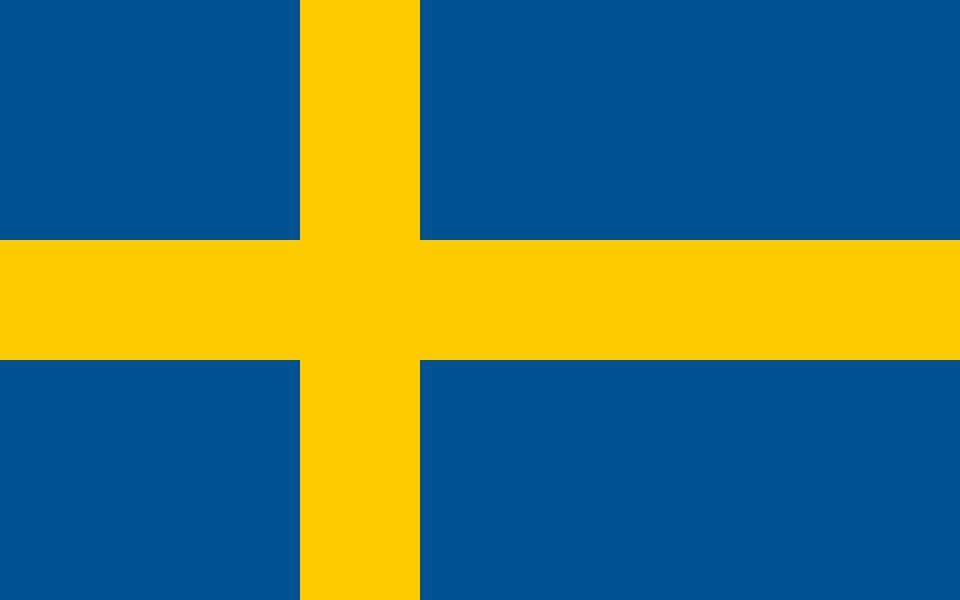
If Sweden wins the Eurovision Song Contest, then the market resolves to Yes. Early close condition: This market will close and expire early if the event occurs.
No related news found
Polymarket
$5.13M
Kalshi
$42.21K
Add this market to your website
<iframe src="https://predictpedia.com/embed/RLPCW2" width="400" height="160" frameborder="0" style="border-radius: 8px; max-width: 100%;" title="Eurovision Winner 2026?"></iframe>