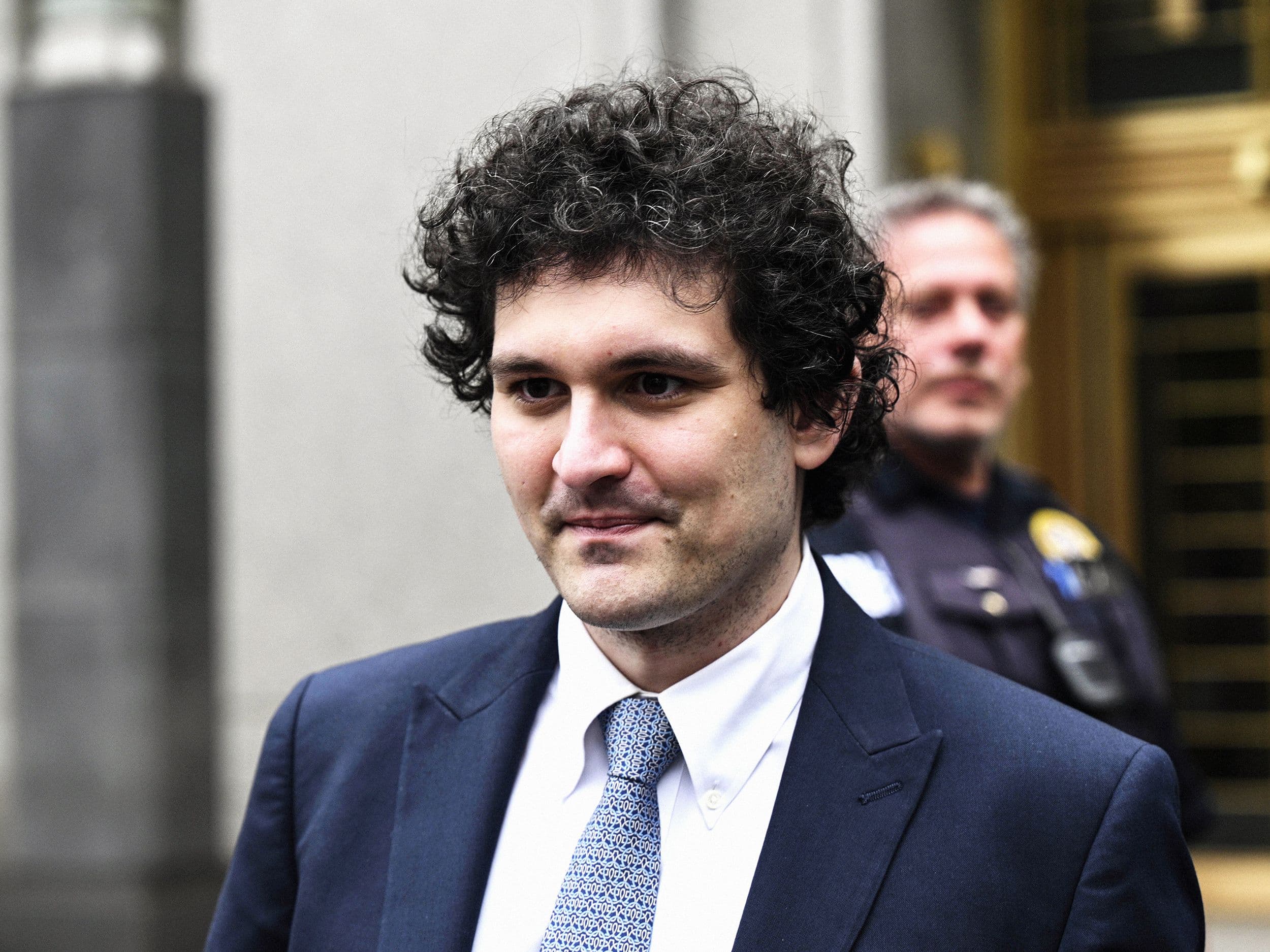
SBF released from custody in 2026?
PM $468.2K
1
1
SBF released from custody in 2026?
PM $468.2K
1
1
AI Analysis
Trader mode: Market mechanics, assumptions and risks
PM $468.2K
Reported volume · provider units
1
Saved contracts
0
Reviewed equivalent pairs
Source snapshot: Oct 18, 2026, 3:00 PM UTC
About This Event
This market will resolve to "Yes" if Sam Bankman-Fried is released from custody by December 31, 2026, 11:59 PM ET. Otherwise, this market will resolve to "No". If Sam Bankman-Fried is released but remains under house arrest, the market will still resolve to "Yes". If Sam Bankman-Fried is released on parole, bond, or any other condition that results in them leaving state custody, the market will resolve to "Yes". Transporting Sam Bankman-Fried to another location of custody (e.g., a different prison, court, or hospital within the correctional system) will not suffice to resolve this market to "Yes". Temporary outings from prison for purposes such as testifying in court or before Congress, while still under the custody of correctional authorities, will not count as a release. The primary resolution source for this market will be official information from government authorities or corrections departments; however, a consensus of credible reporting may also be used.
This saved analysis is awaiting a background update. Its prices and claims may be outdated; compare them with the dated market data above.
Current Market Outlook
Prediction markets give Sam Bankman-Fried only an 8% chance of being released from custody by December 31, 2026. That is a very low probability. The market sees release as possible but unlikely. With $340K in volume on Polymarket, this is a moderately liquid market for a niche legal prediction.
Key Factors Driving the Odds
SBF was sentenced in March 2024 to 25 years in federal prison for fraud, conspiracy, and money laundering related to the FTX collapse. He is currently at the Metropolitan Detention Center in Brooklyn. A 25-year sentence means his projected release date falls around 2048, not 2026.
The narrow path to early release requires either a successful appeal, a presidential pardon, or some other extraordinary legal maneuver. His appeal is pending before the Second Circuit, with oral arguments expected sometime in 2025 or early 2026. Appeals in fraud cases rarely succeed. The Second Circuit overturns less than 10% of federal criminal convictions.
A commutation or pardon from President Biden or Trump is the other route. Biden has been stingy with clemency for white-collar criminals. Trump has shown willingness to pardon allies but SBF donated heavily to Democratic causes, not Republican ones.
What Could Change These Odds
The appeal is the biggest near-term catalyst. If the Second Circuit overturns his conviction or orders resentencing, the odds jump significantly. Oral argument dates have not been set but should be scheduled within the next 6-9 months.
A Trump victory in November 2024 could shift the odds modestly upward. Trump has commuted sentences for non-violent offenders before, though SBF's ties to Democratic donors work against him.
The 8% price already accounts for these possibilities. For the market to move meaningfully, you would need concrete developments like a favorable court ruling or a clemency application being filed. Without either, the price should stay low.
AI-generated analysis based on market data. Not financial advice.
Saved Jul 13, 2026 UTCThis saved content is awaiting a background update. It may contain outdated claims; use the dated market data and provider rules for the latest available information.
Overview
Sam Bankman-Fried (SBF), the founder of the FTX cryptocurrency exchange, was convicted in November 2023 on seven counts of fraud and conspiracy related to the collapse of FTX. He was sentenced in March 2024 to 25 years in federal prison. The prediction market asks whether SBF will be released from custody by December 31, 2026. This includes any form of release that allows him to leave state custody, such as parole, bond, or house arrest. The question is not about a pardon or commutation, but about physical release from incarceration. SBF is currently held at the Metropolitan Detention Center in Brooklyn, New York, following his conviction. His legal team has filed an appeal, arguing that the trial was unfair and that the judge made errors in evidentiary rulings and sentencing. The appeal is pending before the Second Circuit Court of Appeals. If the appeal succeeds, SBF could be granted a new trial or have his sentence reduced, potentially leading to release before 2027. The Bureau of Prisons (BOP) manages federal inmates. SBF, as a nonviolent first-time offender, could be eligible for early release through good conduct credits or participation in the Residential Drug Abuse Program (RDAP), though his sentence length and the nature of his crimes may limit these options. The BOP also has authority to place inmates in home confinement, especially for those with short remaining sentences. Given his 25-year sentence, early release before 2026 would require a successful appeal or a change in sentence by a judge. Interest in this topic stems from the high-profile nature of the FTX collapse, which involved billions of dollars in customer losses and raised questions about cryptocurrency regulation. The prediction market allows traders to bet on the outcome of SBF's legal situation, reflecting beliefs about the likelihood of his appeal or other legal maneuvers succeeding. It also touches on broader questions about the fairness of the justice system for wealthy defendants and the potential for political influence in high-profile cases.
Historical Context
The collapse of FTX in November 2022 was one of the largest financial frauds in U.S. history, comparable to the Enron scandal. FTX, once valued at $32 billion, filed for bankruptcy after a run on deposits revealed that customer funds had been misappropriated to Alameda Research, a hedge fund also owned by SBF. The U.S. Department of Justice charged SBF with wire fraud, securities fraud, and money laundering. His trial began in October 2023 and lasted about a month. SBF's conviction and 25-year sentence are part of a broader pattern of federal crackdowns on cryptocurrency fraud. Previous high-profile cases include the conviction of Ross Ulbricht (Silk Road) in 2015, who received a life sentence without parole, and the sentencing of Changpeng Zhao (Binance) in 2024 to 4 months in prison for money laundering violations. Compared to these, SBF's sentence is longer than Zhao's but shorter than Ulbricht's, reflecting the scale of the fraud. Appeals in federal criminal cases typically take 12-18 months to resolve. The Second Circuit Court of Appeals, which will hear SBF's appeal, has a mixed record on reversing convictions in white-collar cases. In 2023, it upheld the conviction of former Goldman Sachs banker Roger Ng for 1MDB fraud. However, it also vacated the conviction of former New York State Assembly Speaker Sheldon Silver in 2019, though Silver was later retried and convicted. The outcome of SBF's appeal will depend on whether the court finds errors in Judge Kaplan's rulings, particularly regarding witness testimony and jury instructions.
Why It Matters
The outcome of SBF's case has implications for the cryptocurrency industry and the broader financial system. If SBF is released early, it could signal that even massive fraud can be punished leniently, potentially emboldening other crypto executives to take risks. Conversely, a full 25-year sentence would reinforce the message that financial fraud, especially in emerging markets, carries severe consequences. The case also affects the thousands of FTX customers who lost money; many have not been fully repaid, and SBF's release could be seen as a lack of accountability. On a personal level, SBF's release would affect his family and close associates. His parents, both Stanford Law professors, have been involved in his legal defense and are reportedly under financial strain. The case also touches on issues of wealth inequality in the justice system: SBF's $250 million bail package was one of the largest ever, but it was revoked after he allegedly tampered with witnesses. His ability to afford top-tier legal representation contrasts with the experience of less wealthy defendants.
Frequently Asked Questions
Can Sam Bankman-Fried get out of prison early?
Yes, but only through a successful appeal, a sentence reduction by a judge, or through Bureau of Prisons programs like good conduct credits or home confinement. Given his 25-year sentence, early release before 2027 is unlikely without an appeal victory.
What is the status of SBF's appeal?
The appeal is pending before the Second Circuit Court of Appeals. Briefing is ongoing, with oral arguments expected in mid-2025. A decision may come in late 2025 or early 2026.
Could SBF be released on house arrest or parole?
Federal law does not have parole. However, the Bureau of Prisons can place inmates in home confinement for the last 10-20% of their sentence. For a 25-year sentence, that would not apply until he has served about 20 years. House arrest as part of a sentence modification would require a judge's order.
What would happen if SBF's appeal succeeds?
If the Second Circuit reverses his conviction, SBF could be granted a new trial. If the court vacates his sentence, a new sentencing hearing would be held, which could result in a shorter sentence or even time served, leading to immediate release.
How does SBF's sentence compare to other crypto fraud cases?
SBF's 25-year sentence is longer than Changpeng Zhao's 4 months for Binance violations, but shorter than Ross Ulbricht's life sentence for Silk Road. It is in line with sentences for major financial frauds like Bernie Madoff (150 years) and Jeffrey Skilling (24 years).
AI-written background. References identify the evidence used; Wikipedia links under Learn More are additional reading. Prices and provider rules are dated snapshots. This is not financial advice.
Related prediction markets
Prices are catalog snapshots and may have changed. Check each market's rules and observation time.

Nicolás Maduro released from custody by...?
PM $2.69M
Maduro's Wife Cilia Flores released from custody by...?
PM $1.38M
Andrew Tate released from custody by...?
PM $310.6K
College Football: Top 25 Ranked Teams on Oct 18 AP Poll
K 15.5K contractsCollege Football: Top 10 Ranked Teams on Oct 18 AP Poll
K 7.7K contractsCollege Football: Top 25 Ranked Teams on Oct 25 AP Poll
K 6.1K contractsMarket Insights
Price gaps of 2 pp+
0
Reviewed equivalent pairs
0
No currently reviewed equivalent pairs with both binary Yes prices are available.
Price differences do not establish arbitrage. Check each pair's review, current order prices, fees and settlement rules.