$3.84K
1
15

$3.84K
1
15
Trader mode: Actionable analysis for identifying opportunities and edge
This market will resolve according to the next UFC fighter to be ranked 1st in the UFC Pound-For-Pound rankings, following Islam Makhachev. If Islam Makhachev remains #1 in the UFC Pound-For-Pound rankings through December 31, 2026, 11:59 PM ET, or there is otherwise no next UFC fighter to be ranked 1st in the Pound-For-Pound rankings within this timeframe, this market will resolve to “Islam/No Next #1 in 2026”. The primary resolution source for this market will be official information from th
Right now, traders on prediction markets see the UFC's top spot as a true toss-up. They give Islam Makhachev, the current champion, roughly a 50/50 chance of holding the #1 pound-for-pound ranking through the end of 2026. This means the collective bet is that there is an equal chance he either keeps his crown or gets dethroned by another fighter within the next two years.
This split opinion comes from two clear arguments. First, Makhachev has been dominant. He convincingly beat Alexander Volkanovski twice and has cleared out many top contenders in the lightweight division. His style is difficult to solve, which supports the case for his continued reign.
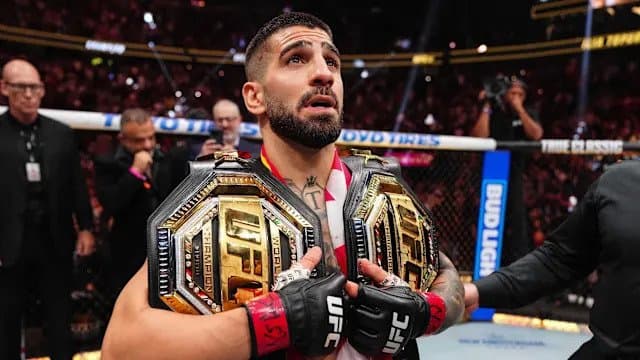
Second, there are credible threats on the horizon. The most talked-about is Ilia Topuria, the undefeated featherweight champion. Topuria's knockout win over Volkanovski was stunning, and a potential super-fight between him and Makhachev is a major topic. Other champions like Alex Pereira (light heavyweight/heavyweight) also have strong cases if they keep winning impressively. The market is essentially weighing Makhachev's proven track record against the rising momentum of other champions.
The prediction will swing with fight announcements and results. Watch for the official booking of a Makhachev vs. Topuria title fight, which would be the most direct path to a new #1. The outcome of Makhachev's next title defense, expected in late 2024 or early 2025, is critical. Similarly, if Topuria, Pereira, or another champion like Sean O'Malley suffers an unexpected loss, it would greatly boost the odds for "Islam/No Next #1."
Prediction markets have a decent record with sports outcomes, as they quickly incorporate new information like fight results or injuries. However, forecasting two years out in a volatile sport like MMA is very difficult. A single punch can change everything. These odds are a snapshot of current sentiment based on known contenders and scheduled fights, but an unknown future contender could always emerge. The market is best viewed as a live consensus on today's landscape, not a firm prophecy.
The market is currently pricing a 46% chance that Islam Makhachev remains the UFC's Pound-For-Pound #1 through the end of 2026. This price signals significant uncertainty. It suggests traders see a near-even split between Makhachev maintaining his dominance and a new champion rising to the top spot within the next two years. The "Islam/No Next #1" contract is the market's most liquid, with other fighter-specific contracts like Leon Edwards (17%) and Jon Jones (13%) trailing. The thin $4,000 total volume indicates this is a speculative, low-liquidity market where prices could shift dramatically with new information.
Two primary factors explain the near-50/50 split. First, Islam Makhachev's recent performances establish him as a clear favorite. His decisive victories over top contenders like Dustin Poirier and a dominant record make him difficult to unseat. The Pound-For-Pound ranking often favors an active, dominant champion, which Makhachev currently is. Second, the 46% price reflects real threats to his reign. A rematch with Arman Tsarukyan is likely and poses a major stylistic challenge. Furthermore, other champions like Leon Edwards or a returning Jon Jones could build compelling cases with high-profile wins, forcing media voters to reconsider the top spot. The market is effectively weighing Makhachev's proven skill against the inevitable volatility of MMA competition over a two-year horizon.
Fight announcements and their outcomes will be the direct catalyst for price movement. A confirmed date for Makhachev vs. Tsarukyan II would immediately test the incumbent's 46% probability. A decisive win for Makhachev could push his contract price toward 60% or higher, while a loss would cause it to crash and redistribute value to other contenders. Conversely, if Leon Edwards defends his welterweight title against a star like Shavkat Rakhmonov and wins impressively, his 17% contract would see significant buying pressure. An official retirement announcement from Jon Jones would render his 13% contract worthless. The market will remain highly reactive to UFC booking decisions throughout 2025.
AI-generated analysis based on market data. Not financial advice.
This prediction market focuses on identifying the next UFC fighter to reach the top of the organization's official pound-for-pound rankings after the current champion, Islam Makhachev. The UFC's pound-for-pound list represents an attempt to rank fighters across all weight classes based on their overall skill, accomplishments, and dominance, irrespective of size. It is a subjective ranking maintained by a panel of media members and updated after each UFC event, serving as a barometer for who is considered the best mixed martial artist in the world at any given time. The market specifically resolves based on the next fighter to be ranked number one, with a deadline of December 31, 2026. If Makhachev retains the top spot through that date, the market resolves to 'Islam/No Next #1 in 2026.' The primary resolution source is official information from the UFC. Interest in this market stems from the volatile nature of MMA, where a single loss can dramatically alter a fighter's standing. The pound-for-pound throne is the ultimate recognition in the sport, and transitions at the top are major events that generate intense debate among fans, analysts, and bettors. The current landscape features several dominant champions and rising contenders whose career trajectories could intersect with the number-one ranking within the next few years. This market allows participants to speculate on which fighter's combination of performance, activity, and public perception will propel them to the summit.
The UFC's official pound-for-pound rankings were introduced in February 2013, created to foster debate and provide a cross-divisional perspective on fighter excellence. The first number-one ranked fighter was then-light heavyweight champion Jon Jones. Historically, the top position has changed hands due to a combination of factors: a champion suffering a loss, a dominant champion retiring, or the emergence of a fighter with such a spectacular run that public and media consensus forces a change. For example, Jon Jones vacated the top spot in 2015 after being stripped of his title, allowing Demetrious Johnson to briefly claim it. Conor McGregor's rise and dual-champion status briefly made him number one in 2016. The longest uninterrupted reign belongs to Jon Jones, who spent over five years cumulatively at number one across different periods. Khabib Nurmagomedov retired in 2020 while holding the top spot, which then passed to Jon Jones again before eventually moving to Alexander Volkanovski. Volkanovski's nearly three-year reign ended when he lost to Islam Makhachev in 2023, though Makhachev did not immediately take the top spot. He finally secured it after a second win over Volkanovski in 2024. This history shows that the pound-for-pound crown is not automatically tied to a single championship belt but is a fluid title influenced by wins, losses, activity, and perceived greatness.
The pound-for-pound ranking is more than a list; it is a central narrative device in combat sports. It drives media coverage, fan engagement, and debate, directly influencing how fighters are marketed and perceived. The fighter holding the number-one spot often commands greater pay-per-view appeal and sponsorship opportunities, translating to significant economic benefit for both the athlete and the UFC. For the organization, transitions at the top create storylines that can be leveraged to promote events and attract new viewers. The question of who is the 'best fighter in the world' transcends individual weight classes and creates a unifying topic for the global MMA community. A change at the top can signal a generational shift, impacting the promotional focus of the entire company. It affects matchmaking, as fights involving the pound-for-pound king or top contenders carry added prestige. For prediction market participants, accurately forecasting this change requires analyzing not just fighting skill, but also scheduling, injury risks, and the subjective nature of media voting, making it a complex and engaging speculative exercise.
As of late 2024, Islam Makhachev firmly holds the number-one position following his decisive victory over Alexander Volkanovski. The immediate contenders below him, including Leon Edwards, Alex Pereira, and Ilia Topuria, are all scheduled for or coming off title defenses. Jon Jones is recovering from injury with his next fight uncertain, which could affect his standing due to inactivity. The landscape is active, with several champions building compelling cases. The next major events that could influence the rankings are the scheduled title defenses for Edwards, Pereira, and Topuria in late 2024 and early 2025. The market is watching to see if any of these fighters can deliver such dominant performances that they create undeniable pressure to be moved to the top spot.
A panel of over 50 MMA media members from around the world votes on the rankings. Each voter submits their own top-15 list, and the compiled results create the official rankings. Voters are instructed to base their choices on a fighter's overall skill, recent performances, quality of opposition, and dominance.
It is extremely rare. Typically, a loss, especially for a champion, results in a drop in the rankings. However, context matters. For instance, after a close decision loss in a champion vs. champion fight, a fighter might retain a high ranking, but they would almost certainly lose the top spot.
In theory, yes, but it has never happened in the history of the official UFC rankings. The system is heavily biased toward current champions. A non-champion would need an extraordinary winning streak against top contenders to even be considered for the number-one position.
The rankings are updated weekly, typically on Tuesday mornings after UFC events. Significant changes most commonly occur in the week following a pay-per-view event where a top-ranked fighter competes.
When a top-ranked fighter retires, they are removed from the rankings in the next update. The fighter ranked second usually moves up to become the new number one, as happened when Khabib Nurmagomedov retired in 2020.
Educational content is AI-generated and sourced from Wikipedia. It should not be considered financial advice.
15 markets tracked

No data available
| Market | Platform | Price |
|---|---|---|
![]() | Poly | 46% |
![]() | Poly | 28% |
![]() | Poly | 25% |
![]() | Poly | 22% |
![]() | Poly | 21% |
![]() | Poly | 19% |
![]() | Poly | 18% |
![]() | Poly | 17% |
![]() | Poly | 7% |
![]() | Poly | 2% |
![]() | Poly | 2% |
![]() | Poly | 0% |


No related news found
Add this market to your website
<iframe src="https://predictpedia.com/embed/SV8U-L" width="400" height="160" frameborder="0" style="border-radius: 8px; max-width: 100%;" title="Who will be the next UFC Pound-For-Pound #1 in 2026?"></iframe>