$9.37K
1
1

1 market tracked

No data available
| Market | Platform | Price |
|---|---|---|
![]() | Poly | 28% |
Trader mode: Actionable analysis for identifying opportunities and edge
This market will resolve to "Yes" if the US military or federal government downs or disables any Mexican cartel drone by any means (including kinetic, laser, jammer, etc.) by March 31, 2026, 11:59 PM ET. Otherwise, this market will resolve to “No”. Any drone whose operation is broadly attributed to a Mexican drug cartel or any Narco-trafficking organization based in Mexico by a consensus of credible reporting will be considered a “Mexican cartel drone.” The resolution source for this market wi
Prediction markets currently give about a 28% chance that the US military or federal government will shoot down or disable a Mexican cartel drone before March 31, 2026. In simpler terms, traders see this as unlikely, roughly a 1 in 4 chance. This suggests the collective view is that such a direct kinetic action by the US against cartel assets in Mexican airspace is not the most probable outcome within this timeframe.
The low probability reflects real diplomatic and operational complexities. First, cartels increasingly use drones for surveillance and smuggling, but they are typically small commercial models flying within Mexico. A US decision to physically destroy one would be a major escalation, directly challenging Mexican sovereignty. Mexico has historically been sensitive to US military operations on its territory.
Second, current policy focuses on cooperation and intelligence sharing. Joint efforts likely prioritize law enforcement and interdiction on the ground over aerial engagements. The political cost of a shootdown, which could resemble an act of war, currently seems to outweigh the tactical benefit for the US.
Finally, the two-year window matters. While drone use by cartels is growing, the threshold for a US kinetic response remains very high. Markets are betting that non-destructive countermeasures, like jamming, or continued diplomatic pressure will be the preferred tools.
There is no single scheduled event for this. The probability could shift suddenly based on incidents or policy changes. Watch for official reports of a cartel drone incursion into US airspace, which would increase pressure for a response. Major seizures of cartel drone fleets by Mexican authorities could reduce the perceived need for US action. Statements from US Southern Command or the State Department about changing rules of engagement regarding cartel drones would also be a strong signal.
Prediction markets are generally reliable at aggregating expert views on geopolitical and security topics, especially when clear rules exist. However, this is a niche event with relatively low trading volume, which can make prices more volatile to new information. Forecasts for low-probability, high-impact events like this can sometimes miss the mark if an unexpected crisis forces a rapid policy shift. The market is likely weighing the steady trend of cartel drone use against the significant diplomatic barrier to a US shootdown.
Prediction markets assign a 28% probability that the US military or federal government will down a Mexican cartel drone by March 31, 2026. This price indicates the market views such an event as unlikely within the timeframe. With only $9,000 in total volume, liquidity is thin, meaning a single large trade could shift the odds significantly. The low probability suggests traders see either a low likelihood of a drone encounter or a high bar for public, attributable US military action.
The primary factor is operational precedent. While US authorities have intercepted cartel drones at the border using jamming technology, these are typically law enforcement actions by agencies like CBP. The market specifies a "military or federal government" action, which could encompass a kinetic shootdown, a more escalatory act with no clear public precedent. The market is likely pricing in the gap between routine border interdiction and a definitive, publicly acknowledged defensive strike.
Second, the definition requires attribution to a cartel by credible reporting. Cartels often use cheap, commercially available drones for surveillance and smuggling, making attribution after destruction difficult. An event would likely require a clear, publicized incident that forces an official US response, such as a drone incursion perceived as a direct threat to military or government assets.
A near-term catalyst would be a notable escalation in drone activity. If cartels begin using drones more aggressively against US law enforcement or military patrols, or if a drone is used in a provocative attack on US soil, the probability would spike. Official policy shifts could also move the market. Public statements from US Southern Command or the Department of Defense explicitly authorizing kinetic responses to cartel drones would be a clear signal, likely increasing the "Yes" probability ahead of any actual event.
The long resolution window, over two years, means this is a market on geopolitical trendlines, not immediate news. Sustained increases in drone-related incidents at the border reported in outlets like the Wall Street Journal or Associated Press would gradually build pressure for a kinetic response, raising the odds well before the deadline.
AI-generated analysis based on market data. Not financial advice.
$9.37K
1
1
This prediction market asks whether the United States military or federal government will down or disable a drone operated by Mexican drug cartels by March 31, 2026. The question reflects a growing security concern along the U.S.-Mexico border, where cartels have increasingly adopted unmanned aerial systems for surveillance and smuggling operations. The resolution criteria specify that any drone broadly attributed to a Mexican cartel by credible reporting qualifies, and the U.S. action can include kinetic strikes, directed-energy weapons like lasers, or electronic jamming. This is not a hypothetical scenario but an extension of existing military and law enforcement activities in the region. Mexican cartels, particularly the Sinaloa Cartel and the Jalisco New Generation Cartel (CJNG), have integrated drones into their operations over the past decade. These organizations use drones primarily for reconnaissance to monitor law enforcement movements and to smuggle small quantities of high-value drugs like fentanyl across remote border sections. The technological sophistication of these drones has evolved from commercial, off-the-shelf models to custom-built aircraft with greater range and payload capacity. This shift has turned the skies along the border into a new domain for the cartel conflict. Interest in this market stems from several recent developments. In December 2023, the U.S. Department of Homeland Security confirmed that cartel drones had crossed into U.S. airspace 'hundreds of times.' U.S. Customs and Border Protection has reported a sharp increase in drone incursions, with over 10,000 sightings in recent years. Military commanders have publicly stated that cartel drones are considered a threat to aviation safety and border security. The market essentially bets on whether these incursions will escalate to a point where the U.S. decides to use force to eliminate a specific drone, marking a significant tactical escalation in cross-border counter-narcotics operations. The legal and diplomatic implications of such an action are complex. The U.S. would likely need to justify downing a drone over Mexican territory or in international airspace as an act of self-defense or under existing security cooperation agreements. Mexico has historically been sensitive to U.S. military operations on its sovereignty. A kinetic strike against a cartel drone could test the limits of the bilateral security framework established under the Mérida Initiative. This market therefore tracks both a specific tactical event and the broader state of U.S.-Mexico security relations.
The use of drones by Mexican cartels began emerging around 2010, initially for filming propaganda videos. By 2015, law enforcement on both sides of the border documented their adaptation for logistical purposes. A pivotal case occurred in January 2017, when CBP agents in San Diego, California, apprehended individuals using a drone to fly methamphetamine across the border fence. This demonstrated the practical utility of drones for evading ground sensors and personnel. The legal and operational precedent for downing drones was established in domestic U.S. airspace before cartels became a focus. In 2019, the Federal Aviation Administration (FAA) granted the Department of Defense and the Department of Homeland Security expanded authorities to identify, track, and mitigate drone threats to critical infrastructure and public safety. This regulatory change, prompted by incidents like the 2018 drone sightings that shut down Gatwick Airport in the UK, created the legal framework for kinetic action. In 2020, CBP began testing and deploying counter-drone systems, including jamming technology, at several border crossings. Cross-border security cooperation has a fraught history. The Mérida Initiative, a U.S.-Mexico security partnership launched in 2008, has faced tensions over sovereignty and human rights. Incidents like the 2020 U.S. arrest of former Mexican Defense Secretary Salvador Cienfuegos, later released under Mexican pressure, strained collaboration. Past kinetic actions, such as the 2012 'Fast and Furious' operation that allowed guns to 'walk' into Mexico, have created lasting distrust. Any decision to shoot down a cartel drone would occur within this context of delicate bilateral relations and established, if sometimes contentious, protocols for joint operations.
A U.S. decision to down a cartel drone would signal a major shift in border security strategy from interdiction to active defense. It would treat cartel aerial incursions not merely as smuggling attempts but as potential national security threats akin to hostile surveillance. This could justify the allocation of more advanced military detection and engagement systems to the border, potentially including technologies previously reserved for war zones. The financial cost of such a posture would be significant, involving new hardware, training, and continuous patrols. The political and diplomatic consequences would be immediate. Mexico could view the action as a violation of its sovereignty, especially if the engagement occurs over its territory. This could jeopardize broader security cooperation, including intelligence sharing and joint investigations into cartel leadership. Domestically, the event would become a flashpoint in U.S. immigration and border policy debates, with different political factions using it to argue for either a more militarized border or for addressing the root causes of drug demand and cartel power through other means.
As of late 2024, U.S. authorities have not publicly acknowledged downing a cartel-operated drone. However, the infrastructure and legal authority to do so are actively being put in place. In February 2024, CBP awarded a contract for portable counter-drone systems for its Border Patrol Tactical Unit (BORTAC). U.S. military exercises, such as those conducted by NORTHCOM, increasingly include scenarios involving hostile drone swarms. Diplomatic discussions between U.S. and Mexican officials on security cooperation continue, with drones reportedly a regular agenda item. The operational threshold for a kinetic engagement remains undefined publicly.
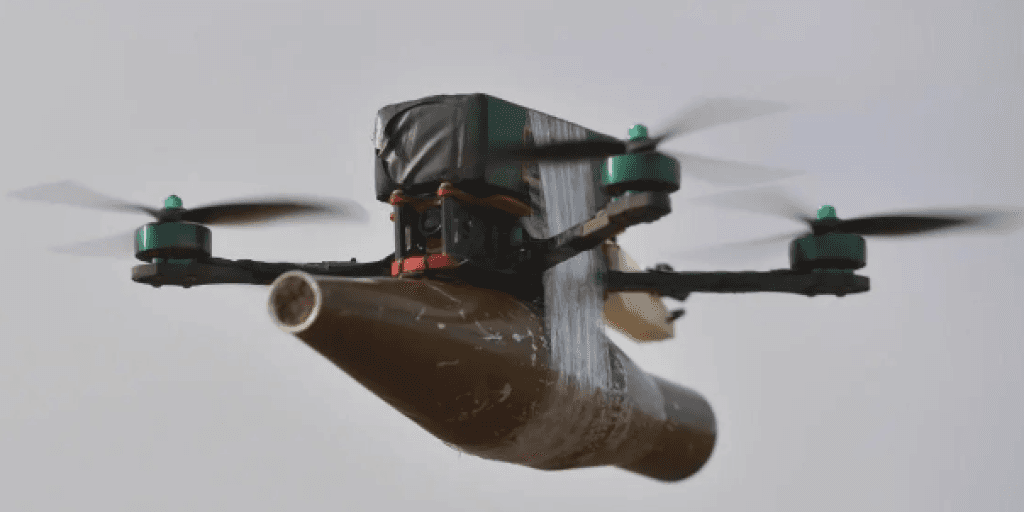
Cartels primarily use commercially available quadcopters and fixed-wing drones, often purchased from Chinese manufacturers like DJI. These are frequently modified with extended-range fuel tanks, GPS waypoint navigation, and custom payload release mechanisms. Some evidence suggests cartels are also experimenting with larger, homemade drones.
Educational content is AI-generated and sourced from Wikipedia. It should not be considered financial advice.

No related news found
Add this market to your website
<iframe src="https://predictpedia.com/embed/TNguo3" width="400" height="160" frameborder="0" style="border-radius: 8px; max-width: 100%;" title="US downs a Mexican cartel drone by March 31?"></iframe>