$1.70K
1
1

1 market tracked

No data available
| Market | Platform | Price |
|---|---|---|
![]() | Poly | 44% |
Trader mode: Actionable analysis for identifying opportunities and edge
On February 28, Elon Musk posted that it was likely Starship would become fully reusable in 2025. You can see the X post here: https://x.com/elonmusk/status/1895598258225106984 This market will resolve to "Yes" if SpaceX or Elon Musk announces that Starship is fully reusable by December 31, 2026, 11:59 PM ET. Otherwise, this market will resolve to "No". Note, this market refers to the Starship upper stage and does not require reusability for the Super-Heavy booster. For this market to resolve
AI-generated analysis based on market data. Not financial advice.
$1.70K
1
1
This prediction market topic concerns the development timeline for achieving full reusability of the SpaceX Starship upper stage. The specific question is whether SpaceX or its CEO, Elon Musk, will announce that the Starship vehicle is fully reusable by December 31, 2026. This prediction is based on a public statement Musk made on February 28, 2024, via the social media platform X, where he indicated it was 'likely' Starship would achieve this milestone in 2025. The market resolves on the announcement of the achievement, not necessarily its operational certification. The focus is exclusively on the Starship spacecraft itself, the upper stage of the combined launch system, and does not include the Super Heavy booster, which is already designed for reuse. The topic sits at the intersection of aerospace engineering, commercial spaceflight, and technological forecasting, attracting interest from investors, space enthusiasts, and industry analysts. The core of the debate hinges on SpaceX's aggressive development pace, known for ambitious timelines, against the immense technical challenges of creating a rapidly reusable, orbital-class spacecraft. Recent test flights have provided critical data but also highlighted the remaining hurdles, making the 2025-2026 window a focal point for speculation about the future of space access costs and capabilities.
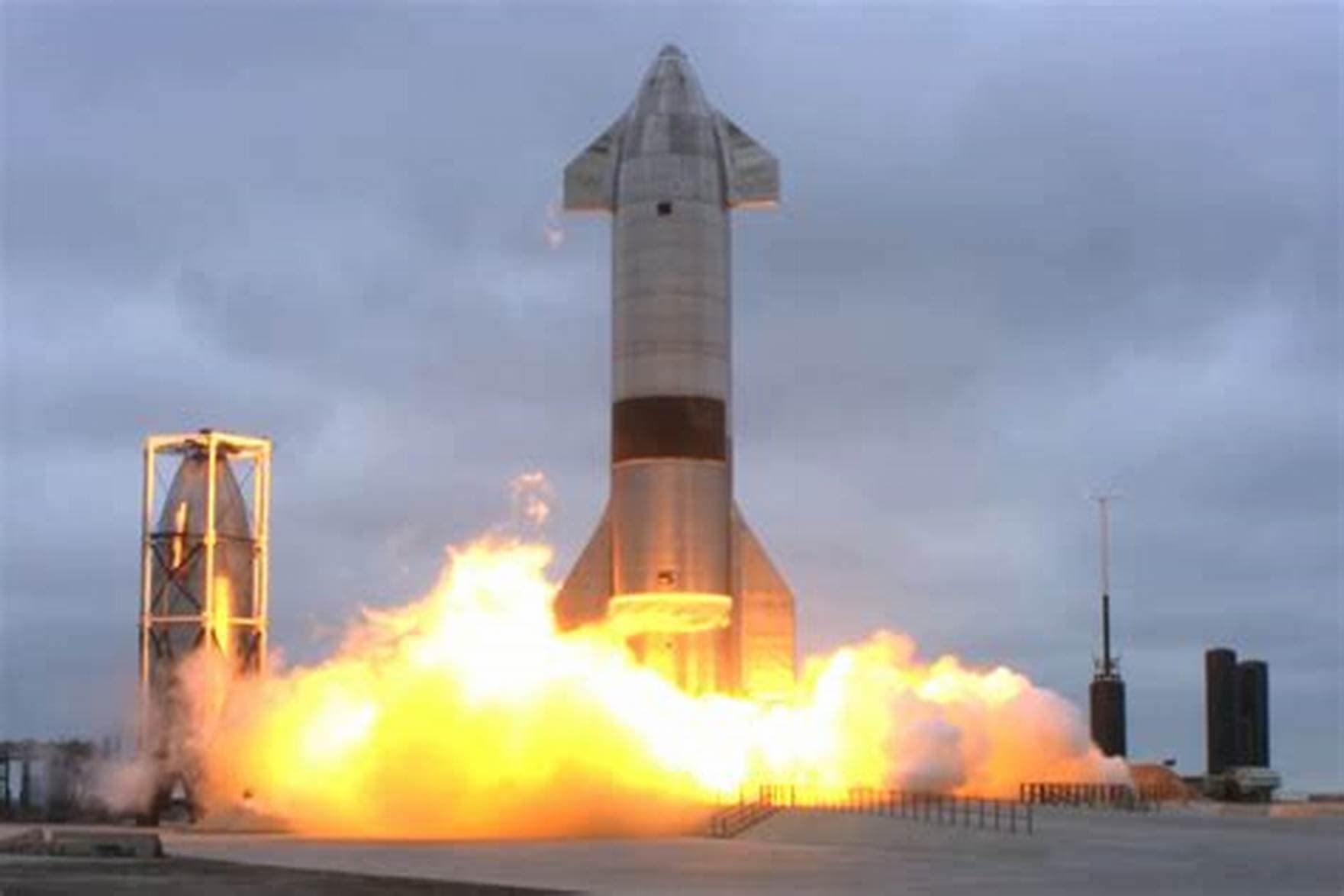
The pursuit of reusable rockets is a decades-old goal in aerospace to dramatically reduce the cost of space access. Prior to SpaceX, the NASA Space Shuttle was partially reusable, but its refurbishment was so extensive and expensive that it failed to achieve the desired cost savings. SpaceX's own journey began with the Falcon 1 and Falcon 9 rockets. A pivotal moment was the first successful landing of a Falcon 9 first stage in December 2015, proving the viability of vertical rocket recovery. This was followed by the first re-flight of a landed booster in March 2017. Falcon 9 boosters have since been reused over 300 times, with some individual boosters flying more than 20 missions. The Starship program, originally unveiled as the Interplanetary Transport System in 2016, represents the next evolutionary step, aiming for full and rapid reusability of both stages. Early prototype tests of sub-scale vehicles like Starhopper (2019) and serial-numbered Starship prototypes (SN8-SN15) from 2020 to 2021 tested atmospheric flight and landing profiles, resulting in several explosive failures before SN15's successful landing in May 2021. This iterative, test-fast-fail-fast approach established the development culture now being applied to the orbital-class vehicles.
Achieving full reusability for Starship would represent a paradigm shift in space economics. Current launch costs for large payloads range in the tens to hundreds of millions of dollars per flight. Musk has stated a long-term goal of reducing the cost of a Starship launch to just a few million dollars, akin to the cost of a commercial airline flight. This order-of-magnitude reduction would fundamentally alter what is possible in space, enabling large-scale space infrastructure, more affordable scientific missions, space-based manufacturing, and making concepts like human settlement on Mars economically plausible. Beyond economics, a successfully reusable Starship would solidify U.S. leadership in the new space economy and provide NASA with a transformative vehicle for its Artemis moon missions and beyond. It would also create new markets and industries while potentially disrupting existing satellite launch and space services providers. The ripple effects would be felt across national security, telecommunications, and scientific research.
Following the fourth integrated flight test in early 2025, which saw successful stage separation and controlled re-entry of the Starship upper stage, SpaceX is preparing for a fifth flight. The company is implementing lessons learned from previous flights, particularly focusing on the performance of the heat shield during re-entry and the reliability of the Raptor engines. Regulatory approval from the FAA for the next launch is pending. Meanwhile, construction of additional Starship and Super Heavy prototypes continues at Starbase, indicating a commitment to a high-tempo test campaign. Public statements from SpaceX leadership in late 2024 and early 2025 have emphasized progress but remained cautious about specific timelines for achieving full reusability.
For this market, 'fully reusable' means the Starship upper stage spacecraft can be launched to orbit, return to Earth, and be prepared for a subsequent launch with only minimal refurbishment, similar to an aircraft. It specifically excludes the Super Heavy booster, which is designed for reuse separately. The resolution depends on an official announcement from SpaceX or Elon Musk declaring this capability has been achieved.
No, as of early 2025, no Starship upper stage has been reused. All integrated test flights to date have involved new Starship vehicles. The program is still in the development and testing phase, with the goal of eventually recovering and re-flying the same vehicle multiple times.
Starship is far more ambitious. It is designed to be fully reusable, meaning both stages, and must survive the extreme heat of atmospheric re-entry from orbital velocities, which is much more severe than the Falcon 9 first stage's return from a suborbital trajectory. It also must be refueled in orbit for many missions and land propulsively on other celestial bodies.
The primary challenges include developing a heat shield system robust enough for frequent orbital re-entries, ensuring the Raptor engines can endure multiple flights without major refurbishment, and perfecting the complex propellant transfer in orbit technology needed for missions beyond low Earth orbit.
NASA's chosen Human Landing System (HLS) is a variant of Starship. Rapid reusability of the standard Starship would lower operational costs and demonstrate the core technologies needed for the lunar lander, which must be refueled by multiple tanker Starship flights in orbit. Delays in achieving reuse could impact the Artemis mission schedule.
Educational content is AI-generated and sourced from Wikipedia. It should not be considered financial advice.
Share your predictions and analysis with other traders. Coming soon!

No related news found
Add this market to your website
<iframe src="https://predictpedia.com/embed/U6hYDp" width="400" height="160" frameborder="0" style="border-radius: 8px; max-width: 100%;" title="SpaceX Starship fully reusable before 2027?"></iframe>