$2.34M
1
7

$2.34M
1
7
Trader mode: Actionable analysis for identifying opportunities and edge
Vietnam’s Prime Minister is selected through internal decisions of the Communist Party of Vietnam. The Party is scheduled to hold its 14th National Congress from January 19 to January 25, 2026, after which the National Assembly of Vietnam is expected to formally elect the next Prime Minister. This market will resolve to the next individual who is formally elected by the National Assembly and officially assumes office as Prime Minister of Vietnam. To count for resolution, the individual must fo
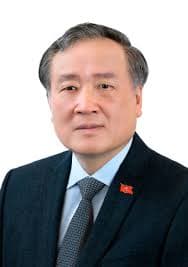
Prediction markets currently give Lê Minh Hưng a 78% chance of becoming Vietnam's next Prime Minister. In simpler terms, traders see this as a very likely outcome, roughly a 4 in 5 probability. This shows strong collective confidence that he will be the successor to the current Prime Minister, Phạm Minh Chính. The formal election is expected shortly after the Communist Party's 14th National Congress concludes on January 25, 2026.
The high probability for Lê Minh Hưng is based on his career path and recent political moves. He is the current Governor of the State Bank of Vietnam, a role often seen as a stepping stone to higher office. In Vietnam's political system, top positions are decided through consensus within the Communist Party's leadership, and candidates are typically groomed and signaled well in advance.
His promotion to the Politburo, the party's top decision-making body, in 2023 was a major signal. This move placed him among the country's most powerful leaders and made him eligible for one of the "four pillar" top positions, which includes the Prime Minister role. There has been little public indication of another candidate being prepared for this specific succession, which the market interprets as a clear path for him.
All attention is on the ongoing 14th National Congress of the Communist Party of Vietnam, which runs from January 19 to January 25, 2026. This closed-door meeting is where the party's leadership lineup for the next term is decided. While the formal vote by the National Assembly will happen after the congress, the real decision is made here. Any official announcement of the new Politburo ranking or the proposed candidate for Prime Minister during or immediately after the congress will be the definitive signal. A surprise candidate emerging from the congress is the main event that could shift the current prediction.
For opaque political processes like leadership succession in one-party states, prediction markets can be insightful but carry unique risks. They are good at aggregating available signals, like official promotions and expert analysis of political norms. However, their accuracy depends on the information leaking into the public domain. The final decision is made by a very small group behind closed doors, and a last-minute consensus shift would not be reflected in the market until after it happened. For this type of event, high confidence odds often point to a settled internal party decision, but they cannot account for an entirely secret, unexpected outcome.
Prediction markets assign a 78% probability that Lê Minh Hưng will become Vietnam's next Prime Minister. This price, translating to roughly 4-to-1 odds, indicates the market views his appointment as the overwhelming consensus outcome. With $2.3 million in total volume, this is a highly liquid political prediction market, giving significant weight to the current pricing. The resolution will follow the Communist Party of Vietnam's 14th National Congress in January 2026 and the subsequent formal election by the National Assembly.
Lê Minh Hưng's status as the incumbent Governor of the State Bank of Vietnam since 2024 is the primary factor. In Vietnam's political system, the Prime Minister role has increasingly been filled by officials with deep economic and financial management experience, a profile Hưng exemplifies. His recent promotion to the Politburo, the party's top decision-making body, in May 2024 is a critical signal of elite support and a typical prerequisite for the premiership. The market interprets this rapid ascent as a clear grooming process, discounting the chances of other potential candidates like Minister of Public Security Tô Lâm or Permanent Deputy Prime Minister Trần Lưu Quang.
The major risk to this high-confidence prediction is the opaque nature of the Communist Party's internal deliberations ahead of the 2026 Congress. While Hưng is the frontrunner, factional dynamics within the Politburo could shift, potentially elevating an alternative candidate who also balances economic credentials with political loyalty. Any unexpected economic instability or a significant shift in Vietnam's anti-corruption campaign before the Congress could alter the calculus. The market will closely watch for any changes in Hưng's official portfolios or public appearances in the 18 months leading to the Congress for signs of changing fortune.
AI-generated analysis based on market data. Not financial advice.
This prediction market focuses on identifying who will become the next Prime Minister of Vietnam following the Communist Party of Vietnam's 14th National Congress in January 2026. The Prime Minister is the head of government in Vietnam's single-party socialist republic, responsible for implementing policies set by the Party and managing the state administration. The selection process is an internal Party matter, with the formal election by the National Assembly serving as a procedural confirmation of the Party's decision. The outcome will signal the direction of Vietnam's economic and foreign policy for the 2026-2031 term. Interest in this topic stems from Vietnam's growing economic importance in Southeast Asia, its strategic position in U.S.-China relations, and the opaque nature of its political succession. The transition occurs during a period of significant challenges, including economic headwinds, anti-corruption campaigns, and leadership stability questions following the resignation of two presidents and a National Assembly chair within two years. Observers analyze personnel appointments, factional alignments within the Party, and public profiles of senior officials to predict the likely candidate.
Vietnam's Prime Minister selection follows patterns established after the Đổi Mới (Renovation) economic reforms began in 1986. The position has typically been held by officials with strong economic management credentials. Since 1997, prime ministers have generally served two five-year terms, with exceptions like Nguyen Tan Dung (2006-2016) who served two full terms. The process begins with the Communist Party's National Congress, held every five years. The 13th Congress in January 2021 selected the current leadership quartet: General Secretary Nguyen Phu Trong, President (now resigned), Prime Minister Pham Minh Chinh, and National Assembly Chair (now resigned). The Party's Central Committee, comprising about 200 members, votes on candidates nominated by the Politburo. Historically, the Prime Minister often previously served as Deputy Prime Minister. For example, Nguyen Xuan Phuc was Deputy Prime Minister before becoming Prime Minister in 2016. The National Assembly's role is largely ceremonial, with near-unanimous approval of the Party's nominee. In 2021, Pham Minh Chinh received 96.25% of National Assembly votes. The current political climate is unusual due to the anti-corruption campaign that has led to the resignation of President Nguyen Xuan Phuc in January 2023, President Vo Van Thuong in March 2024, and National Assembly Chair Vuong Dinh Hue in April 2024, creating more uncertainty about succession norms.
The selection of Vietnam's next Prime Minister will influence the country's economic trajectory at a critical juncture. Vietnam has become a major manufacturing hub and alternative to China for global supply chains, with GDP growth averaging 6-7% annually before the pandemic. The new Prime Minister will need to address slowing export growth, real estate sector instability, and bureaucratic hurdles that affect foreign investment. Politically, the appointment will indicate whether Vietnam continues its intense anti-corruption drive or shifts toward economic stabilization. The outcome also affects Vietnam's delicate foreign policy balancing act between the United States and China. Vietnam upgraded relations with the U.S. to a Comprehensive Strategic Partnership in 2023 while maintaining close ties with China. The Prime Minister manages these relationships while implementing Party directives. For Vietnamese citizens, the leadership affects public service delivery, infrastructure investment, and anti-corruption efforts that have touched daily life. The business community watches for signals about economic management style and reform momentum.
The Communist Party is in preparatory phases for its 14th National Congress scheduled for January 19-25, 2026. Party committees at provincial and central levels are holding conferences to elect delegates to the Congress. The Politburo has established subcommittees to prepare political documents and personnel plans. Current Prime Minister Pham Minh Chinh continues normal duties, including recent diplomatic engagements and domestic policy announcements. The unusual turnover in other top positions—with both the presidency and National Assembly chair vacant—has increased speculation about whether all four top posts might see changes. The Party's Central Committee is expected to hold its mid-term conference in 2025, which may provide indications about leadership preferences. No official candidates have been announced, as is standard in Vietnam's closed political process.
The Communist Party of Vietnam's National Congress first chooses the Party leadership, including Politburo members. The Politburo then nominates a candidate for Prime Minister. This nomination is ratified by the National Assembly through a formal vote, which is essentially a confirmation of the Party's decision.
Yes, Pham Minh Chinh is eligible for a second five-year term. Vietnamese prime ministers typically serve two terms, though there is no formal term limit in the constitution. The decision depends on the Party's assessment of his performance and internal political considerations.
The Prime Minister heads the government, implements laws, and manages the state administration. They oversee ministries, propose policies, and handle day-to-day governance. However, all major decisions align with directives from the Communist Party, led by the General Secretary.
The formal election will occur after the Communist Party's 14th National Congress in late January 2026. The National Assembly typically holds a session shortly after the Party Congress to elect state positions, so the announcement would likely come in early 2026.
Potential candidates include current Prime Minister Pham Minh Chinh seeking reappointment, senior Politburo members like Truong Thi Mai or To Lam, and regional leaders such as Nguyen Van Nen. The exact contenders will become clearer as the 2026 Party Congress approaches.
The Prime Minister focuses on domestic governance and economic management, while the President serves as head of state with responsibilities in foreign affairs and military as commander-in-chief. Both positions are subordinate to the Communist Party General Secretary, who holds ultimate authority.
Educational content is AI-generated and sourced from Wikipedia. It should not be considered financial advice.
7 markets tracked

No data available
| Market | Platform | Price |
|---|---|---|
![]() | Poly | 78% |
![]() | Poly | 21% |
![]() | Poly | 0% |
![]() | Poly | 0% |
![]() | Poly | 0% |
![]() | Poly | 0% |
![]() | Poly | 0% |


No related news found
Add this market to your website
<iframe src="https://predictpedia.com/embed/USMbuf" width="400" height="160" frameborder="0" style="border-radius: 8px; max-width: 100%;" title="Next Prime Minister of Vietnam"></iframe>