$8.70K
1
1

1 market tracked

No data available
| Market | Platform | Price |
|---|---|---|
![]() | Poly | 12% |
Trader mode: Actionable analysis for identifying opportunities and edge
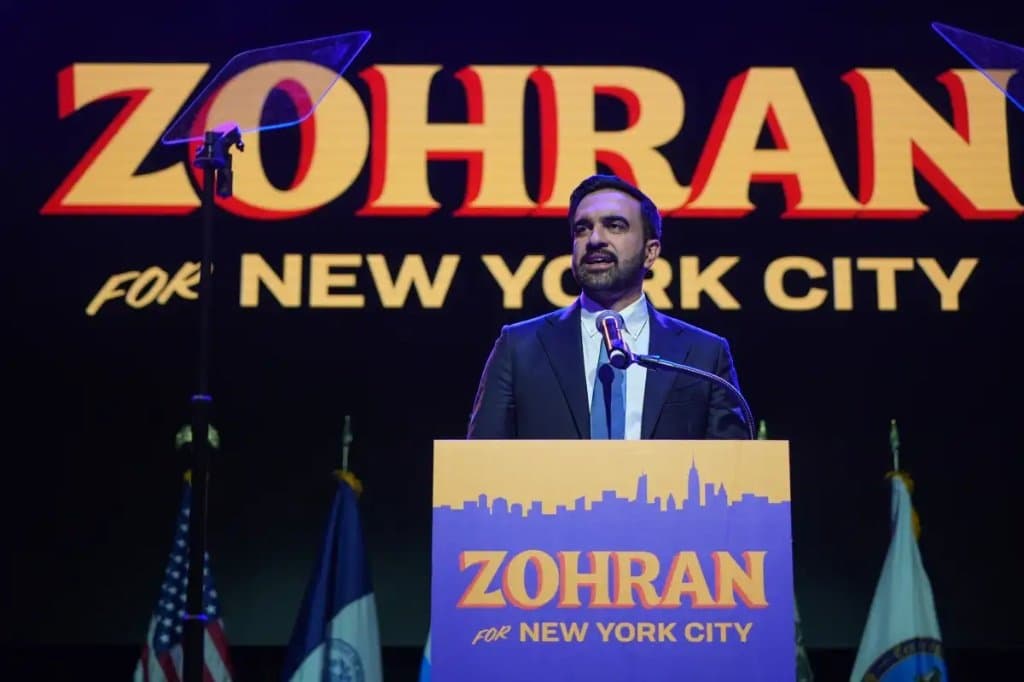
Zohran Mamdani has proposed raising New York City's minimum wage to $30 an hour by 2030. You can read more about that here: https://www.cityandstateny.com/policy/2025/02/mamdani-unveils-30-30-minimum-wage-push-part-mayoral-campaign/403015/?oref=csny-homepage-top-story This market will resolve to “Yes” if both the following occur: 1. Zohran Mamdani wins the 2025 NYC Mayoral election. 2. A policy is enacted in New York City before December 31, 2026, 11:59 PM ET, which would establish a minimum
Prediction markets currently assign an 18% probability that New York City will enact a law raising the minimum wage to at least $30 per hour before January 1, 2027. This price, trading on Kalshi, indicates the market views this policy outcome as unlikely, though not impossible. With only $8,000 in total market volume, liquidity is thin, suggesting this is a speculative niche market rather than a heavily traded consensus view.
The low probability reflects significant political and economic hurdles. First, the proposed $30 floor represents an increase of over 100% from NYC's current $16 minimum wage. Such a dramatic jump lacks precedent in recent municipal policy and would face intense scrutiny from business groups over potential impacts on employment and inflation. Second, while Council Member Shahana Mamdani is a progressive advocate for worker wages, enacting legislation requires a majority vote in the City Council and would likely need alignment with the Mayor's office, creating a complex legislative pathway. Historical patterns show NYC's minimum wage increases have been incremental, often tied to state-level schedules, making a standalone city law for a specific high figure a departure from established process.
The odds could shift upward if a formal bill is introduced with substantial council support, particularly if backed by key committee chairs or the Speaker. A major political shift, such as stronger progressive gains in the next city election cycle, could also increase perceived likelihood. Conversely, the probability could fall further toward zero if Mayor Eric Adams or influential business chambers publicly and forcefully oppose the concept. The market will be particularly sensitive to the official legislative calendar. Key dates to watch include the bill introduction date, any scheduled hearing before the Committee on Civil Service and Labor, and the end of the council's session periods, as movement before 2027 requires navigating a finite legislative timeline.
AI-generated analysis based on market data. Not financial advice.
$8.70K
1
1
This prediction market topic concerns the possibility of New York City establishing a minimum wage of at least $30 per hour by January 1, 2027. The specific condition for a 'Yes' resolution is the enactment of a law that sets a minimum wage of $30 or more, with the increase scheduled to take effect no later than 2030. This proposal represents an unprecedented and ambitious leap in wage policy, far exceeding current federal and state minimums. The topic is directly tied to the political agenda of New York City Mayor Eric Adams and the city's legislative body, the New York City Council, where such a law would need to originate and pass. Interest in this market stems from its intersection of high-stakes urban economic policy, political progressivism, and the ongoing national debate about income inequality and a living wage in major metropolitan areas. Recent discussions around 'Fight for $15' and subsequent pushes for higher wages in high-cost cities have set the stage for this more radical proposal. The outcome hinges on complex political negotiations, economic analyses of potential impacts on businesses and workers, and the prevailing social priorities of New York City's leadership in the coming years.
The push for a $30 minimum wage in New York City is the latest chapter in a long history of localized wage regulation. The city first gained the authority to set its own minimum wage above state and federal levels in 2016, following a campaign by then-Mayor Bill de Blasio and the 'Fight for $15' movement. This led to a phased increase, with the city minimum reaching $15 per hour for large employers at the end of 2018, and for all employers by the end of 2019. This established New York City as a national leader in municipal wage policy. Subsequently, the city has continued incremental increases tied to inflation. In 2023, the minimum wage in New York City rose to $15.00, while the statewide minimum for areas outside NYC was set at $14.20. The state has also enacted a schedule for further increases, aiming for $15 downstate and $14.20 upstate by 2024, with future increases indexed to inflation. The proposal for a $30 wage represents a doubling of the current city floor and a 100% increase over the 2018 benchmark, marking a radical departure from the previous pattern of incremental, inflation-adjusted raises. It seeks to directly address the severe affordability crisis in a city where the cost of living has dramatically outpaced wage growth for low-income workers over the past decade.
The establishment of a $30 minimum wage would have profound and far-reaching consequences for New York City's economy and social fabric. For approximately 1.1 million hourly workers in the city, it could mean a transformative increase in take-home pay, potentially lifting many out of poverty and reducing reliance on public assistance programs. Proponents argue it is a necessary correction to ensure a living wage in one of the world's most expensive cities, where the true cost of living far exceeds current minimum wage levels. Conversely, the policy carries significant risks. Small businesses, particularly in retail and hospitality, warn of potential mass closures, job losses, and accelerated automation. The policy could also trigger inflationary pressures as businesses pass on higher labor costs to consumers, and it might create wage compression issues, reducing the pay differential between entry-level and skilled positions. The political ramifications are equally significant. Success could embolden progressive movements in other high-cost cities like San Francisco and Boston to pursue similar targets, while failure could demonstrate the limits of municipal authority in regulating labor markets. The debate serves as a high-profile test case for the modern labor movement's most ambitious goal.
As of late 2024, no formal legislation to establish a $30 minimum wage in New York City has been introduced in the City Council. The policy remains a theoretical proposal discussed by progressive advocates and some council members. The immediate legislative focus has been on implementing the state-mandated incremental increases and other labor policies like pay transparency. Mayor Eric Adams has not publicly endorsed a $30 wage target, and his administration is primarily focused on economic recovery and affordability measures with less direct impact on business costs. The political window for such a monumental change is considered narrow, requiring both a strong progressive push in the Council and support from the Mayor's office, a combination that does not currently exist. The timeline to pass a law before January 1, 2027, would require bill introduction, committee hearings, council votes, and mayoral action within the next two years.
Yes. Since 2016, New York City has had specific authorization under state law to set a minimum wage higher than the state's floor for employers within the five boroughs. This home rule authority is the legal foundation for any city-specific wage law.
A bill must be introduced by a council member, reviewed and voted on by relevant committees (like Civil Service and Labor), passed by a majority of the full 51-member City Council, and then sent to the Mayor. The Mayor can sign it into law, veto it, or let it become law without a signature. A mayoral veto can be overridden by a two-thirds council vote.
Economists are divided. Proponents argue it would increase consumer spending in local economies. Opponents, including many business groups, warn it could force severe cuts to staffing, hours, or benefits, lead to price increases, and potentially cause some businesses, especially in low-margin industries, to close or relocate.
No major US city has enacted a minimum wage near $30 per hour. The highest current city minimum wages are in areas like Seattle, Washington (approx. $19.97 for large employers) and San Francisco, California ($18.07). A jump to $30 would be unprecedented in scale.
New York City's minimum wage is a floor. If the city sets a wage at $30 and the state later raises its minimum to a level below $30, the city's higher rate would still apply. If the state somehow set a rate above $30, the higher state rate would supersede the city's law.
Educational content is AI-generated and sourced from Wikipedia. It should not be considered financial advice.
Share your predictions and analysis with other traders. Coming soon!

No related news found
Add this market to your website
<iframe src="https://predictpedia.com/embed/Uj3uls" width="400" height="160" frameborder="0" style="border-radius: 8px; max-width: 100%;" title="Will Mamdani raise the minimum wage to $30 before 2027?"></iframe>