$122.01K
1
1

1 market tracked

No data available
| Market | Platform | Price |
|---|---|---|
![]() | Poly | 22% |
Trader mode: Actionable analysis for identifying opportunities and edge
This market will resolve to "Yes" if a natural meteoroid (bolide) explodes in Earth's atmosphere with a total impact energy greater than or equal to 10 kilotons of TNT equivalent between January 1 and December 31, 2026, 11:59 PM ET. Otherwise, this market will resolve to “No”. The object must be classified as a natural meteoroid; events involving artificial objects or reentry vehicles do not qualify. The primary resolution source will be the NASA JPL Fireball and Bolide Data repository: https:
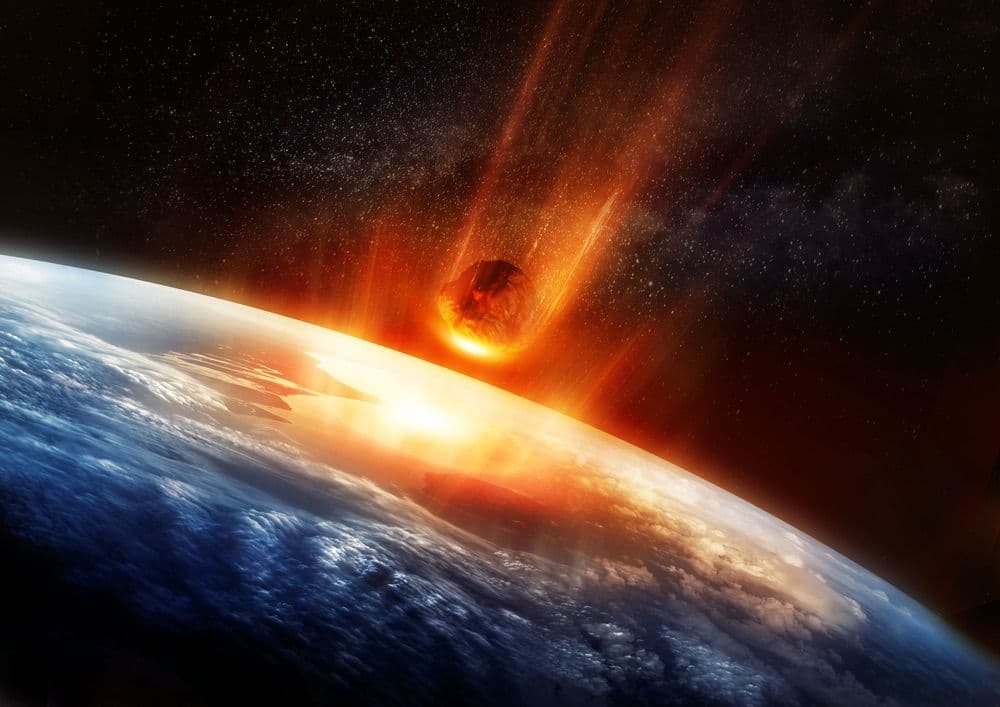
Prediction markets currently give about a 1 in 5 chance that Earth will experience a major meteor strike in 2026. Specifically, traders are betting there is a 22% probability a natural space rock will explode in our atmosphere next year with an energy of 10 kilotons of TNT or more. For scale, that’s roughly two-thirds the power of the atomic bomb dropped on Hiroshima. While not an extinction-level event, such an airburst could cause significant local damage if it happened over a populated area.
The odds are set where they are for a few concrete reasons. First, events of this size are rare but not unheard of. A meteor estimated at 17-20 kilotons famously exploded over Chelyabinsk, Russia, in 2013, injuring over 1,000 people mostly from broken glass. NASA data shows several smaller kiloton-range events occur globally most years, but hitting the 10kt threshold is less common.
Second, the market reflects our limited ability to predict these strikes. We have cataloged most large asteroids that could cause global catastrophes, but smaller objects like the Chelyabinsk meteor, which was about 20 meters wide, are very hard to detect until they are extremely close. The market’s 22% chance essentially prices in this known uncertainty and the statistical frequency of such events.
Finally, the time frame matters. A 22% annual chance implies traders believe an event like this is somewhat likely within a five-year period. They are betting that while it could happen in any given year, 2026 is not special, so the odds remain modest for that single calendar year.
There are no specific dates to watch, as these events are random and unpredictable. The main signal will come from official monitoring programs. A sudden flurry of scientific reports or NASA alerts about a newly discovered asteroid on a potential collision course would likely shift the odds dramatically. Otherwise, the probability may slowly drift as 2026 approaches without any new information. The market will definitively resolve at the end of 2026 based on data from NASA’s JPL Fireball database, which tracks global bolide events.
Prediction markets are generally good at aggregating known statistics and expert sentiment on events with clear historical data. For meteor strikes, the market is essentially a collective bet on established astronomical frequencies. However, their reliability is limited by the inherent randomness of the event. The market can’t foresee an unknown object until it is detected. The odds are a best guess based on past rates, not a forecast of a specific incoming rock. For this type of low-probability, high-uncertainty event, the market is a useful snapshot of the collective assessment of risk, but it remains a probabilistic guess about a fundamentally unpredictable natural process.
Prediction markets assign a 22% probability to a major meteor strike occurring in 2026. This price indicates traders view the event as unlikely but not negligible. With a "Yes" share trading at 22¢, the market implies roughly a 1-in-5 chance that a natural meteoroid with an atmospheric explosion energy of 10 kilotons or more will be recorded next year. The $122,000 in trading volume provides moderate liquidity, suggesting informed speculation rather than casual betting.
The 22% probability is anchored in historical frequency data from NASA's CNEOS program. Since 1988, sensors have detected an average of several 10kt+ atmospheric events per year. For example, 2023 recorded at least three such events, including a 12kt fireball near Iceland. The market price essentially calibrates to this observed annual base rate. However, the odds are not higher because these events are almost always harmless, occurring over oceans or remote areas. The 2013 Chelyabinsk meteor, estimated at 440kt, was a statistical outlier in both its energy and its consequences over a populated region. Traders are pricing the routine occurrence of a common high-energy event, not a catastrophic impact.
The market is a pure play on detection, not disaster. The primary catalyst for a major price swing would be the discovery of a specific asteroid on a potential 2026 intercept course. Continuous sky surveys like Pan-STARRS or the Vera C. Rubin Observatory could identify such an object, which would cause the "Yes" probability to spike. Conversely, odds could drift lower if 2025 passes with fewer detected 10kt+ events than the recent average, suggesting a temporary lull in the influx of larger meteoroids. The market resolves based on NASA's official bolide data, so its accuracy is high, but the timing of any event within the year is inherently random.
AI-generated analysis based on market data. Not financial advice.
$122.01K
1
1
This prediction market asks whether Earth will experience a significant atmospheric meteor explosion in 2026. Specifically, it concerns a natural meteoroid, or bolide, releasing energy equivalent to 10 kilotons of TNT or more during the calendar year. Such events, while often harmless due to occurring high in the atmosphere, represent the most frequent form of interaction between Earth and near-Earth objects. The 10-kiloton threshold is significant; it is roughly two-thirds the energy of the atomic bomb dropped on Hiroshima and is detectable by global infrasound and satellite-based sensors operated by agencies like NASA and the U.S. government. Interest in this market stems from both scientific curiosity about the frequency of such events and public awareness of planetary defense. High-energy fireballs can cause localized damage, as seen in Chelyabinsk, Russia, in 2013, and their detection helps refine models of the population of smaller, hard-to-detect asteroids. The market will be resolved using data from NASA's Jet Propulsion Laboratory Fireball and Bolide Reports, which catalog events detected by U.S. government sensors. The question for 2026 is not about a specific predicted impact but about the statistical probability of an event of this size occurring within a single year, based on historical rates.
Earth's atmosphere is struck by meteoroids constantly, with most burning up as faint meteors. Larger objects, capable of producing multi-kiloton explosions, are less common but well-documented in the modern era. The benchmark for this market, 10 kilotons, was dramatically exemplified by the Chelyabinsk event on February 15, 2013. A roughly 20-meter asteroid entered the atmosphere over Russia and exploded with an energy estimated at 440-500 kilotons, about 30 times this market's threshold. The shockwave from the Chelyabinsk airburst injured about 1,500 people, mostly from broken glass, and highlighted the threat from objects too small to be easily detected in advance. Prior to Chelyabinsk, a notable event was the 1908 Tunguska explosion in Siberia, estimated at 3-10 megatons (3,000-10,000 kilotons), which flattened over 2,000 square kilometers of forest. In the satellite era, beginning in the late 1980s, U.S. government sensors have provided a consistent record. From 1988 through 2023, these sensors detected an average of about 40-50 fireballs with energies of 1 kiloton or more each year. Events meeting or exceeding the 10-kiloton threshold occur less frequently, roughly several times per decade. For example, a 173-kiloton event occurred over the Bering Sea in December 2018, and a 16-kiloton event was detected south of Puerto Rico in January 2022.
The occurrence of a 10-kiloton meteor strike matters for practical risk assessment and scientific understanding. While most such events happen over oceans or uninhabited areas, one occurring near a population center could cause significant property damage and injuries from its shockwave, as Chelyabinsk demonstrated. This underscores the importance of planetary defense programs that aim to find and characterize smaller near-Earth objects, which are far more numerous than city-killing asteroids. From a scientific perspective, each detected fireball provides data on the size, composition, and orbital origin of the impacting body, helping astronomers refine models of the solar system's small object population. These events are natural experiments that inform our understanding of asteroid fragmentation and atmospheric entry physics. For governments and emergency managers, understanding the statistical frequency of these events helps in planning for low-probability, high-consequence natural hazards.
As of late 2024, the NASA CNEOS fireball database continues to be updated with new events detected by U.S. government sensors. The most recent publicly listed events are typically from the past few months. No specific asteroid has been predicted to impact Earth in 2026 with certainty. The focus of planetary defense efforts remains on discovering and tracking larger objects (140 meters and above) as mandated by Congress, though projects like NASA's NEO Surveyor space telescope, planned for launch in 2027, aim to improve detection of smaller objects that could produce fireballs. The statistical likelihood of a 10kt+ event in any given year, based on the multi-decade satellite record, remains consistent.
Based on data from 1988 to 2023, events with an energy of 10 kilotons of TNT or more occur several times per decade. The exact frequency varies, but it is a statistically expected event within a multi-year timeframe.
A meteoroid is a small rocky or metallic body in space. When it enters Earth's atmosphere and vaporizes, creating a streak of light, it is called a meteor. A particularly bright meteor that explodes is termed a bolide or fireball.
For a specific 10-kiloton event in 2026, prediction is currently impossible. Objects this small (5-10 meters) are very difficult to detect more than a few hours before impact, if at all. The market is about statistical probability, not a forecasted impact.
The largest well-documented event in recent decades was the Chelyabinsk meteor over Russia in 2013, with an estimated energy release of 440-500 kilotons. A larger 173-kiloton event occurred over the Bering Sea in December 2018.
NASA's Jet Propulsion Laboratory maintains the publicly accessible Fireball and Bolide Reports page, which lists the date, location, and estimated energy of events detected by U.S. government sensors since 1988.
Educational content is AI-generated and sourced from Wikipedia. It should not be considered financial advice.

No related news found
Add this market to your website
<iframe src="https://predictpedia.com/embed/VF9lbk" width="400" height="160" frameborder="0" style="border-radius: 8px; max-width: 100%;" title="Major meteor strike (10kt+) in 2026?"></iframe>