$42.85K
2
23

$42.85K
2
23
14 markets tracked

No data available
| Market | Polymarket | Kalshi | Diff |
|---|---|---|---|
![]() | 35% | 36% | 1% |
![]() | 17% | 20% | 3% |
![]() | 14% | 19% | 5% |
![]() | 19% | 4% | 15% |
![]() | 19% | 2% | 17% |
![]() | 7% | 11% | 4% |
![]() | 7% | 4% | 3% |
![]() | 9% | 1% | 9% |
![]() | 2% | 1% | 2% |
Trader mode: Actionable analysis for identifying opportunities and edge
Presidential elections in Bulgaria are expected to be held in the Fall of 2026. This market will resolve according to the listed candidate who wins the next presidential election in Bulgaria. This market includes any potential second round. If the result of this election isn't known by December 31, 2027, 11:59 PM ET, the market will resolve to "Other". This market will resolve based on the result of the election, as indicated by a consensus of credible reporting. If there is ambiguity, this
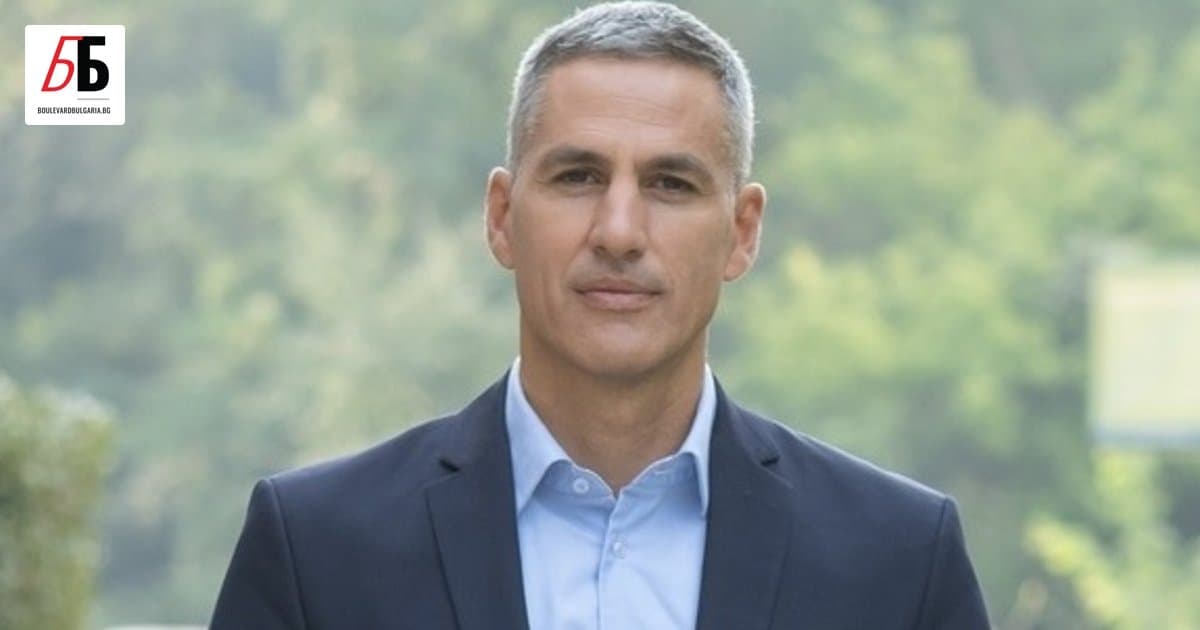
Prediction markets currently give Iliana Yotova, the incumbent Vice President of Bulgaria, about a 1 in 3 chance of winning the 2026 presidential election. With a 36% probability, traders collectively see her as a possible but not probable winner. This suggests the race is viewed as fairly open, with other candidates or an "Other" outcome seen as more likely. The market has attracted a modest amount of attention, with about $43,000 wagered across various questions on the outcome.
Yotova is a well-known figure, having served as Vice President since 2017. However, the Bulgarian presidency is a largely ceremonial role, and elections often reflect broader political moods rather than specific policies. The current odds likely account for two main factors.
First, incumbency can be a double-edged sword. While Yotova has high name recognition, she is also tied to the political establishment during a period of significant instability. Bulgaria has seen six parliamentary elections since 2021, with a fragile coalition government currently in power. Voters may seek change.
Second, the presidential election uses a two-round system. If no candidate gets over 50% in the first round, the top two face off in a runoff. Yotova, who is affiliated with the socialist-leaning BSP party, may consolidate left-wing votes in the first round but could struggle in a runoff against a unified opponent from the center or right. The market may be pricing in the difficulty of securing that final majority.
The election is expected in the fall of 2026, but the exact date is not yet set. The most important signals will come from Bulgaria's volatile domestic politics in the lead-up.
Watch for the formation of candidate lists and major coalition endorsements in early to mid-2026. A key event will be the official start of the campaign period, which will clarify who Yotova's main opponents are. Also, monitor any shifts in the popularity of the current governing coalition. A government collapse or major scandal before the election could significantly reshape the presidential race.
Prediction markets have a mixed but generally decent record on elections this far out. They are good at aggregating known information, like incumbency and political structure, but are less reliable before the field of candidates is fully set. The current low trading volume also means these early odds could be more volatile if new information emerges. For context, markets often become more accurate as the election nears and more money reflects sharper consensus. For now, view this 36% as a snapshot of informed skepticism about an incumbent's chances in a turbulent political climate.
Prediction markets assign a 36% probability to incumbent Vice President Iliana Yotova winning the 2026 Bulgarian presidential election. This price, translating to odds of roughly 2-to-1 against, indicates the market views her re-election as possible but not the most likely outcome. The "Other" category is collectively priced higher. With only $43,000 in total volume spread thinly across 23 candidate-specific markets, liquidity is low. This suggests the current odds are more indicative of initial sentiment than a deeply traded consensus.
Yotova's subdued odds reflect Bulgaria's complex political environment. The presidency is a largely ceremonial role, but it holds symbolic power and requires broad appeal. Yotova, a member of the Bulgarian Socialist Party (BSP), won her first term in 2016 alongside President Rumen Radev as an independent ticket. Radev's strong, often anti-establishment popularity was a key driver. With Radev term-limited, Yotova cannot rely on the same coalition. Her candidacy is further complicated by Bulgaria's prolonged political instability, featuring six parliamentary elections between 2021 and 2023 and a fragile governing coalition. The market prices in significant uncertainty about her ability to unite a fragmented electorate on her own.
The election is over 280 days away, leaving ample time for political realignment. The key catalyst will be the formation of candidate slates and endorsements. If a major party or a coalition of parties consolidates behind a single challenger, that candidate's odds will surge while Yotova's would likely fall. Conversely, if the opposition remains divided and Yotova secures a prominent endorsement from a popular figure like President Radev, her probability could rise sharply. Monitoring opinion polls once official campaigning begins in mid-2026 will be critical. The market's low liquidity means new information or concentrated trading can cause large price swings.
This is a cross-platform event on Kalshi and Polymarket. While both platforms show similar low probabilities for Yotova, minor price discrepancies exist for niche candidates due to the thin trading volume. This presents potential arbitrage opportunities for traders willing to provide liquidity, but the wide bid-ask spreads and low volume make executing large trades costly. The price differences are not significant for the frontrunner but highlight the market's immature stage. Traders should watch for convergence as volume increases closer to the election.
AI-generated analysis based on market data. Not financial advice.
The 2026 Bulgarian presidential election will determine who serves as the country's head of state for a five-year term beginning in early 2027. The Bulgarian president holds a largely ceremonial role but possesses certain reserve powers, including the authority to return legislation to parliament for further debate, appoint caretaker governments during political crises, and serve as commander-in-chief of the armed forces. The election occurs as Bulgaria continues its prolonged political instability, marked by frequent parliamentary elections and rotating coalition governments since 2021. The presidency has gained practical importance in this environment, with the incumbent often acting as a mediator and constitutional arbiter. The 2026 contest will be the seventh direct presidential election since the office was established in 1992, following the end of communist rule. Interest in the election stems from its potential to influence Bulgaria's geopolitical orientation, particularly regarding its membership in the European Union and NATO, its relationship with Russia, and its management of corruption and judicial reform. The election is scheduled for the fall of 2026, with a likely second-round runoff if no candidate secures an absolute majority in the first round. The campaign will test the strength of established political parties and may reflect public sentiment on issues like economic development, energy security, and demographic decline.
Bulgaria's presidency was established by the 1991 constitution following the collapse of the one-party communist state. The first direct presidential election was held in 1992, won by Zhelyu Zhelev of the Union of Democratic Forces. The office was designed to be a stabilizing counterweight to the powerful National Assembly. Historically, presidential elections have often served as a barometer for parliamentary politics. For example, the 2001 election of Georgi Parvanov of the BSP signaled a leftward shift that was later confirmed in parliamentary votes. The 2016 election of Rumen Radev, an independent backed by the BSP, precipitated the fall of Boyko Borissov's government and led to early parliamentary elections in 2017. A key precedent is the two-term limit established by constitutional practice; no president has served more than two consecutive five-year terms. The 2011 election was the only one where a sitting president, Georgi Parvanov, was barred from seeking a third term, similar to the situation facing Rumen Radev in 2026. The 2021 presidential election saw Radev re-elected with 66.7% of the vote in the runoff, a margin that underscored his personal popularity amid widespread disillusionment with mainstream political parties. This history shows the presidency gaining influence during periods of parliamentary deadlock, a condition that has persisted in Bulgaria since 2021.
The election matters because the Bulgarian president, while not wielding executive power, sets the tone for national discourse and can influence foreign policy through public statements and vetoes. In a country experiencing prolonged political fragmentation, the president's role in appointing caretaker governments has become critically important, directly affecting governance between elected parliaments. The president also grants pardons and is the formal head of the Consultative Council on National Security. The election's outcome will signal Bulgaria's political direction for the latter half of the 2020s. A president aligned with pro-EU reformist forces could accelerate judicial and anti-corruption reforms required for Bulgaria's full integration into the Schengen Area and the Eurozone. Conversely, a president with a more skeptical view of the West could slow these processes and foster closer economic ties with non-EU partners. The election also has social significance, as it will reflect public attitudes on issues like the war in Ukraine, energy dependence, and demographic challenges, potentially legitimizing certain policy paths for the ruling parliamentary coalition.
As of late 2024, the field for the 2026 presidential election is undeclared but actively taking shape behind the scenes. President Rumen Radev is in the final two years of his term and is constitutionally barred from running again. Major political parties, including GERB, We Continue the Change, and the Bulgarian Socialist Party, are in early internal discussions about potential candidates but have made no official nominations. The political context is dominated by a fragile coalition government in parliament, led by Prime Minister Nikolay Denkov and later Dimitar Glavchev, which continues to grapple with legislative priorities. This instability ensures that the presidential election is viewed as the next major national political event. Recent opinion polls show no clear frontrunner, with many voters undecided, indicating an open race.
The election is constitutionally scheduled for the fall of 2026, most likely in October or November. The exact date will be set by the National Assembly. If no candidate wins a majority in the first round, a runoff between the top two candidates is held two weeks later.
No. The Bulgarian constitution limits presidents to two consecutive five-year terms. Rumen Radev was elected in 2016 and re-elected in 2021. His second term ends in January 2027, making him ineligible to run in the 2026 election.
The president is the head of state with primarily ceremonial duties but holds specific powers. These include vetoing legislation (which can be overridden by parliament), appointing caretaker governments when parliament cannot form one, serving as commander-in-chief, and granting pardons. The president also represents the country in foreign affairs.
The winner must receive more than 50% of the valid votes cast. If no candidate achieves this in the first round, a second-round runoff is held between the two candidates who received the most votes in the first round. The candidate with the majority in the runoff wins.
Any Bulgarian citizen who is at least 18 years old on election day and is not under a judicial interdiction has the right to vote. Bulgarian citizens living abroad can also vote in person at diplomatic missions or via mail-in ballot in some countries.
Educational content is AI-generated and sourced from Wikipedia. It should not be considered financial advice.

Different
Similar

In 2026 If X wins the 2026 Bulgarian presidential election, then the market resolves to Yes. For parliamentary elections, the party or coalition with the most seats wins. If two parties tie in seats: the one entering government will resolve to Yes and all others to No. If both or neither enter government, the one with the higher share of the vote will resolve to Yes and all others to No. For coalitions/alliances, only those formally registered with electoral authorities before the nomination de

Presidential elections in Bulgaria are expected to be held in the Fall of 2026. This market will resolve according to the listed candidate who wins the next presidential election in Bulgaria. This market includes any potential second round. If the result of this election isn't known by December 31, 2027, 11:59 PM ET, the market will resolve to "Other". This market will resolve based on the result of the election, as indicated by a consensus of credible reporting. If there is ambiguity, this


Presidential elections in Bulgaria are expected to be held in the Fall of 2026. This market will resolve according to the listed candidate who wins the next presidential election in Bulgaria. This market includes any potential second round. If the result of this election isn't known by December 3

If Iliana Yotova wins the 2026 Bulgarian presidential election, then the market resolves to Yes. Secondary rules: For parliamentary elections, the party or coalition with the most seats wins. If two parties tie in seats: the one entering government will resolve to Yes and all others to No. If both o


Presidential elections in Bulgaria are expected to be held in the Fall of 2026. This market will resolve according to the listed candidate who wins the next presidential election in Bulgaria. This market includes any potential second round. If the result of this election isn't known by December 3

If Nikolai Denkov wins the 2026 Bulgarian presidential election, then the market resolves to Yes. Secondary rules: For parliamentary elections, the party or coalition with the most seats wins. If two parties tie in seats: the one entering government will resolve to Yes and all others to No. If both


Presidential elections in Bulgaria are expected to be held in the Fall of 2026. This market will resolve according to the listed candidate who wins the next presidential election in Bulgaria. This market includes any potential second round. If the result of this election isn't known by December 3

If Rosen Zhelyazkov wins the 2026 Bulgarian presidential election, then the market resolves to Yes. Secondary rules: For parliamentary elections, the party or coalition with the most seats wins. If two parties tie in seats: the one entering government will resolve to Yes and all others to No. If bot


Presidential elections in Bulgaria are expected to be held in the Fall of 2026. This market will resolve according to the listed candidate who wins the next presidential election in Bulgaria. This market includes any potential second round. If the result of this election isn't known by December 3

If Krum Zarkov wins the 2026 Bulgarian presidential election, then the market resolves to Yes. Secondary rules: For parliamentary elections, the party or coalition with the most seats wins. If two parties tie in seats: the one entering government will resolve to Yes and all others to No. If both or


Presidential elections in Bulgaria are expected to be held in the Fall of 2026. This market will resolve according to the listed candidate who wins the next presidential election in Bulgaria. This market includes any potential second round. If the result of this election isn't known by December 3

If Yanaki Stoilov wins the 2026 Bulgarian presidential election, then the market resolves to Yes. Secondary rules: For parliamentary elections, the party or coalition with the most seats wins. If two parties tie in seats: the one entering government will resolve to Yes and all others to No. If both
No related news found
Add this market to your website
<iframe src="https://predictpedia.com/embed/VNcCmb" width="400" height="160" frameborder="0" style="border-radius: 8px; max-width: 100%;" title="Bulgaria Presidential Election"></iframe>