This event is no longer in the live catalog. Showing its last saved snapshot.

Highest temperature in Los Angeles on November 18?
PM $20.8K
1
11
- Reported volume
- PM $20.8K
- Events
- 1
- Markets
- 11
AI Analysis
Trader mode: Market mechanics, assumptions and risks
PM $20.8K
Reported volume · provider units
11
Saved contracts
0
Same-question pairs
Source snapshot: Nov 19, 2026, 9:00 AM UTC
Snapshot observed Nov 18, 2026, 3:00 AM UTC. This analysis describes that snapshot and is not a live news update.
What the contract measures
This Polymarket event asks which temperature range will contain the highest temperature reported at Los Angeles International Airport (KLAX) on 18 November 2026 [1]. The qualifying value comes from routine METAR observations, and reports beginning with SPECI do not count [1]. Each market states its range in whole degrees Fahrenheit. Celsius readings are converted and rounded to a whole Fahrenheit degree before they are matched to a range [1]. The rules also name fallback sources and say that the lowest bracket resolves if neither source publishes sufficient data by the deadline [1].
Reading the snapshot
The provider observed these prices at Nov 18, 2026, 3:00 AM UTC, and the record was retrieved at Nov 18, 2026, 3:37 AM UTC [1]. These are snapshot prices, not executable quotes or verified probabilities. The record includes all 11 saved markets for this event and marks the sample as not partial [1].
The largest Yes price belongs to the 68-69°F range at 0.636. The 66-67°F range is at 0.215 and the 70-71°F range is at 0.12 [1]. The other eight ranges, including the open-ended "57°F or below" and "76°F or higher" ranges, are each priced at 0.019 or lower [1]. The Yes prices in this snapshot add to slightly more than 1, which is another reason to read them as approximate.
The reported volume is $6,932, which Polymarket gives for this event in US dollars [1]. Volume does not measure liquidity or the number of traders.
The listed end time is Nov 18, 2026, 12:00 PM UTC [1]. This is provider metadata, not a resolution. The rules tie resolution to the first METAR for the following day or an 11:59 PM ET deadline, whichever comes first [1]. The evidence does not show a resolved outcome.
What remains uncertain
The evidence does not explain why prices sit where they do. It also does not show how prices have changed, because this is a single snapshot. Only Polymarket is included, so no cross-platform comparison is possible.
The rules allow observations to be revised until a deadline, and they describe a process for clearly erroneous data [1]. Because the temperature is converted from Celsius and rounded, a reading near a boundary can fall into an adjacent range [1]. The evidence does not show whether any such revision or correction has occurred.
References
- Polymarket: Highest temperature in Los Angeles on November 18?. Provider data observed Nov 18, 2026, 3:00 AM UTC.
Snapshot observed Nov 18, 2026, 3:00 AM UTC. This analysis describes that snapshot and is not a live news update.
What the contract measures
This event asks which temperature range contains the highest temperature reported at Los Angeles International Airport (KLAX) on 18 November 2026 [1]. The qualifying value comes from the hourly temperature remark in routine METAR observations, and any report beginning with SPECI does not count [1]. Celsius readings are converted to whole Fahrenheit using the stated formula and rounding, and that whole Fahrenheit value determines the range [1]. If the primary source lacks usable data, the rules name the Weather Underground Daily Observations table as a fallback, and the market resolves to the lowest bracket if neither source suffices [1].
Reading the snapshot
The provider observed this data at Nov 18, 2026, 3:00 AM UTC, and the evidence was retrieved at Nov 18, 2026, 3:37 AM UTC [1]. These timestamps describe when the data was captured, not the current state of the market.
All 11 saved Polymarket markets in this event are included in the sample, and the sample is not marked partial [1]. The highest Yes price is 0.636 for the range "between 68-69°F," followed by 0.215 for "between 66-67°F" and 0.12 for "between 70-71°F" [1]. The remaining markets are priced at 0.019 or lower [1]. These are quoted snapshot prices, not executable quotes or verified probabilities. The Yes prices do not sum exactly to one, so they should not be read as a complete distribution.
Wording differs across the tails. Two markets use open-ended phrasing: "57°F or below" and "76°F or higher" [1]. All listed markets show the same end time, Nov 18, 2026, 12:00 PM UTC [1]. That is a provider field. The rules instead describe resolution at the first METAR issuance for the following day or by 11:59 PM ET on that day, whichever comes first [1]. The two descriptions should be read separately rather than treated as the same deadline.
The reported volume of $6,932 is Polymarket's total for its own event in US dollars [1]. It does not indicate liquidity or the number of traders.
What remains uncertain
The evidence does not include the actual observed temperature, so no outcome is known from it. The snapshot may be out of date by the time a reader reviews it. No other platform appears in the evidence, so no cross-platform comparison is possible. The rules also allow up to seven calendar days for clearly erroneous published data to be corrected before a market settles [1]. The evidence does not explain why prices sit where they do.
References
- Polymarket: Highest temperature in Los Angeles on November 18?. Provider data observed Nov 18, 2026, 3:00 AM UTC.
AI-generated analysis based on market data. Not financial advice.
Saved Nov 18, 2026 UTCOverview
This PredictPedia entry covers a weather contract on Polymarket asking for the highest temperature recorded at Los Angeles International Airport (KLAX) on November 18, 2026 [1]. Each market in the event is a temperature range stated in whole degrees Fahrenheit, and a range resolves Yes if it contains the qualifying value for that date [1]. The contract is a bracket market, so the ranges are meant to cover the possible outcomes for the day, and only one range is expected to contain the final figure [1]. The qualifying value comes from routine aviation weather reports (METAR observations) for KLAX [1]. The contract rules say to use the hourly temperature remark in tenths of a degree Celsius where it appears. Where that remark is absent, the temperature in the body of the observation counts in whole degrees Celsius [1]. Special observations, marked SPECI, do not count, while other routine reports count even if issued off the nominal hour or without a METAR label [1]. Observations count when their timestamp, converted to Los Angeles local time including any daylight-saving shift, falls on the observation date [1]. The rules convert the Celsius value to Fahrenheit and round to the nearest whole degree, with values ending in exactly one half rounded up [1]. The Fahrenheit figure then determines which bracket applies. The rules give worked examples, such as 18.3 degrees Celsius counting as 65 degrees Fahrenheit [1]. The primary resolution source is the set of routine KLAX observations published by the Aviation Weather Center [1]. If that source has not published a routine observation reporting a temperature for the date by 11:59 PM ET on the following day, the rules direct the resolver to the Weather Underground Daily Observations table [1]. If neither source has published enough data to determine a temperature by that deadline, the market resolves to the lowest bracket [1]. The rules also allow the market to stay open for up to seven calendar days after clearly erroneous data is published, in case the source issues a correction [1]. The Wikipedia background sources in this entry concern general temperature records rather than this contract. One notes that air temperature measurements are treated as the standard for official records by bodies such as the World Meteorological Organization [2]. Another gives general population and geography facts about the city [3]. Neither source addresses how this contract is priced or settled.
Historical Context
The sources provide only general background on temperature records. A Wikipedia entry states that air measurements are used as the standard for official highest-temperature records, and that the World Meteorological Organization and Guinness World Records are among the bodies that treat them that way [2]. The same entry gives the current official highest registered air temperature on Earth as 134.1 degrees Fahrenheit (56.7 degrees Celsius), recorded on 10 July 1913 at Furnace Creek Ranch in Death Valley, California [2]. This record has no direct bearing on the Los Angeles contract, and the supplied sources contain no history of this specific market or of past KLAX readings.
Why It Matters
The contract measures a single number: the highest qualifying temperature reported at KLAX on November 18, 2026, using the routine observation rules described above [1]. Because the outcome depends on the exact reports and conversion steps, the rules matter as much as the forecast range itself. A reading near a bracket boundary can change which range wins, and the rules settle those cases in advance [1]. The market snapshot shows eleven ranges, from 57 degrees Fahrenheit or below to 76 degrees Fahrenheit or higher, with Yes prices ranging from 0.0005 to 0.636 at the observation time [1]. The 68 to 69 degree range had the highest Yes price in that snapshot, at 0.636, while the 66 to 67 degree range was next at 0.215 [1]. These are snapshot prices from the provider, not executable quotes or verified probabilities, and the Yes prices across the eleven ranges sum to about 1.02 in this snapshot. Reported volume of $6,932 is the provider's own total for this event in US dollars and does not indicate liquidity or the number of traders.
Snapshot context
The latest published provider snapshot for this topic was observed on 2026-11-18 at 03:00 UTC. It contains listings from Polymarket. Market descriptions and listed closing times define the contracts; they do not establish that the real-world outcome has occurred. This article does not include a separately verified news update. [1]
Frequently Asked Questions
Which observations count toward the result?
Routine METAR observations for KLAX count, while special observations marked SPECI do not [1]. The hourly temperature remark is used where present, and the temperature in the body of the observation is used when that remark is absent [1].
How is the temperature converted to a bracket?
The qualifying value in degrees Celsius is converted with the formula Fahrenheit equals Celsius times 9/5 plus 32, rounded to the nearest whole degree, with values ending in exactly one half rounded up [1]. The rounded Fahrenheit value determines the bracket [1].
What happens if the primary source has no usable data?
The rules move to the Weather Underground Daily Observations table if the Aviation Weather Center has published no routine temperature observation for the date by 11:59 PM ET on the following day [1]. If neither source has enough data by that deadline, the market resolves to the lowest bracket [1].
Are the market prices the same as the chance of each outcome?
The supplied sources do not establish that. The prices are provider snapshots taken at the observation time [1], and the Yes prices across this event's ranges sum to about 1.02 in that snapshot, so they should not be read as verified probabilities.
AI-written background. References identify the evidence used; Wikipedia links under Learn More are additional reading. Prices and provider rules are dated snapshots. This is not financial advice.
Related prediction markets
Prices are catalog snapshots and may have changed. Check each market's rules and observation time.
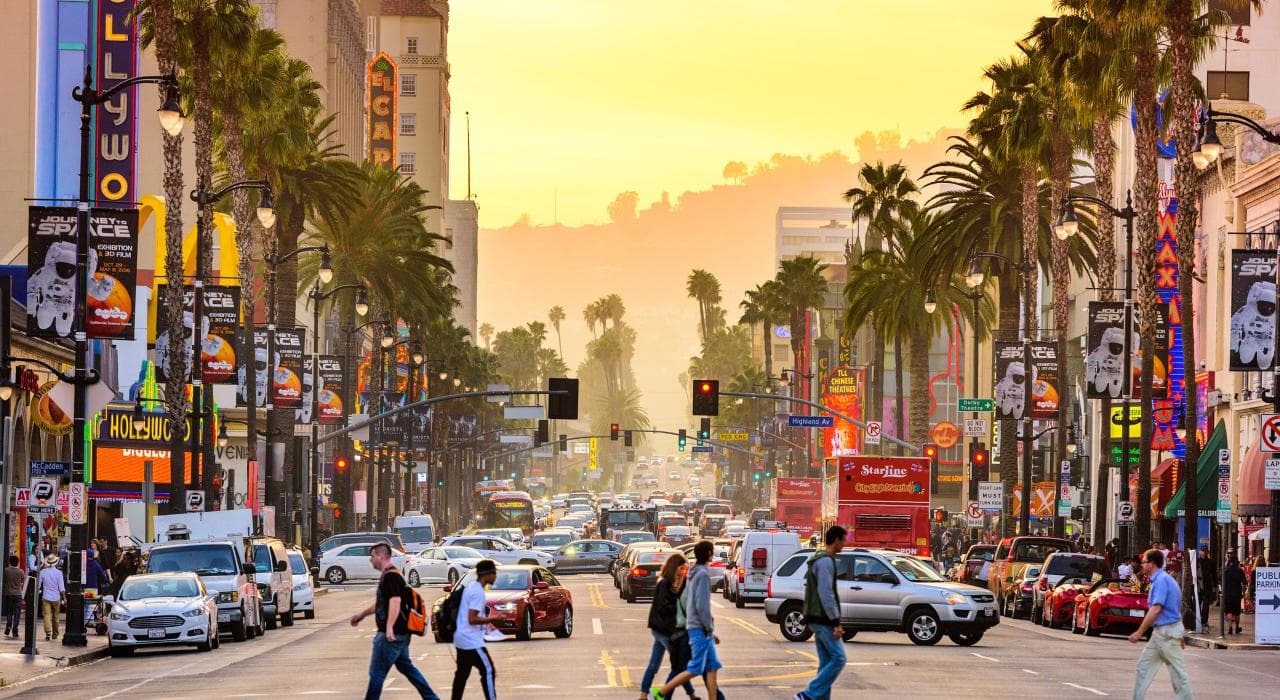
Highest temperature in Los Angeles on November 24?
PM $5.5KHighest temperature in Los Angeles on November 25?
PM $0Lowest temperature in Los Angeles on November 24?
PM $0Lowest temperature in Los Angeles on November 25?
PM $0
Highest temperature in Hong Kong on November 24?
PM $27.7K
Highest temperature in Busan on November 24?
PM $15.8KMarket Insights
Price gaps of 2 pp+
0
Same-question pairs
0
No outcomes on this page have been reviewed as the same question on both platforms yet.
Price differences do not establish arbitrage. Check each pair's review, current order prices, fees and settlement rules.