$21.22K
1
2

$21.22K
1
2
Trader mode: Actionable analysis for identifying opportunities and edge
This market will resolve to “Yes” if Israel carries out a kinetic military strike against the Fordow Fuel Enrichment Plant in Iran between the time of market creation and the listed date, 11:59 PM ET. Otherwise, this market will resolve to “No”. This includes, but is not limited to, drone and missile strikes, aerial bombings, and kinetic actions carried out by Israeli operatives on the ground. Cyber attacks, sanctions, or diplomatic actions will not count toward the resolution of this market.
AI-generated analysis based on market data. Not financial advice.
This prediction market focuses on whether Israel will conduct a kinetic military strike against Iran's Fordow Fuel Enrichment Plant within a specified timeframe. The Fordow facility is an underground uranium enrichment plant built into a mountain near the city of Qom, approximately 100 meters beneath the surface. It is one of Iran's most heavily fortified nuclear sites and a central point of contention in international nonproliferation efforts. A kinetic strike would involve physical attacks such as drone strikes, missile launches, aerial bombings, or ground operations, explicitly excluding cyber operations or diplomatic measures. The market's resolution depends solely on observable military action attributed to Israel. Interest in this topic stems from escalating tensions between Israel and Iran, particularly following Iran's increased uranium enrichment activities and its support for proxy groups in the region. Israel has consistently stated it will not allow Iran to obtain nuclear weapons, a policy often referred to as the 'Begin Doctrine.' Recent public statements from Israeli officials have explicitly mentioned military options being 'on the table' regarding Iran's nuclear program. The Fordow facility's hardened design makes it a challenging military target, raising questions about the feasibility and consequences of any potential strike. The Fordow plant began operations in 2009 and was publicly revealed by Western intelligence agencies that same year. Under the 2015 Joint Comprehensive Plan of Action (JCPOA), Iran agreed to convert Fordow into a research center and cease enrichment there, but following the U.S. withdrawal from the deal in 2018, Iran resumed uranium enrichment at the site. The International Atomic Energy Agency (IAEA) confirmed in 2021 that Iran had begun producing uranium enriched to 60% at Fordow, a significant step toward weapons-grade material. This activity, combined with Iran's ballistic missile program and regional posture, forms the core of Israeli security concerns. Analysts monitor several indicators for potential military action, including Israeli air force exercises simulating long-range strikes, public warnings from Israeli leadership, and intelligence assessments of Iran's 'breakout time'—the period needed to produce enough fissile material for one nuclear weapon. The strategic calculation involves weighing the military and technical challenges of destroying a deeply buried facility against the perceived risk of a nuclear-armed Iran. Any strike would likely involve advanced munitions like the U.S.-supplied GBU-57 Massive Ordnance Penetrator (MOP) or Israel's own reportedly developed bunker-buster weapons.
The Fordow facility's history is central to the nuclear dispute. Construction began secretly around 2006, and its existence was disclosed by Western intelligence in 2009. The site was built by the Islamic Revolutionary Guard Corps (IRGC) inside a mountain complex formerly part of an ammunition depot, specifically designed to withstand aerial attack. This covert construction violated Iran's safeguards agreement with the IAEA, which requires notification of new nuclear facilities. Under the 2015 JCPOA, Iran agreed to halt enrichment at Fordow for 15 years and convert the site to a research center hosting no more than 1,044 IR-1 centrifuges, with no fissile material present. The Trump administration's withdrawal from the JCPOA in May 2018 and reimposition of sanctions led Iran to gradually abandon these restrictions. In November 2019, following the U.S. 'maximum pressure' campaign, Iran announced it would resume uranium enrichment at Fordow. By January 2021, it had begun producing 20% enriched uranium there, and by late 2022, it confirmed production of 60% enriched uranium. Israel has a history of preemptive strikes against nuclear facilities it perceives as threats. In 1981, the Israeli Air Force destroyed Iraq's Osirak nuclear reactor. In 2007, Israel conducted an airstrike against a suspected nuclear reactor in Deir ez-Zor, Syria. Israel is also widely believed to be responsible for a series of covert actions against Iran's nuclear program, including the Stuxnet cyberattack (discovered in 2010) which damaged centrifuges at Natanz, and the assassination of nuclear scientists. These precedents establish a pattern of Israeli willingness to use kinetic force to enforce its red lines on nuclear proliferation.
A military strike on Fordow would have immediate and severe regional consequences. It would likely trigger direct military retaliation from Iran, potentially involving missile attacks on Israeli territory from Iran or its proxies like Hezbollah in Lebanon. Such an exchange could escalate into a broader regional war, disrupting global oil supplies that transit through the Strait of Hormuz. The economic impact would include spikes in oil prices, increased shipping insurance costs, and market volatility. Beyond the immediate conflict, an attack would fundamentally alter the nonproliferation landscape. It could prompt Iran to openly withdraw from the Nuclear Non-Proliferation Treaty (NPT) and accelerate a weaponization program. It would also damage prospects for future diplomatic agreements with Iran and could encourage other states in the region to pursue their own nuclear capabilities for deterrence. The political fallout would strain Israel's relations with the United States and European allies, who prioritize diplomatic containment, and could destabilize governments across the Middle East.
As of late 2024, Iran continues to advance its nuclear program at Fordow. The IAEA reported in its November 2024 verification update that Iran maintains its stockpile of 60% enriched uranium and is operating multiple cascades of advanced centrifuges at the site. Diplomatic efforts to revive the JCPOA remain stalled. In October 2024, Israeli Defense Minister Yoav Gallant stated that Israel is 'accelerating operational plans' against Iran's nuclear program. Concurrently, the U.S. and Israel conducted a major joint military exercise in the Mediterranean, simulating long-range strike capabilities, which analysts interpreted as a signal to Iran.
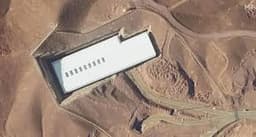
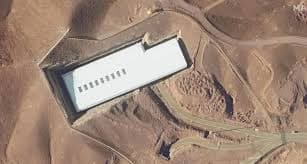
The Fordow Fuel Enrichment Plant is located near the city of Qom in north-central Iran, about 100 miles southwest of Tehran. It is built into the side of a mountain within a former Islamic Revolutionary Guard Corps (IRGC) military compound.
Educational content is AI-generated and sourced from Wikipedia. It should not be considered financial advice.
2 markets tracked

No data available
| Market | Platform | Price |
|---|---|---|
![]() | Poly | 19% |
![]() | Poly | 10% |


No related news found
Add this market to your website
<iframe src="https://predictpedia.com/embed/Veo7sl" width="400" height="160" frameborder="0" style="border-radius: 8px; max-width: 100%;" title="Israel military action against Fordow nuclear facility by...?"></iframe>