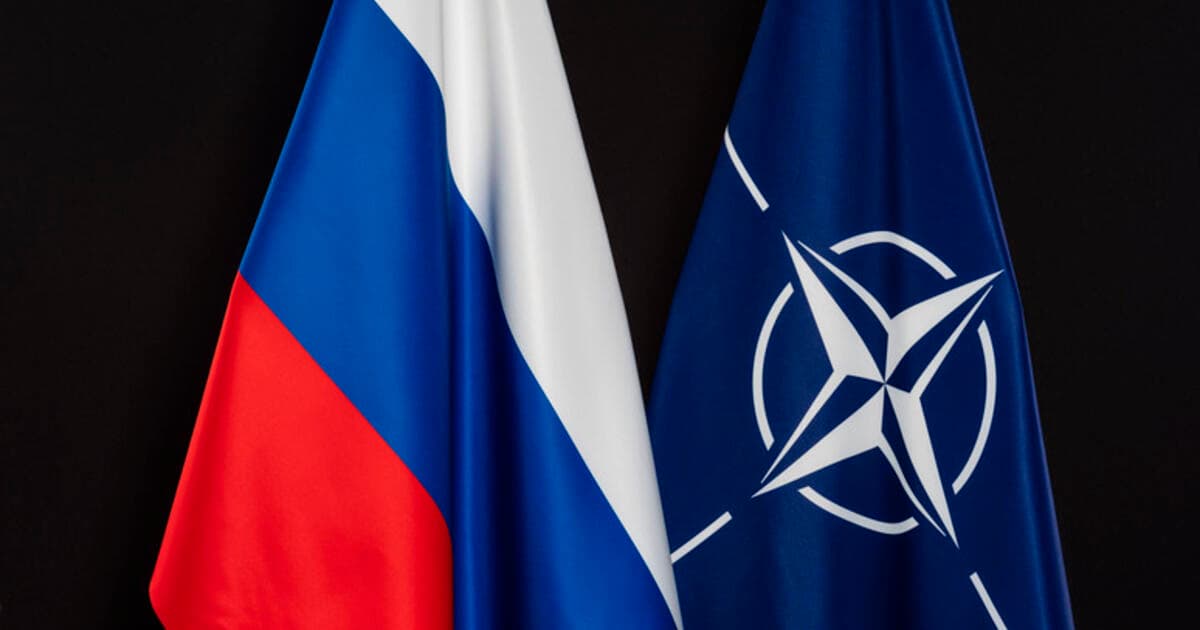
Will Russia invade a NATO country by...?
$5.50M
1
1
Will Russia invade a NATO country by...?
$5.50M
1
1
AI Analysis
Trader mode: Actionable analysis for identifying opportunities and edge
About This Event
This market will resolve to "Yes" if Russia commences a military offensive intended to establish control over any portion of any NATO country between May 28 and December 31, 2025, 11:59 PM ET. Otherwise, this market will resolve to "No". For the purposes of this market, land de facto controlled by NATO member states or Russia as of May 28, 2025, will be considered the sovereign territory of those countries. Hybrid or “grey zone” operations conducted by unmarked personnel will qualify if they a
This saved analysis is awaiting a background update.
Current Market Outlook
Polymarket traders are pricing a Russian invasion of a NATO country by December 31, 2026 at just 9%. That means the market sees this as an unlikely but not impossible scenario. For context, a 9% probability is roughly equivalent to the chance of rolling a 10 or higher on a 20-sided die. The market has seen $5.3 million in volume, which is high liquidity for a geopolitical question this broad.
The market resolves to "Yes" if Russia launches a military offensive intended to control any portion of any NATO member state between May 28 and December 31, 2025. Resolution is imminent or past due. The low price reflects a consensus that direct confrontation with NATO remains off the table for now.
Key Factors Driving the Odds
The primary reason for the 9% probability is Russia's current military posture. After three years of war in Ukraine, Russian forces are stretched thin. A 2024 RAND study estimated Russia has lost over 300,000 casualties and thousands of armored vehicles. Opening a second front against NATO, which has 3.5 million active military personnel across its 32 members, would be strategically irrational.
NATO's Article 5 collective defense clause is a powerful deterrent. No NATO country has been invaded since the alliance's founding in 1949. The Baltic states and Poland have significantly increased defense spending since 2022, with Poland hitting 4% of GDP.
The second factor is the nature of "grey zone" operations. The market's resolution criteria include hybrid attacks by unmarked personnel. This is the most likely pathway to a "Yes" outcome. Russia has conducted cyberattacks, election interference, and sabotage campaigns against NATO members for years. But the market requires a military offensive intended to establish territorial control. That's a higher bar than most current Russian activities.
What Could Change These Odds
The biggest catalyst would be a Russian military breakthrough in Ukraine that frees up forces for other fronts. If Ukraine's defense collapses in 2025, Putin might calculate that NATO is unwilling to fight. That scenario would push odds above 25%.
A second trigger: a major incident in the Baltic states. Russia could manufacture a border clash with Latvia or Estonia, especially around the Suwalki Gap. If Russian forces cross into NATO territory for even a few hours, the market would resolve "Yes."
Third, the window for resolution is narrow. The market expires December 31, 2025. That's only seven months from now. If nothing happens by November, odds will drift toward zero. The short timeframe itself is a reason the probability is low.
The 9% price is rational given current conditions. But it's not zero. Grey zone operations that escalate into direct military action remain the most realistic path to a "Yes" resolution.
AI-generated analysis based on market data. Not financial advice.
Saved Jul 28, 2026 UTCThis saved content is awaiting a background update.
Overview
This prediction market asks whether Russia will launch a military offensive intended to establish control over any portion of a NATO member state's sovereign territory between May 28 and December 31, 2025. The resolution criteria specify that land de facto controlled by NATO members or Russia as of May 28, 2025, counts as sovereign territory, and hybrid or grey zone operations by unmarked personnel qualify if they aim to establish control. The market excludes territories already under Russian control or contested before the start date, such as parts of Ukraine. This question has gained attention because NATO's Article 5 collective defense clause means an attack on one member is an attack on all, raising the stakes for global security. Since Russia's full-scale invasion of Ukraine in 2022, tensions between Russia and NATO have escalated, with increased military deployments, cyber attacks, and hybrid operations along NATO's eastern flank. Countries like Poland, the Baltic states (Estonia, Latvia, Lithuania), and Finland, which joined NATO in 2023, have reported provocations including border incidents, GPS jamming, and disinformation campaigns. Analysts debate whether Russia would risk direct confrontation with NATO, given the alliance's conventional military superiority and nuclear deterrent. However, Russia's willingness to use force against neighbors, its stated opposition to NATO expansion, and its testing of NATO's response through grey zone tactics keep the question relevant. The market reflects uncertainty about whether Russian President Vladimir Putin would escalate beyond Ukraine to challenge NATO directly, especially as the war in Ukraine continues and Western support for Kyiv remains a point of contention.
Historical Context
The question of Russia attacking a NATO country has roots in the post-Cold War period. NATO expanded eastward after 1991, incorporating former Warsaw Pact members and Baltic states. Russia viewed this as a breach of informal assurances given during German reunification. In 2008, Russia invaded Georgia, a NATO aspirant, and recognized the breakaway regions of Abkhazia and South Ossetia. That same year, NATO declared that Ukraine and Georgia would become members, though no timeline was set. In 2014, Russia annexed Crimea and fomented war in eastern Ukraine, actions that led to NATO suspending practical cooperation and increasing troop rotations in the Baltics and Poland. The alliance deployed four multinational battlegroups to Estonia, Latvia, Lithuania, and Poland in 2017 under the Enhanced Forward Presence initiative. Russia's full-scale invasion of Ukraine in February 2022 triggered the largest security crisis in Europe since World War II. Finland and Sweden abandoned their neutrality, with Finland joining NATO in April 2023 and Sweden in March 2024. Russia responded by stationing nuclear weapons in Belarus and conducting snap exercises near NATO borders. Hybrid attacks have increased: Estonia reported cyber attacks on government systems in 2022, Latvia saw GPS interference affecting aviation in 2023, and Poland experienced a missile incident in November 2022 that killed two citizens, though it was likely a Ukrainian air defense malfunction. Russia has also weaponized migration by flying migrants to Belarus and pushing them toward Polish and Lithuanian borders. These incidents have tested NATO's response but have not triggered Article 5. The alliance has repeatedly stated it is prepared to defend every inch of its territory, but grey zone tactics allow Russia to probe without crossing the threshold for a conventional attack.
Why It Matters
A Russian attack on a NATO country would trigger Article 5, committing all 32 members to collective defense. This could escalate into a direct military confrontation between Russia and NATO, two nuclear-armed powers. The immediate economic effects would include market volatility, disruption of trade routes, and potential energy supply cuts. Europe depends on NATO's security framework for stability, and any breach would reshape defense spending, force deployments, and alliance cohesion. The United States, as the largest NATO contributor, would face pressure to respond, potentially drawing it into a war with Russia. Global financial markets would react sharply, with safe-haven assets like gold and U.S. Treasury bonds likely rising while stocks and the euro fall. The humanitarian impact would be severe: NATO members near Russia, like the Baltic states and Poland, could see civilian casualties and refugee flows. The outcome would also affect non-NATO countries like Ukraine, Moldova, and Georgia, which rely on NATO's deterrence to prevent Russian expansion. A successful Russian attack would undermine the credibility of NATO's security guarantee, potentially encouraging further aggression in other regions, such as East Asia. Conversely, a failed attack or strong NATO response could reinforce deterrence. The question matters because it tests the limits of post-1945 European security architecture and the viability of collective defense in an era of hybrid warfare.
Current Status
As of mid-2025, Russia's war in Ukraine continues with no resolution. Russian forces have made incremental gains in eastern Ukraine but have not achieved a breakthrough. U.S. intelligence assessments from early 2025 indicate Russia is rebuilding its conventional forces but is unlikely to be ready for a major new offensive against NATO before 2026 or 2027, given losses in Ukraine. However, hybrid operations have intensified. In March 2025, Estonia reported a cyber attack on its parliament and government networks attributed to Russian state-backed hackers. Poland has recorded increased incursions of its airspace by Russian drones and missiles, though none have hit populated areas. Finland has seen GPS jamming affecting civilian flights near its eastern border. NATO has responded by increasing surveillance and rotating additional troops to the Baltic region. The alliance conducted its Steadfast Defender exercise in early 2025, the largest since the Cold War, involving 90,000 troops. Political tensions remain high: Trump has publicly pressured NATO members to increase defense spending to 3% of GDP, and some European leaders worry about U.S. reliability. The market period from May to December 2025 will test whether these tensions and hybrid activities escalate into a conventional attack.
Frequently Asked Questions
What is Article 5 of the NATO treaty?
Article 5 is the collective defense clause stating that an armed attack against one or more NATO members in Europe or North America shall be considered an attack against all. It was invoked once, after the September 11, 2001 attacks on the United States.
Has Russia ever attacked a NATO country before?
No NATO member has been directly attacked by Russia since the alliance was founded in 1949. However, Russia has used hybrid tactics, such as cyber attacks and disinformation, against NATO members, including Estonia in 2007 and various countries since 2014.
Educational content is AI-generated and sourced from Wikipedia. It should not be considered financial advice.