$26.19K
1
2

$26.19K
1
2
Trader mode: Actionable analysis for identifying opportunities and edge
This market will resolve to "Yes" if Donald Trump, the US government, or US armed forces announces that US armed forces conducted a new strike against any watercraft designated as a narco terrorist target between market creation and the specified date, 11:59 PM ET. Otherwise, this market will resolve to "No". Any announcement made within this market's timeframe of a qualifying, previously unannounced strike will count, regardless of whether the strike occurred within this market's timeframe. A
Prediction markets currently give a 67% chance that Donald Trump, the U.S. government, or the U.S. armed forces will announce a new military strike against a vessel designated as a narco-terrorist target by March 14, 2026. In simpler terms, traders see a roughly 2 in 3 probability of an official announcement about a "drug boat" strike happening within the next two weeks. This shows a clear expectation that another such event is more likely than not.
The high probability is based on recent history and policy. During his first term, the Trump administration authorized U.S. Southern Command to increase interdiction efforts, including kinetic strikes, against drug smuggling vessels in international waters. These operations, often targeting "go-fast" boats, were framed as counter-narcotics and counter-terrorism actions.
The market odds suggest traders believe this policy is active and that another strike is operationally plausible within a short timeframe. The 67% probability also likely accounts for the administration's communication strategy. Past strikes have been announced to demonstrate enforcement action, so traders may expect any new operation to be publicly confirmed.
The main date is the market's resolution deadline of March 14, 2026. Any official statement from the White House, U.S. Department of Defense, or U.S. Southern Command before that time would trigger a "Yes" outcome.
Monitoring official press releases and news reports from these entities is key. A surge in related official statements about counter-narcotics operations in the Caribbean or Eastern Pacific could be a leading indicator. There is no specific scheduled event for a strike, so the announcement could come at any moment before the deadline.
Prediction markets are generally useful for forecasting events with clear, verifiable outcomes like official announcements. For niche military or policy actions, markets can be sensitive to recent patterns. If a strike occurred recently, traders might reasonably expect another.
However, the limited trading volume here suggests a smaller pool of informed traders. This can make prices more volatile if new information emerges. Markets also cannot predict unforeseen operational delays or sudden changes in diplomatic considerations that might pause such actions. The forecast is a snapshot of collective belief based on available public information, not a guarantee.
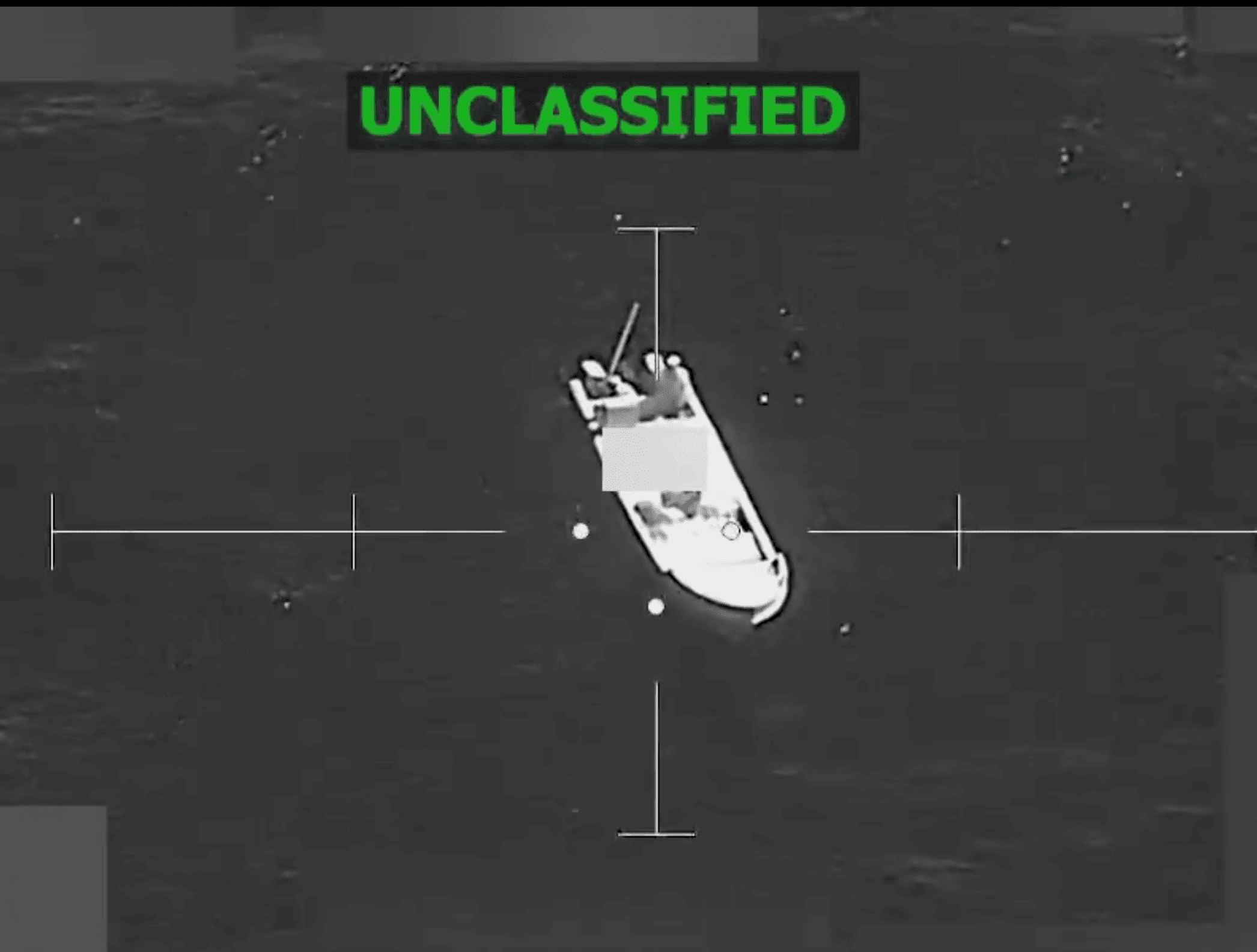
The Polymarket contract "Trump announces new drug boat strike by March 14, 2026?" is trading at 67 cents, indicating a 67% probability. This price suggests traders see a new announcement as more likely than not, but with significant uncertainty remaining. The market has thin liquidity, with only $26,000 in total volume, meaning a single large bet could move the price substantially. The resolution deadline is 11:59 PM ET on March 14, 2026.
The 67% probability reflects a calculated assessment of policy continuity and operational tempo. During his first term, the Trump administration authorized and publicly announced multiple kinetic strikes against "drug boats," often referring to vessels linked to transnational criminal organizations. These actions were framed as part of a broader counter-narcotics and national security strategy. Traders are pricing in the expectation that a second Trump administration would resume this high-profile tactic. The market is essentially betting that such strikes are a established tool in this policy area and that a new administration would seek early, visible demonstrations of its enforcement posture.
The primary catalyst is official communication from the White House, Department of Defense, or U.S. Southern Command. A specific, publicized event involving a maritime drug interdiction that escalates to a kinetic strike would almost certainly trigger a "Yes" resolution. Conversely, the odds could fall if the two-week window passes without incident or announcement. A key risk to the "Yes" case is operational secrecy. The market resolves on an announcement, not the event itself. The government may conduct a qualifying strike but choose not to publicize it for tactical or diplomatic reasons, which would cause the market to resolve "No" despite the action occurring. Thin liquidity also makes the price volatile to rumor or unverified social media reports.
AI-generated analysis based on market data. Not financial advice.
This prediction market focuses on whether former President Donald Trump, the US government, or US armed forces will announce a new military strike against watercraft designated as narco-terrorist targets. The market resolves to 'Yes' if such an announcement is made within the specified timeframe, regardless of when the actual strike occurred. This topic sits at the intersection of US drug policy, military intervention, and presidential campaign rhetoric. During his first term, Trump frequently discussed aggressive military action against drug cartels, including suggesting the US Navy could 'shoot down' drug boats. The concept of designating cartels as Foreign Terrorist Organizations (FTOs) gained traction within his administration, though no major cartel received that formal designation. The question reflects ongoing policy debates about how to combat transnational drug trafficking and whether kinetic military force is an appropriate or effective tool. Interest in this market stems from Trump's history of bold statements on the issue, the persistent challenge of drug smuggling via maritime routes, and the potential for such an announcement to influence domestic politics and international relations, particularly with Mexico and Colombia.
The US has a long history of military involvement in counter-narcotics operations, particularly in maritime domains. The War on Drugs, declared by President Richard Nixon in 1971, gradually expanded to include military assets. In December 1989, President George H.W. Bush ordered Operation Just Cause, the invasion of Panama, which included capturing dictator Manuel Noriega on drug trafficking charges. This set a precedent for using military force for counter-narcotics objectives. In the 1990s and 2000s, US Navy and Coast Guard vessels routinely interdicted drug smuggling 'go-fast' boats and semi-submersibles in international waters, primarily under law enforcement authorities. A significant escalation in rhetoric occurred during the Trump administration. In 2017, Trump reportedly asked his advisors about the possibility of launching missiles into Mexico to destroy drug labs, an idea that was rejected. In 2020, he publicly suggested designating cartels as terrorist organizations and using military force against them, drawing immediate condemnation from Mexican officials. These historical actions and statements create a framework where the announcement of a direct 'strike'—a term implying offensive military action rather than interdiction—is a plausible, though escalatory, policy option.
An announcement of a US military strike on drug boats would have immediate international repercussions. It would test the limits of security cooperation with Latin American allies, particularly Mexico, and could violate national sovereignty if conducted in territorial waters without consent. Domestically, it would reignite debates about the Authorization for Use of Military Force (AUMF) and whether counter-narcotics operations constitute 'war.' Politically, such an announcement could be framed as demonstrating decisive action against the opioid crisis, which claims over 100,000 American lives annually. It could also be criticized as militarizing a public health and law enforcement challenge. For prediction markets and observers, the topic is a proxy for measuring the likelihood of a more aggressive, Trump-era approach to cartels resurfacing, with real consequences for border security, diplomatic relations, and military policy.
As of mid-2024, the US military continues its long-standing support role for counter-narcotics interdictions in international waters, primarily through intelligence sharing and surveillance. No recent presidential administration has publicly announced a kinetic 'strike' against a specific drug boat in the manner defined by this market. The policy debate continues, with some US lawmakers periodically introducing legislation to designate certain cartels as FTOs, which could provide a legal basis for more direct action. The Mexican government maintains its firm opposition to any foreign military operations on its soil or in its waters. The topic remains live in political discourse due to the ongoing fentanyl crisis and campaign rhetoric from candidates, including Donald Trump, who has again spoken forcefully about cartels on the 2024 campaign trail.
The US Navy and Coast Guard routinely board and seize drug smuggling vessels in international waters under law enforcement authorities. However, they have not typically conducted 'strikes'—meaning kinetic military attacks like missile or gunfire intended to destroy rather than detain—against such targets in peacetime. The market specifies this more aggressive type of action.
There is no single legal definition. In this context, it likely refers to a watercraft used by a drug trafficking organization that the announcing authority also labels as terrorist. While no major cartels are officially designated Foreign Terrorist Organizations, some have been labeled Transnational Criminal Organizations, and the line between crime and terrorism is often blurred in US policy discussions.
Striking a vessel in another nation's territorial waters (within 12 nautical miles of shore) without that nation's consent would violate international law and the UN Charter, which prohibits the use of force against another state's territorial integrity. Such an action would be considered an act of war by Mexico and most of the international community.
An interdiction is a law enforcement action to stop, board, inspect, and seize a vessel and its contraband, usually with the goal of arresting crew and preserving evidence. A strike is a military action using lethal force to destroy a target. The market is specifically about an announcement of the latter.
As Commander-in-Chief, the US President has the ultimate authority to order a military strike. In practice, such an order would flow through the Secretary of Defense to the relevant combatant commander, such as the head of US Southern Command. The legal authority would likely be debated, potentially relying on self-defense arguments or existing counter-terrorism authorizations.
Educational content is AI-generated and sourced from Wikipedia. It should not be considered financial advice.
2 markets tracked

No data available
| Market | Platform | Price |
|---|---|---|
![]() | Poly | 67% |
![]() | Poly | 53% |


No related news found
Add this market to your website
<iframe src="https://predictpedia.com/embed/XqVfDf" width="400" height="160" frameborder="0" style="border-radius: 8px; max-width: 100%;" title="Trump announces new drug boat strike by...?"></iframe>