Largest Company end of December 2026?
PM $8.64M
1
8
Largest Company end of December 2026?
PM $8.64M
1
8
Current odds
Snapshot from
As of Oct 21, 2026, 3:00 AM UTC, the highest-priced outcome on Polymarket is NVIDIA at 73%.
Polymarket
- NVIDIA73%
- Apple22.1%
- Alphabet1.8%
- Microsoft0.4%
- SpaceX0.2%
Yes prices. They are not order quotes; check each platform's rules, fees and live prices before trading.
AI Analysis
Trader mode: Market mechanics, assumptions and risks
PM $8.64M
Reported volume · provider units
8
Saved contracts
0
Same-question pairs
Source snapshot: Oct 21, 2026, 3:00 AM UTC
About This Event
This market will resolve to the largest company in the world by market cap on December 31, 2026, as of market close. The resolution source for this market will be a consensus of credible reporting.
This analysis is awaiting a background update, so its prices may be older than the odds above.
Snapshot observed 2026-10-13T00:00:05.902Z. This analysis describes that snapshot and is not a live news update.
What the contract measures
The contract asks which company will be the largest in the world by market capitalization on December 31, 2026, "as of market close" [1]. The provider states that the resolution source "will be a consensus of credible reporting" [1]. The saved event lists an end time of 2027-01-01T04:59:00.000Z [1]. That listed close time falls after the December 31 date in the rule text, so readers should check the exact wording and timestamp before comparing this contract with others that use a different close convention.
Reading the snapshot
The provider observed these prices at 2026-10-13T00:00:05.902Z, and the application retrieved the saved record at 2026-10-13T02:11:35.742Z [1]. The market was listed as active at that time [1]. The Yes prices were NVIDIA at 0.775, Apple at 0.1665, Alphabet at 0.018, Microsoft at 0.0035, SpaceX at 0.0015, and Saudi Aramco, Amazon, and Tesla at 0.0005 each [1]. These figures are snapshots from one moment. They are not executable quotes or verified probabilities, and they do not show the current state of the market.
Each company has its own Yes and No contract within the same event. The Yes and No prices for each company sum to 1.0 in the saved data, so the Yes prices are the relevant comparison. The sample includes all eight saved markets for this event, with no partial sample flag [1]. The saved record also warns that the providers may not list every possible real-world outcome [1]. A company missing from the list is not shown to have a lower price. Because all markets come from one provider event, no cross-platform comparison is made here, and the prices should not be averaged with other sources.
Volume is not included in this interpretation, and it would not indicate liquidity or the number of traders.
What remains uncertain
The supplied evidence does not explain why prices are where they are, and it contains no recent reporting on market capitalization rankings. It also does not show how the resolution source will be applied in practice. The contract has not resolved, and the evidence does not establish a final outcome. Readers should check the contract rules and listed close time directly before drawing conclusions.
References
- Polymarket: Largest Company end of December 2026?. Provider data observed 2026-10-13T00:00:05.902Z.
AI-generated analysis based on market data. Not financial advice.
Saved Oct 13, 2026 UTCThis saved content is awaiting a background update. It may contain outdated claims; use the dated market data and provider rules for the latest available information.
Overview
This PredictPedia entry covers the Polymarket event "Largest Company end of December 2026?" in the Economy category. The event's stated rule is that it "will resolve to the largest company in the world by market cap on December 31, 2026, as of market close" [1]. The rules name a resolution source of "a consensus of credible reporting" [1]. The listed end time is 2027-01-01T04:59:00.000Z [1]. That timestamp is the contract's closing time under the listed rules. It is not a separately announced event, and the rules' December 31 date should not be read as an announcement of any corporate or market event. The event is a set of separate yes or no markets, one for each named company. Each asks whether that company will be the largest by market capitalization at the stated close [1]. Market capitalization is the total stock value of a publicly traded company. The public list the source points to describes companies with the largest market value as most or all categorized as megacap stocks [2]. That list is background on the category, not a ranking for this contract. The prices in this entry are snapshots from the observation time shown in the header. They are not executable quotes, and they are not verified probabilities. In the snapshot, the Yes price for NVIDIA was 0.775, for Apple 0.1665, for Alphabet 0.018, for Microsoft 0.0035, for SpaceX 0.0015, and for Saudi Aramco, Amazon and Tesla 0.0005 each [1]. Each company's Yes and No prices sum to one in the saved data. Price differences between markets reflect this snapshot only and do not by themselves identify an opportunity.
Why It Matters
The contract measures which company holds the top position for total stock market value at a single point in time, the market close on December 31, 2026 [1]. Because the contract resolves on a specific close rather than over a period, the outcome depends on the ranking at that moment. Market capitalization changes as share prices move, so a company that leads on one date may not lead on another [1][2]. The resolution rule relies on a consensus of credible reporting rather than a single named data feed, which means the reporting used to settle the question is part of the contract's design [1]. Readers should check the full rules at the provider before relying on the resolution mechanics.
Snapshot context
The latest published provider snapshot for this topic was observed on 2026-10-13 at 00:00 UTC. It contains listings from Polymarket. Market descriptions and listed closing times define the contracts; they do not establish that the real-world outcome has occurred. This article does not include a separately verified news update. [1]
Frequently Asked Questions
What exactly does the contract resolve on?
The rules state that the event will resolve to the largest company in the world by market cap on December 31, 2026, as of market close [1]. The resolution source is described as a consensus of credible reporting [1].
Why does the listed end time fall on January 1, 2027?
The provider lists the end time as 2027-01-01T04:59:00.000Z [1]. This is the contract's listed closing time. The source does not describe any separate announcement tied to that time.
Which companies have markets in this event?
The saved event includes separate markets for NVIDIA, Apple, Alphabet, Microsoft, SpaceX, Saudi Aramco, Amazon and Tesla [1]. The provider's saved set includes all eight markets for this event, but that does not establish that every possible company is listed [1].
Do the prices show which company will win?
No. The prices are snapshots at the observation time and are not executable quotes or verified probabilities [1]. The highest Yes price in the snapshot belonged to NVIDIA at 0.775 [1], but the snapshot does not establish the outcome.
AI-written background. References identify the evidence used; Wikipedia links under Learn More are additional reading. Prices and provider rules are dated snapshots. This is not financial advice.
Related prediction markets
Prices are catalog snapshots and may have changed. Check each market's rules and observation time.
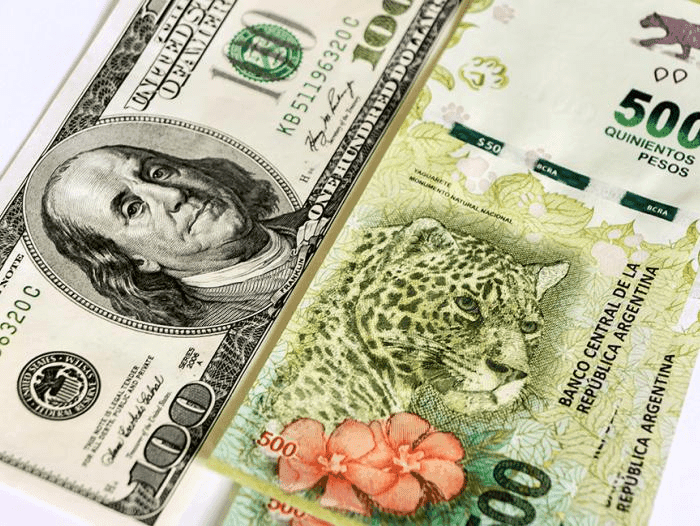
Argentina Official USD Exchange Rate end of 2026?
PM $12.0K
EU emergency diesel stocks end of December 2026?
PM $42.7K
Bank of Canada decision in Dec 2026?
PM $407.4K · K 19.3K contractsWill the Bank of Canada increase the target for the overnight rate by 25 bps at the October interest rate announcement?
Kalshi: Will Bank of Canada hike rates by 25bps at their December 2026 meeting?
Related contracts
Will the Bank of Canada make no change to the target for the overnight rate at the October interest rate announcement?
Kalshi: Will Bank of Canada maintain the current rate at their December 2026 meeting?
Related contracts
Will the Bank of Canada make no change to the target for the overnight rate at the December interest rate announcement?
Kalshi: Will Bank of Canada maintain the current rate at their December 2026 meeting?
Same question, fine print differs
Related or unreviewed contracts may settle differently. Their gap is not an equivalent-contract comparison.
Saved prices; check contract rules.
ECB Interest Rates: December 2026
PM $35.9K
Fed Decision in December?
PM $4.15M
Bank of Russia decision in December?
PM $13.7KMarket Insights
Price gaps of 2 pp+
0
Same-question pairs
0
No outcomes on this page have been reviewed as the same question on both platforms yet.
Price differences do not establish arbitrage. Check each pair's review, current order prices, fees and settlement rules.