This event is no longer in the live catalog. Showing its last saved snapshot.

Highest temperature in Los Angeles on November 19?
PM $36.6K
1
11
- Reported volume
- PM $36.6K
- Events
- 1
- Markets
- 11
AI Analysis
Trader mode: Market mechanics, assumptions and risks
PM $36.6K
Reported volume · provider units
11
Saved contracts
0
Same-question pairs
Source snapshot: Nov 20, 2026, 9:00 AM UTC
Snapshot observed Nov 19, 2026, 12:00 AM UTC. This analysis describes that snapshot and is not a live news update.
What the contract measures
This Polymarket event asks which temperature range will contain the highest temperature reported at Los Angeles International Airport (KLAX) on November 19, 2026 [1]. Each market covers one whole-degree Fahrenheit range. The qualifying value comes from routine METAR observations, and a report whose line begins with SPECI does not count [1]. Celsius readings are converted to Fahrenheit and rounded to a whole degree, and that rounded value decides the range [1].
Reading the snapshot
The provider's observation time is Nov 19, 2026, 12:00 AM UTC, and the source was retrieved at Nov 19, 2026, 2:37 AM UTC [1]. These prices describe that snapshot. They are not live quotes or executable prices.
The highest Yes price was 0.485 for the 66-67°F range, followed by 0.405 for 64-65°F. The other nine ranges were 0.075 or lower [1]. The Yes prices add up to about 1.05, so they should not be read as a complete set of verified probabilities.
The sample includes all 11 saved markets for this event, and partialSample is false [1]. The reported volume of $4,346 is Polymarket's own total in US dollars [1]. Volume does not measure liquidity or the number of traders.
Timing needs care. The listed end time is Nov 19, 2026, 12:00 PM UTC [1]. The rule text describes a different trigger: resolution occurs at the first METAR issuance on the following day or by 11:59 PM ET on that following day, whichever comes first [1]. The saved source does not explain how these two descriptions relate.
What remains uncertain
The evidence does not show the final highest temperature or any resolved outcome. The rules allow for corrected observations, a fallback to the Weather Underground Daily Observations table, and a period of up to seven days for clearly erroneous data [1]. Any of these could affect how the contract settles. The evidence also does not explain why prices sit where they do, and it contains no information about events after the snapshot time.
References
- Polymarket: Highest temperature in Los Angeles on November 19?. Provider data observed Nov 19, 2026, 12:00 AM UTC.
Snapshot observed Nov 19, 2026, 12:00 AM UTC. This analysis describes that snapshot and is not a live news update.
What the contract measures
This Polymarket event asks which temperature range will contain the highest temperature reported at Los Angeles International Airport (KLAX) on 19 November 2026. The qualifying value comes from routine METAR observations, and SPECI special observations do not count [1]. The hourly temperature remark is used where present, and otherwise the body temperature group applies [1]. Converted values are rounded to whole degrees Fahrenheit, and each range is defined in whole degrees Fahrenheit [1].
The contract resolves at the issuance of the first METAR for the station on the following day or by 11:59 PM ET on that day, whichever comes first. Fallback sources and a seven-day window for clearly erroneous data are also described [1]. The provider lists an end time of Nov 19, 2026, 12:00 PM UTC [1]. That listed time is a provider field and should be read alongside the resolution wording, not as a separate announced event.
Reading the snapshot
The saved snapshot was observed at Nov 19, 2026, 12:00 AM UTC and retrieved at Nov 19, 2026, 2:37 AM UTC. It lists 11 markets, all included, with a reported volume of $4,346 in US dollars on Polymarket [1]. This is a snapshot, not a current quote, and it does not show whether prices have changed since it was taken.
The highest Yes prices in the snapshot are 0.485 for 66-67°F, 0.405 for 64-65°F, and 0.075 for 68-69°F [1]. Other ranges are priced at 0.045 or lower. The Yes prices across all 11 ranges sum to roughly 1.05, so they are not normalized probabilities for this snapshot. Volume is a total reported by the provider for its event and does not indicate liquidity, executable depth, or the number of traders.
Because every market in this event is on one platform and wording is shared, the ranges can be compared within this event. No comparison to other platforms or events is supported by this evidence.
What remains uncertain
The evidence does not include the observed temperatures for 19 November, so no outcome can be determined from it. The snapshot predates the observation date, and the evidence does not show later prices or any resolution. The evidence also does not explain why prices are where they are. The sample is complete for this saved event, but that does not establish that the provider lists every possible outcome.
References
- Polymarket: Highest temperature in Los Angeles on November 19?. Provider data observed Nov 19, 2026, 12:00 AM UTC.
AI-generated analysis based on market data. Not financial advice.
Saved Nov 19, 2026 UTCOverview
This PredictPedia entry covers a Polymarket event asking for the highest temperature recorded at Los Angeles International Airport (KLAX) on November 19, 2026. The event is divided into temperature ranges, each stated in whole degrees Fahrenheit, and each range is its own contract. The resolution rules define which observations count, how the temperature is read, and how it is converted and bracketed [1]. The station is Los Angeles International Airport, which the rules identify by the code KLAX [1]. Los Angeles is the most populous city in California and the principal city of a large metropolitan area [2]. The airport's location is relevant only because the rules name it as the source of the temperature reading, not because the contract depends on any city-level measurement. The rules specify the qualifying value in some detail. It is the highest temperature reported in the hourly temperature remark of any routine (METAR) observation for KLAX on the observation date [1]. Reports beginning with SPECI, which denote special observations, do not count. Every other report is treated as routine, including reports issued off the nominal hour and reports without a METAR or SPECI label [1]. The hourly temperature remark is a group beginning with the letter T followed by eight digits, where the first digit gives the sign, the next three give the temperature in tenths of a degree Celsius, and the following four give the dew point, which is not used [1]. If a routine observation lacks that remark, the temperature in the body of the observation governs for that report, in whole degrees Celsius [1]. The Celsius value is then converted to Fahrenheit using the standard formula and rounded to the nearest whole degree, with values ending in exactly half rounded up [1]. The resulting whole Fahrenheit number determines which range contains the observation [1]. Observation times are converted to the station's local time, including any daylight-saving shift in effect, to decide whether a report falls on the observation date [1]. The primary resolution source is the routine observations for KLAX published by the Aviation Weather Center [1]. If that source has not published a routine observation reporting a temperature for the date by 11:59 PM ET on the following day, the Weather Underground Daily Observations table is used instead [1]. If neither source has published enough data to determine a temperature by that deadline, the market resolves to the lowest bracket [1]. The rules also address corrections: the report the resolution source shows for a given observation time counts whether or not it is marked as a correction, and changes are considered only until the first datapoint for the following date has been published [1]. Where the source publishes clearly erroneous data from technical or operational error, the market may remain open for up to seven calendar days (ET) for a correction [1]. An important point for reading the event is the timing. The provider data lists an end time of 12:00 UTC on November 19, 2026, which falls before the end of the observation date [1]. The rules, however, tie resolution to the first routine observation for the following day or to 11:59 PM ET on that following day, whichever comes first [1]. The saved data does not explain how these two statements fit together, so anyone relying on this event should read the current rules directly rather than assume a particular settlement time.
Why It Matters
The contract measures a single observable quantity: the highest hourly temperature reported at KLAX on the observation date, as recorded in routine airport weather observations and converted into Fahrenheit brackets [1]. Each range contract pays out according to whether the qualifying Fahrenheit value falls inside its bracket [1]. Because the measurement is tied to a named weather station and published observation formats, the rules define in detail which reports count, how conflicting values are handled, and what happens if data is missing or later corrected [1]. This specificity is what makes the contract checkable against the named sources, rather than a general judgment about the weather.
Snapshot context
The latest published provider snapshot for this topic was observed on 2026-11-19 at 00:00 UTC. It contains listings from Polymarket. Market descriptions and listed closing times define the contracts; they do not establish that the real-world outcome has occurred. This article does not include a separately verified news update. [1]
Frequently Asked Questions
What temperature does this market use to decide the outcome?
It uses the highest temperature reported in the hourly temperature remark of any routine METAR observation for Los Angeles International Airport on the observation date. Special observations beginning with SPECI do not count [1].
How is a Celsius reading converted into a range?
The Celsius value is converted to Fahrenheit with the standard formula and rounded to the nearest whole degree, with values ending in exactly half rounded up. That whole Fahrenheit value determines which range contains the observation [1].
What happens if the primary source has no usable data?
The Weather Underground Daily Observations table is used if the Aviation Weather Center has published no routine temperature observation for the date by 11:59 PM ET on the following day. If neither source has enough data by that deadline, the market resolves to the lowest bracket [1].
Do corrected observations count?
The report the resolution source shows for a given observation time counts whether or not it is marked as a correction. Changes are considered only until the first datapoint for the following date has been published [1].
Does the listed end time mean the outcome is already known?
No. The saved provider data lists an end time of 12:00 UTC on November 19, 2026, but the rules describe resolution tied to observations for the following day, so the listed time alone does not establish when or how the market settles [1].
AI-written background. References identify the evidence used; Wikipedia links under Learn More are additional reading. Prices and provider rules are dated snapshots. This is not financial advice.
Related prediction markets
Prices are catalog snapshots and may have changed. Check each market's rules and observation time.
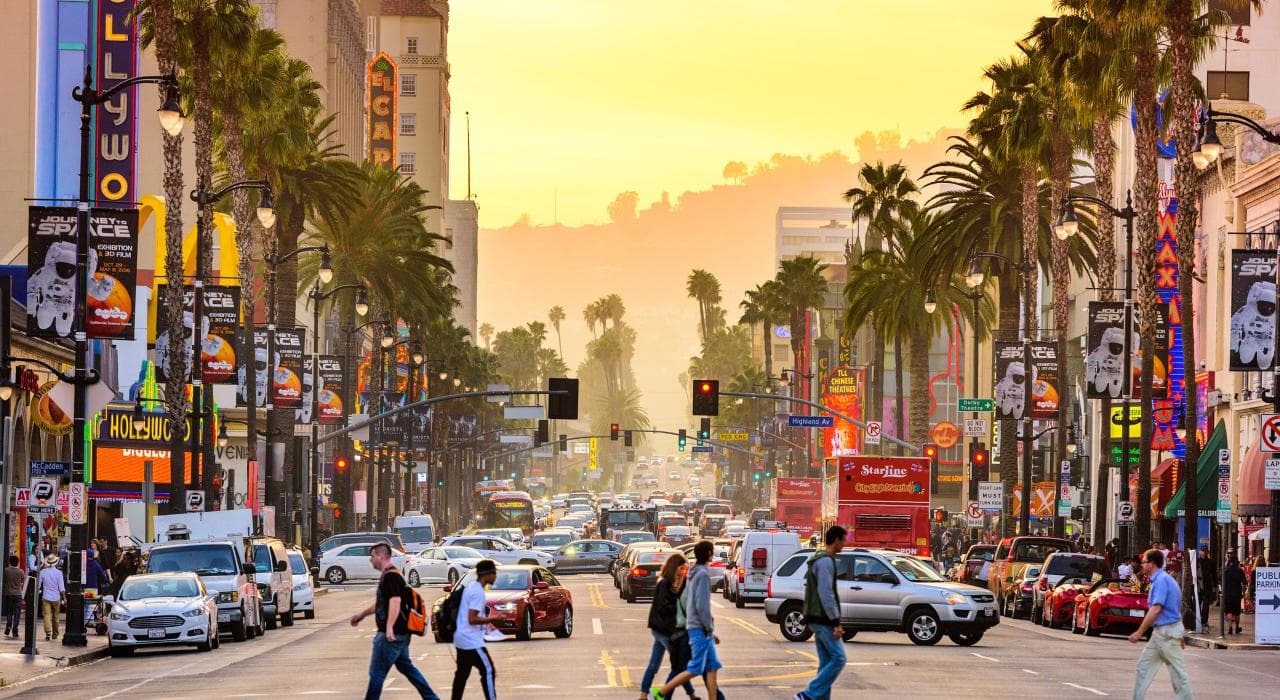
Highest temperature in Los Angeles on November 24?
PM $11.1KHighest temperature in Los Angeles on November 25?
PM $1.4KLowest temperature in Los Angeles on November 24?
PM $0Lowest temperature in Los Angeles on November 25?
PM $0
Highest temperature in Hong Kong on November 24?
PM $54.9K
Highest temperature in Busan on November 24?
PM $35.9KMarket Insights
Price gaps of 2 pp+
0
Same-question pairs
0
No outcomes on this page have been reviewed as the same question on both platforms yet.
Price differences do not establish arbitrage. Check each pair's review, current order prices, fees and settlement rules.