$6.34K
1
8

$6.34K
1
8
Trader mode: Actionable analysis for identifying opportunities and edge
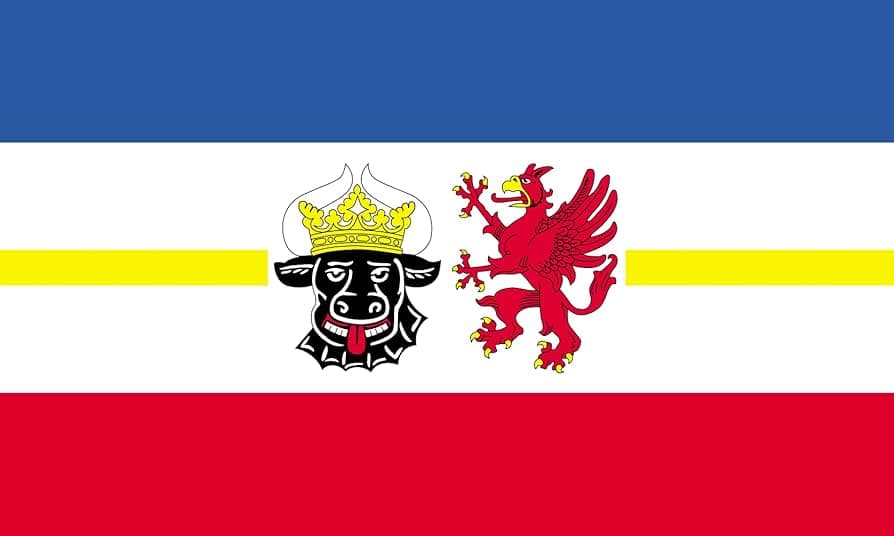
Parliamentary elections to elect the Landtag of Mecklenburg-Vorpommern are scheduled to take place on September 20, 2026. This market will resolve to the political party that wins the greatest number of seats in the state parliament of Mecklenburg-Vorpommern (Landtag) as a result of this election. If voting in the Mecklenburg-Vorpommern election for the Landtag does not occur by January 31, 2027, this market will resolve to "Other". In the event of a tie between multiple parties for the most
Prediction markets currently give the Alternative for Germany (AfD) party a roughly 9 in 10 chance of winning the most seats in the 2026 Mecklenburg-Vorpommern state election. This is a very high level of confidence, suggesting traders see the far-right party as the clear favorite to become the largest political force in the state parliament, known as the Landtag.
Two main factors explain these odds. First, the AfD has been the leading party in national polls for Germany for over a year, and it already performs strongly in eastern German states like Mecklenburg-Vorpommern. In the 2021 state election there, the AfD finished a close second to the current leading party, the center-left Social Democrats (SPD).
Second, the political landscape in the state is fragmented. The current government is a three-party coalition of the SPD, the Left Party, and the Greens. This makes it harder for any single traditional party to rally a unified block of voters against the AfD. Traders are betting that the AfD's consistent base of support, combined with dissatisfaction with the governing coalition, will push it into first place.
The election is set for September 20, 2026. The main events that could shift predictions will be state and national polls over the next two years. A significant scandal involving the AfD, or a major success for the governing coalition that boosts its popularity, could change the trajectory. Also watch for the final weeks of campaigning in summer 2026, when party strategies and public debates will crystallize.
Prediction markets have a solid track record for electoral forecasting, often outperforming polls, especially further from an election. However, this event is nearly two years away, which is a very long timeframe in politics. These high odds reflect a current snapshot of sentiment, not a guaranteed outcome. Major unforeseen events, changes in party leadership, or shifts in the national political mood could all alter the race significantly. The market's confidence is high, but the timeline leaves plenty of room for change.
Prediction markets assign a 90% probability that the Alternative for Germany (AfD) will win the most seats in the 2026 Mecklenburg-Vorpommern state election. This price indicates traders view an AfD victory as nearly certain. The market has thin liquidity, with only $6,000 in total volume, meaning this high-confidence price is based on a relatively small amount of capital. The contract resolves on September 20, 2026, based on which party secures the greatest number of seats in the state parliament, or Landtag.
Two concrete dynamics explain the market's extreme pricing. First, the AfD has led opinion polls in Mecklenburg-Vorpommern for over a year. Recent surveys from INSA and Forsa consistently show the party polling between 30-35%, a significant lead over the second-place Social Democrats (SPD), who typically poll around 20-23%. This polling gap has been stable, suggesting a solidified voter base for the AfD in Germany's northeastern states.
Second, the political landscape favors the AfD. The state is currently governed by a "traffic light" coalition of the SPD, Greens, and Free Democrats (FDP) at the federal level, which is deeply unpopular in the region. Mecklenburg-Vorpommern has a history of strong protest voting and populist success, being the home state of former Chancellor Angela Merkel but also an area with economic challenges. The AfD's focus on immigration and economic discontent resonates here more than in western German states. The market is pricing in the continuation of these national and regional trends.
The primary risk to the current consensus is a major scandal or leadership crisis within the AfD itself. The party faces ongoing scrutiny from Germany's domestic intelligence service and potential legal challenges that could disrupt its campaign. Another factor is voter mobilization. A low turnout could amplify the AfD's core support, but a high turnout driven by centrist voters alarmed by the AfD's rise could benefit the SPD or Christian Democrats (CDU). The CDU, currently polling third, could also gain if the federal government's popularity recovers, but this is considered a less likely scenario given the time until the election. The market will react sharply to the first major polls after the 2025 federal election, which will set the tone for the 2026 state race.
AI-generated analysis based on market data. Not financial advice.
The Mecklenburg-Vorpommern parliamentary election on September 20, 2026, will determine the composition of the state's legislature, the Landtag. This election is a key political event in one of Germany's sixteen federal states, located in the northeastern part of the country. Voters will elect representatives to the state parliament, which in turn selects the Minister-President and forms the state government. The election follows a standard five-year cycle, with the previous election held in 2021. The outcome will influence regional policies on issues like renewable energy, tourism, and agriculture, while also serving as a barometer for national political trends ahead of the next federal election. Mecklenburg-Vorpommern has a population of approximately 1.6 million people, making it one of Germany's least populous states. Its economy relies heavily on tourism along the Baltic Sea coast, shipbuilding, and agriculture. The state has historically been a political battleground between the center-left Social Democratic Party (SPD) and the center-right Christian Democratic Union (CDU), though the far-right Alternative for Germany (AfD) has gained significant support in recent years. The 2026 election is particularly notable because it could challenge the long-standing political dominance of the SPD, which has led the state government for most of the post-reunification period. Interest in this election extends beyond regional politics. Analysts view it as a test case for the stability of Germany's traditional party system and the resilience of democratic norms against populist challenges. The performance of the AfD, which became the second-strongest party in the 2021 election with 16.7% of the vote, will be closely watched. Furthermore, the election could impact national coalition dynamics, as state-level results influence the composition of the Bundesrat, Germany's upper legislative house. Observers are also monitoring voter turnout, which has been declining in the state, from 67.2% in 2011 to 60.3% in 2021. The election process uses a mixed-member proportional representation system. Each voter casts two ballots: one for a direct candidate in their constituency and one for a party list. Seats are allocated to ensure the overall composition of the Landtag reflects the proportional vote share of parties that cross the 5% electoral threshold. The party that wins the most seats typically leads coalition negotiations to form a government. If no party achieves an absolute majority, as has been the case in recent elections, complex coalition building becomes necessary.
Mecklenburg-Vorpommern's political landscape has been shaped by its history as part of East Germany. Following German reunification in 1990, the state held its first democratic election. The CDU won that initial election, but the SPD quickly established dominance. From 1998 to 2021, the SPD consistently emerged as the strongest party in every state election, forming various coalitions with the CDU, The Left, or, briefly, the FDP. This prolonged SPD rule is unique among eastern German states and contrasts with the more volatile politics seen in Saxony or Thuringia. The 2016 election marked a significant shift when the AfD entered the Landtag for the first time with 20.8% of the vote, temporarily becoming the second-strongest force. This result reflected broader national trends of rising populism and discontent with immigration policies. The 2021 election saw the AfD's support dip to 16.7%, but it maintained its position as a major opposition party. These elections demonstrated the fragmentation of the party system, ending the era of straightforward two-party coalitions and requiring more complex three-party arrangements. The consistent need for coalition governments since 2016 highlights the challenges of governance in a multipolar political environment.
The election outcome will determine policy direction for 1.6 million residents on critical issues like energy transition, given the state's role in offshore wind power, and tourism infrastructure development along the Baltic coast. A change in government could alter investment priorities, affecting local businesses and employment in key sectors such as shipbuilding in Rostock and Stralsund. Social policies, including education funding and healthcare access in rural areas, are also at stake. Politically, the result will influence Germany's federal balance of power. The state government participates in the Bundesrat, where it can approve or block national legislation. A strong AfD performance could normalize far-right politics in state legislatures, potentially affecting democratic discourse. For national parties, success or failure here may trigger leadership changes and strategic reevaluations ahead of the 2029 federal election.
As of late 2024, the SPD-led coalition government under Minister-President Manuela Schwesig continues its term. The political atmosphere is dominated by preparations for the 2026 campaign, with parties beginning to select candidates and draft policy platforms. Recent opinion polls suggest a tight race, with the SPD and CDU polling closely and the AfD maintaining significant support around 18-20%. Key issues in public debate include the cost of living, the expansion of renewable energy infrastructure, and the state's response to demographic decline.
Voters cast two ballots: one for a direct candidate in their local constituency and one for a state party list. The 79 seats are allocated through a mixed-member proportional system that ensures the overall party composition matches the proportional vote share, with a 5% threshold for representation.
Manuela Schwesig of the Social Democratic Party (SPD) has been Minister-President since 2017. She leads a coalition government consisting of the SPD and The Left party.
In the 2021 election, the SPD won 39.6% of votes, the AfD 16.7%, the CDU 13.3%, The Left 9.9%, and the Greens 6.3%. The FDP failed to clear the 5% threshold. The SPD formed a coalition with The Left to secure a majority.
Educational content is AI-generated and sourced from Wikipedia. It should not be considered financial advice.
8 markets tracked

No data available
| Market | Platform | Price |
|---|---|---|
![]() | Poly | 90% |
![]() | Poly | 10% |
![]() | Poly | 1% |
![]() | Poly | 1% |
![]() | Poly | 1% |
![]() | Poly | 0% |
![]() | Poly | 0% |
![]() | Poly | 0% |


No related news found
Add this market to your website
<iframe src="https://predictpedia.com/embed/Yez8H1" width="400" height="160" frameborder="0" style="border-radius: 8px; max-width: 100%;" title="Mecklenburg-Vorpommern Parliamentary Election Winner"></iframe>