$22.96K
1
3

$22.96K
1
3
Trader mode: Actionable analysis for identifying opportunities and edge
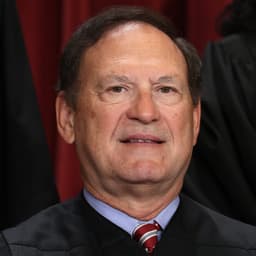
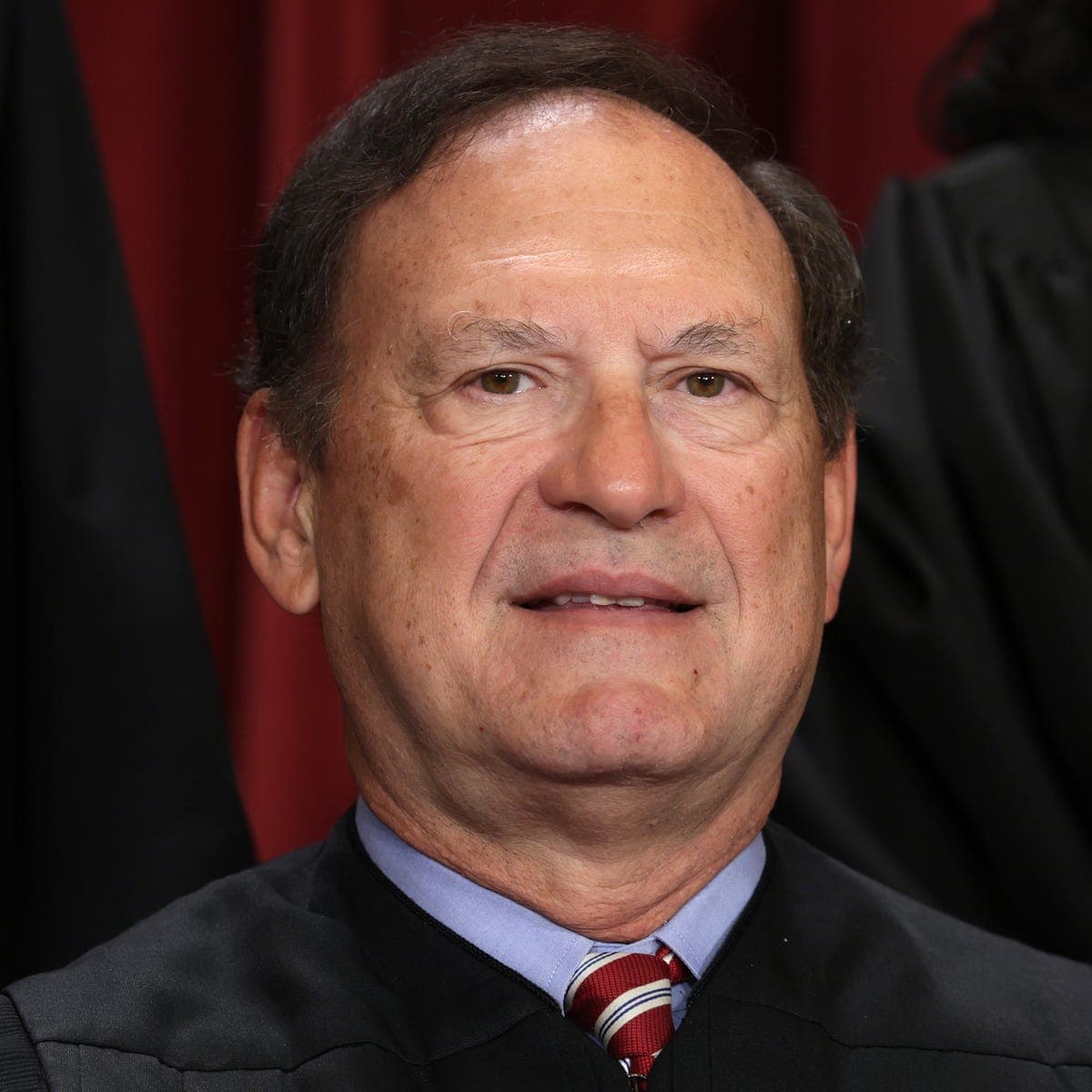
This market will resolve to "Yes" if Samuel Alito announces that he will retire from his position as Associate Justice of the Supreme Court of the United States by the specified date at 11:59 PM ET. Otherwise, this market will resolve to "No". The announced timing of his retirement may be immediate, at the end of the current Supreme Court term, or at any point in the future. Any qualifying announcement from Alito will count for a "Yes" resolution, regardless of whether the announced retirement
Right now, prediction markets see Justice Samuel Alito's potential retirement as a pure coin flip. Traders collectively believe there is roughly a 50% chance he will announce he is stepping down from the Supreme Court by the end of 2026. This shows the market has no strong conviction either way. It reflects genuine uncertainty about the 74-year-old justice's plans, balancing many personal and political factors against each other.
The even odds stem from two main sets of considerations. First, there is a clear historical pattern. Recent conservative justices like Anthony Kennedy and Stephen Breyer retired under Republican presidents, allowing a president from their own ideological wing to name their successor. For Alito, a staunch conservative, the end of a potential second Trump term in early 2029 could be a logical window. Announcing in 2026 would secure his replacement by the current administration.
Second, countervailing pressures push against retirement. Alito is relatively young for a modern justice and appears to be in good health. He remains an active and influential voice in the court's conservative majority. There is little personal incentive for him to leave soon unless he specifically wants to ensure his successor is chosen by Donald Trump rather than a potential future Democratic president.
The most important date is the November 2024 presidential election. Its outcome will immediately reshape the calculation. A Trump victory would likely increase the probability of a 2026 retirement announcement, as it would guarantee a conservative appointment. A Biden victory would make a 2026 announcement far less likely, as Alito might then choose to stay longer to avoid giving a Democratic president the appointment.
Other signals to watch are the end of Supreme Court terms in June 2025 and June 2026. Justices often time retirement announcements for these periods. Any public comments from Alito about his tenure or workload, or reports on his health, could also shift the odds.
Prediction markets have a mixed record on forecasting unique, personal decisions like a specific justice's retirement. They are better at aggregating known political incentives than reading individual minds. Markets correctly anticipated Justice Breyer's retirement by tracking political pressure and age, but failed to predict Justice Kennedy's earlier departure. For Alito, the market is effectively pricing the known political strategy against the unknown personal choice, which is why the odds are stuck at 50/50. The prediction is a useful snapshot of informed speculation, but it remains highly sensitive to unforeseen personal factors.
Prediction markets currently assign a 49% probability that Supreme Court Justice Samuel Alito will announce his retirement by December 31, 2026. This price, trading on Polymarket, signals a market that views the event as essentially a coin flip. The thin liquidity, with only $23,000 in total volume, means this price is more susceptible to sentiment shifts than a heavily traded market. A 49% chance indicates no clear consensus; traders see arguments for and against retirement as nearly equally weighted.
Two primary dynamics are in tension. First, Justice Alito is 74 years old. By the end of 2026, he will be 76. Recent history shows justices like Anthony Kennedy and Stephen Breyer retired in their mid-70s to early 80s, often with an eye toward ensuring a like-minded successor is appointed by a politically aligned president. A second Trump administration, a plausible scenario for 2025-2026, could create a strong incentive for Alito to retire and lock in a conservative replacement.
Second, Alito has shown no public indication of stepping down. He is a stalwart of the court's conservative bloc and has authored consequential opinions, including the 2022 Dobbs decision. His tenure is marked by a clear judicial philosophy he likely believes requires his continued presence. The market's uncertainty stems from weighing his age and political opportunity against his demonstrated commitment to a long-term project on the bench.
The 2024 presidential election is the dominant catalyst. A Trump victory would likely cause the "Yes" share price to rise significantly, as traders would anticipate Alito considering retirement during a Republican presidency to secure his legacy. Conversely, a Biden re-election would probably push odds downward, as Alito would have less incentive to retire with a Democrat in the White House. The market's resolution date of December 2026 provides a long window, but the political alignment of the White House in January 2025 will be the first major test of the current pricing. Any public statement from Alito or credible reporting on his private deliberations would also cause immediate price movement.
AI-generated analysis based on market data. Not financial advice.
This prediction market addresses whether Associate Justice Samuel Alito will announce his retirement from the U.S. Supreme Court by a specified date. Justice Alito, appointed by President George W. Bush in 2006, is a central figure in the Court's conservative majority. His potential retirement is a subject of intense speculation because it could alter the ideological balance of the nation's highest court for decades. The timing of such an announcement is politically sensitive, as it could occur during a presidential election year or under divided government control of the Senate, which confirms nominees. Interest in this topic stems from the Supreme Court's profound impact on American law and society through decisions on abortion, gun rights, regulatory power, and presidential immunity. Observers analyze Alito's age, health, public statements, and the political calendar to gauge retirement likelihood. Recent controversies involving Alito, including flags flown at his properties and questions about judicial ethics, have added another layer to retirement discussions. The market resolves based on any public announcement from Alito stating his intent to retire, regardless of the effective date of that retirement.
Supreme Court retirements are often strategically timed. A modern precedent was set by Justice Anthony Kennedy, who retired in July 2018 at age 81, allowing President Trump to appoint Justice Brett Kavanaugh. Kennedy's departure solidified a conservative majority. Before that, Justice Antonin Scalia died in office in February 2016, creating a vacancy that Senate Republicans held open for over a year until President Trump took office. The most recent retirement was Justice Stephen Breyer, who stepped down in June 2022 at age 83, allowing President Biden to appoint Justice Ketanji Brown Jackson. Historically, justices have sometimes timed retirements to ensure a president from their own party names their successor. Justice David Souter, appointed by President George H.W. Bush, retired in 2009 under President Obama, but Souter was a liberal vote. The last justice to retire during a presidential election year was Justice John Paul Stevens in April 2010, under President Obama. The political environment for confirmations has grown more polarized since the contentious hearings for Justice Robert Bork in 1987 and Justice Clarence Thomas in 1991.
A Supreme Court vacancy is among the most consequential events in American politics. The Court's rulings affect fundamental rights, economic regulations, environmental policy, and the balance of power between federal and state governments. A change from Alito to a liberal or moderate justice could shift the Court's ideological center, potentially altering outcomes on issues like affirmative action, voting rights, and administrative law. The confirmation process itself has become a major political battleground, consuming legislative energy and deepening partisan divisions. For the legal community, a vacancy creates uncertainty about the direction of precedent, affecting litigation strategies and lower court decisions. For the public, the Court's composition influences trust in the judiciary as an institution. A retirement announcement triggers intense media scrutiny, fundraising appeals from political groups, and mobilization efforts by activist organizations on both sides.
As of mid-2024, Justice Alito has not indicated any plans to retire. He continues to participate fully in the Court's work, hearing cases and authoring opinions. In May 2024, reports emerged about an inverted American flag flown at Alito's Virginia home in January 2021, around the time of the Capitol riot, and an 'Appeal to Heaven' flag at his New Jersey vacation home. These reports prompted calls from some Democratic lawmakers for Alito to recuse himself from cases related to the 2020 election, though he has declined to do so. The Court is concluding its October 2023 term, with major decisions pending. The next presidential election will be held on November 5, 2024, and the current Senate has a 51-49 Democratic majority.
There is no mandatory retirement age. Since 1970, justices have retired at an average age of about 78.5. Some, like Justice John Paul Stevens, served until age 90. Others, like Justice Anthony Kennedy, retired in their early 80s.
No. Article III of the Constitution grants federal judges life tenure 'during good Behaviour.' A justice can only be removed through impeachment by the House and conviction by the Senate, which has never happened to a Supreme Court justice.
The modern process typically takes 2-3 months from nomination to final Senate vote. For example, Justice Amy Coney Barrett was nominated on September 29, 2020, and confirmed on October 26, 2020, a period of 27 days, which was unusually fast.
The justice may announce a future retirement date, often at the term's end in late June or early July. If they retire immediately, the president nominates a successor, and the Court may operate with eight justices until confirmation, which can lead to 4-4 ties on decisions.
Justice Alito has made no public statements about retiring. In a 2022 interview with the Wall Street Journal, he said he planned to continue serving, stating, 'I think I have a pretty good idea of what the job entails, and I'm not planning on going anywhere.'
President Joe Biden would nominate a successor, who must be confirmed by the Senate. Potential nominees could include current federal appellate judges like Ketanji Brown Jackson was before her elevation, or other legal figures vetted by the Biden administration.
Educational content is AI-generated and sourced from Wikipedia. It should not be considered financial advice.
3 markets tracked

No data available
| Market | Platform | Price |
|---|---|---|
![]() | Poly | 49% |
![]() | Poly | 8% |


No related news found
Add this market to your website
<iframe src="https://predictpedia.com/embed/ZFJ6yy" width="400" height="160" frameborder="0" style="border-radius: 8px; max-width: 100%;" title="Will Samuel Alito announce his retirement by...?"></iframe>