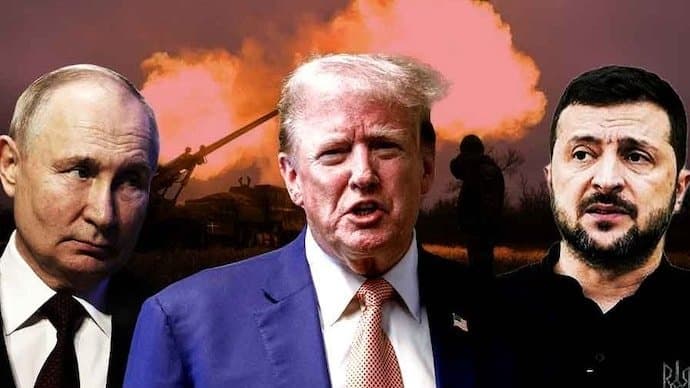
Trump, Putin, and Zelensky meet together before 2027?
$52.80K
1
1
Trump, Putin, and Zelensky meet together before 2027?
$52.80K
1
1
AI Analysis
Trader mode: Actionable analysis for identifying opportunities and edge
About This Event
This market will resolve to "Yes" if Vladimir Putin, Volodymyr Zelenskyy, and Donald Trump all meet together between this market's creation and December 31, 2026, 11:59 PM ET. Otherwise, this market will resolve to "No". A meeting is defined as any encounter where Putin, Zelenskyy, and Trump are present and interact with each other in person. The resolution source will be a consensus of credible reporting.
This saved analysis is awaiting a background update. Its prices and claims may be outdated; compare them with the dated market data above.
Current Market Outlook
Prediction markets price a Trump-Putin-Zelensky meeting before 2027 at just 14%. That is a low probability, meaning traders see this as possible but unlikely. With only $17,000 in volume across a single Polymarket contract, liquidity is thin. The market resolves December 31, 2026, giving roughly 18 months for the event to occur.
A 14% chance translates to implied odds of roughly 6:1 against. For context, a fair coin flip would be 50%. The market is saying a three-way summit is about as likely as drawing a face card from a deck.
Key Factors Driving the Odds
The core problem is simple: these three men do not want to be in the same room together. Trump and Putin have met before, but the Russia-Ukraine war has made any Putin-Zelensky meeting radioactive. Zelensky signed a 2022 decree banning negotiations with Putin. That decree could be reversed, but it signals deep political resistance.
The biggest obstacle is timing. Trump is not in office until January 2025 at the earliest. Even if he wins, arranging a summit requires Putin to agree, Zelensky to agree, and a neutral venue. Putin has shown zero interest in direct talks with Zelensky since 2022. Zelensky has said he will only meet Putin after a peace framework is established, not before.
A second factor is Trump's own position. He has claimed he could end the war in 24 hours, but has not specified how. If he wins, his first priority will be domestic policy and cabinet appointments, not a high-risk summit. A failed meeting would damage his image as a dealmaker.
What Could Change These Odds
The biggest catalyst would be a Trump victory in November 2024. If he wins, odds could jump to 30-40% as markets price in his willingness to break diplomatic norms. A ceasefire or major battlefield shift could also change the math. If Ukraine makes significant gains or Russia escalates, external pressure for a meeting could rise.
The reverse is also true. If Trump loses, this market likely drops to near zero. A Harris presidency would mean no Trump in office, making a three-way meeting impossible unless Trump attends as a private citizen, which is highly unlikely.
The resolution date is December 2026. That is a long window. A lot can change in war. But the market is not betting on hope. It is betting on the structural barriers that make this meeting a long shot.
AI-generated analysis based on market data. Not financial advice.
Saved Jul 29, 2026 UTCThis saved content is awaiting a background update. It may contain outdated claims; use the dated market data and provider rules for the latest available information.
Overview
This prediction market asks whether former U.S. President Donald Trump, Russian President Vladimir Putin, and Ukrainian President Volodymyr Zelensky will hold an in-person meeting together before January 1, 2027. The question hinges on the complex and volatile dynamics of the Russia-Ukraine war, U.S. foreign policy, and the personal relationships among these three leaders. A meeting of this nature would represent a major diplomatic event, potentially signaling a shift in the conflict's trajectory or the beginning of formal peace negotiations. The market's resolution depends on credible reporting confirming a physical encounter where all three are present and interact, not just a virtual call or a side conversation at a larger event. The context for this question is the ongoing war in Ukraine, which began with Russia's full-scale invasion on February 24, 2022. Trump, who left office in January 2021, has repeatedly claimed he could end the war quickly if reelected, often suggesting he would negotiate directly with Putin and Zelensky. Putin has shown no willingness to meet with Zelensky under current conditions, demanding Ukrainian capitulation on territorial and security issues. Zelensky has insisted on a peace formula that includes Russian withdrawal from all occupied territories and accountability for war crimes. Any meeting would require a dramatic shift in these positions. Interest in this market spiked after Trump's 2024 presidential campaign gained momentum, and again after his election victory in November 2024. Trump's stated policy of direct engagement with adversaries, his past praise for Putin, and his history of transactional diplomacy make a trilateral meeting plausible under certain conditions. However, the practical obstacles remain enormous: Russia demands recognition of its annexations, Ukraine demands restoration of its borders, and the U.S. must balance European security concerns with domestic political pressures. The meeting would likely occur only if all three leaders see a clear benefit, such as a ceasefire deal or a framework for ending the war. The market also reflects broader uncertainty about the future of the war, the stability of Western support for Ukraine, and the personal dynamics among these three men. Trump and Putin have a history of public praise for each other, but their relationship soured after Russia's invasion. Zelensky and Trump have a strained relationship, dating back to Trump's 2019 impeachment over pressuring Ukraine to investigate Joe Biden. Any meeting would require overcoming these personal and political tensions, making it a high-stakes but low-probability event in the view of many analysts.
Historical Context
The idea of a Trump-Putin-Zelensky meeting has roots in several key precedents. The most direct is the 2019 Trump-Ukraine scandal, where Trump withheld $400 million in military aid from Ukraine while pressuring Zelensky to investigate Joe Biden. That episode led to Trump's first impeachment and damaged trust between the two leaders. Trump has since called the impeachment a 'hoax' and has expressed admiration for Putin, saying in 2024 that he would 'get along very well' with the Russian leader again. Another precedent is the 2022 Istanbul talks between Russia and Ukraine, mediated by Turkey. In March 2022, negotiators from both sides met in person and reportedly came close to a framework agreement that would have granted Ukraine neutral status in exchange for security guarantees. The talks collapsed after Russia's Bucha massacre was uncovered and Western countries increased arms shipments to Ukraine. Putin has since rejected any talks based on the Istanbul framework, demanding Ukrainian capitulation. Trump has referenced these talks as a model for his own approach, claiming he could revive them. The broader historical context includes the 2018 Trump-Putin summit in Helsinki, where Trump publicly sided with Putin over U.S. intelligence agencies regarding Russian interference in the 2016 election. That meeting drew widespread criticism and is seen as a low point in U.S.-Russia relations. Trump has also met with Zelensky once, in September 2019 on the sidelines of the UN General Assembly, a meeting that became central to the impeachment inquiry. Any future trilateral meeting would be the first time all three have sat together. Finally, the war itself has created a diplomatic stalemate. Since 2022, there have been no direct face-to-face talks between Putin and Zelensky. The only high-level meetings have involved intermediaries, such as Turkish President Erdogan, Saudi Crown Prince Mohammed bin Salman, and UAE President Mohamed bin Zayed. Trump's return to power could break this stalemate, but it could also embolden Putin to demand more concessions, making a meeting contingent on major shifts in U.S. policy.
Why It Matters
A meeting between Trump, Putin, and Zelensky would be the most consequential diplomatic event since the end of the Cold War. It could determine the fate of Ukraine's sovereignty, the future of European security, and the credibility of U.S. alliances. If the meeting leads to a ceasefire or peace deal, it could save tens of thousands of lives and prevent further destruction of Ukrainian cities. If it fails, it could signal a prolonged war or even escalation, including potential use of nuclear weapons by Russia. The meeting would also test Trump's ability to negotiate with authoritarian leaders while maintaining support from NATO allies and the U.S. Congress. The economic implications are enormous. The war has already caused global energy price spikes, disrupted grain exports, and triggered inflation worldwide. A peace deal could stabilize energy markets, lower food prices, and unlock reconstruction opportunities in Ukraine, estimated at $486 billion by the World Bank. Conversely, a failed meeting that leads to continued fighting could deepen the economic damage and increase the risk of a wider conflict involving NATO. For investors, a meeting outcome could affect defense stocks, energy companies, and commodities markets. For ordinary people, especially in Europe and developing countries, the meeting's results could mean lower heating bills and cheaper food, or continued economic pain.
AI-written background. References identify the evidence used; Wikipedia links under Learn More are additional reading. Prices and provider rules are dated snapshots. This is not financial advice.
Market Insights
Price gaps of 2 pp+
0
Saved price pairs
0
No exact saved pairs with both binary Yes prices are available.
Price differences do not establish arbitrage. Check each pair's review, current order prices, fees and settlement rules.