$482.59K
1
32

$482.59K
1
32
Trader mode: Actionable analysis for identifying opportunities and edge
This market will resolve to “Yes” if Donald Trump mentions the listed term between March 23, 2026, 12:00 AM ET and March 29, 2026, 11:59 PM ET. Otherwise, this market will resolve to “No”. Plural and possessive forms of the listed term will count toward the resolution of this market regardless of context; however, other forms will NOT count. Instances where the term is used in a compound word will count regardless of context (e.g. joyful is not a compound word for "joy," however "killjoy" is a
AI-generated analysis based on market data. Not financial advice.
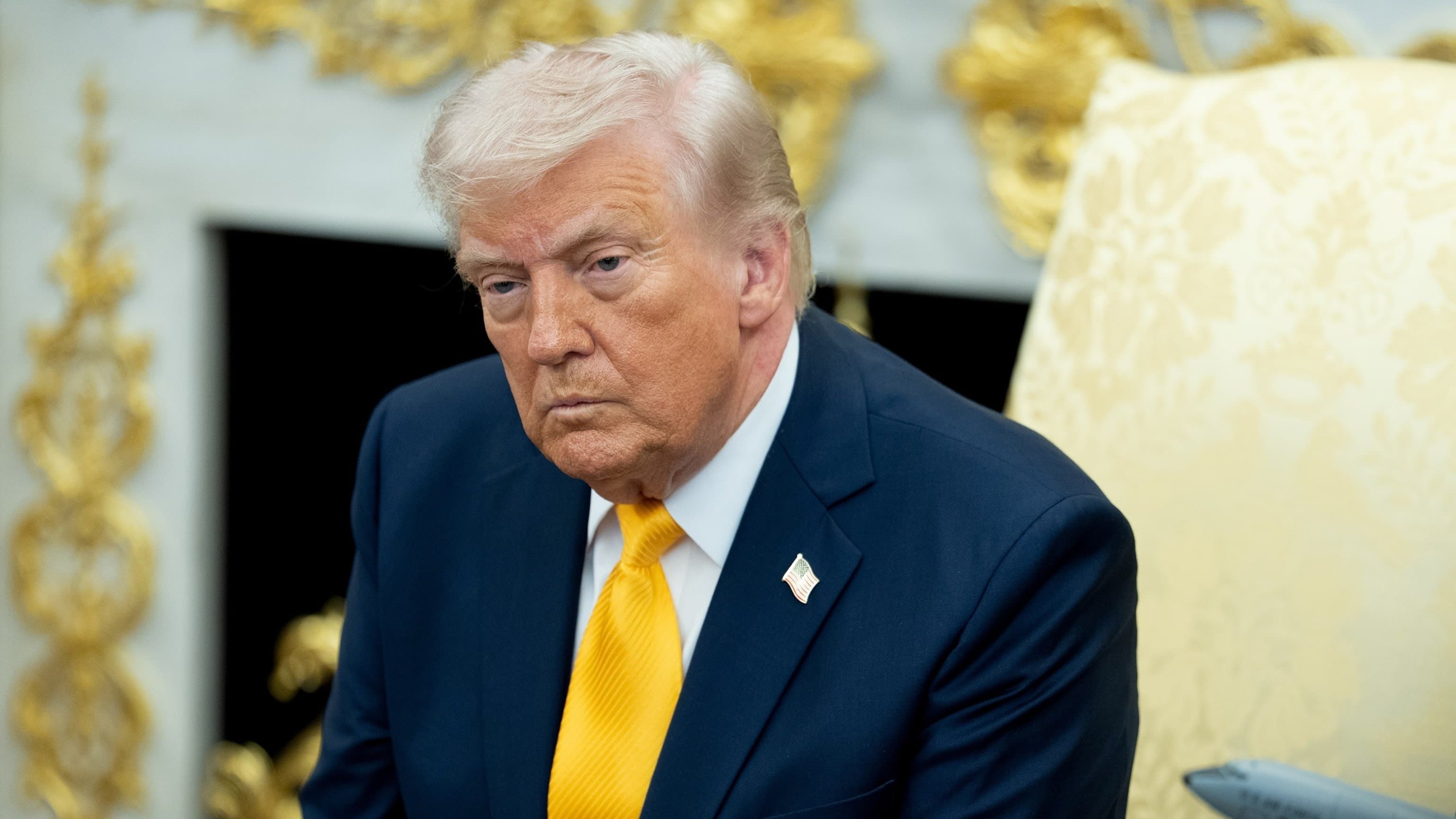
This prediction market focuses on whether former President Donald Trump will mention a specific term during the week of March 23-29, 2026. The market resolves to 'Yes' if Trump uses the term, its plural form, its possessive form, or a compound word containing it in any public statement, speech, or social media post within that timeframe. This type of market reflects the significant influence Trump's public commentary continues to have on political discourse, media cycles, and financial markets, even years after his presidency. His statements often drive immediate news coverage and can impact everything from stock prices to political campaigns. Interest in tracking Trump's specific language stems from his established pattern of using particular phrases to signal policy priorities, attack opponents, or mobilize his political base. Analysts and journalists routinely parse his word choices for clues about future actions or shifts in strategy. For a term to become the subject of a dedicated prediction market, it typically represents a current point of political contention, a frequent target of criticism, or a core element of his 2026 agenda, whether related to a potential presidential campaign, legislative battles, or ongoing legal matters. The week of March 29, 2026, falls within a potentially critical period. If Trump is an active candidate for the 2028 presidential election, his statements would be scrutinized as campaign rhetoric. If he is not a candidate, his remarks still hold considerable sway over the Republican Party's direction. The market allows participants to bet on the likelihood of a specific term entering the national conversation through Trump's megaphone, effectively gauging the salience of that issue to his political identity at that moment. Prediction markets on Trump's statements have become a tool for aggregating collective intelligence about his focus areas. They convert qualitative analysis of a politician's rhetoric into a quantifiable probability. The resolution depends on verifiable public utterances, making the outcome objective despite the often subjective analysis of why he chooses certain words. This creates a clear, binary event for traders to evaluate.
Prediction markets focusing on political rhetoric gained prominence during the 2016 and 2020 U.S. presidential elections. Markets existed on whether candidates would mention specific opponents, policy terms like 'build the wall,' or scandal-related words like 'emails.' These markets proved reasonably accurate in forecasting the focus of debates and major speeches, as traders incorporated analysis of campaign schedules and past behavior. Donald Trump's relationship with specific terminology is well-documented. During his presidency, terms like 'fake news,' 'witch hunt,' 'China virus,' and 'sleepy Joe' became fixtures of his lexicon. His use of these phrases was strategic, often intended to frame media criticism, legal investigations, or geopolitical relations on his own terms. The persistence of these terms in his speeches, sometimes for years, demonstrates a pattern of rhetorical commitment that makes predicting their recurrence feasible. In the post-presidency period after 2021, Trump's statements have remained central to political news. His endorsement power within the GOP, his commentary on midterm elections, and his ongoing legal challenges have ensured a steady stream of public remarks. Previous prediction markets have tracked his potential announcements, such as a 2024 presidential run, with the market prices fluctuating in response to rally speeches and advisor leaks. The week of March 29, 2026, sits in a context defined by the aftermath of the 2024 election and the approaching 2026 midterms, where Trump's chosen vocabulary will signal his priorities and targets.
The specific terms Donald Trump chooses to highlight can have tangible real-world effects. When he repeatedly mentions a company, its stock price often experiences volatility. When he focuses on a particular policy issue, it can pressure legislators to act or change the legislative agenda. His language about foreign nations can influence diplomatic relations and global markets. A prediction market on a specific term is, therefore, a proxy for betting on which issue will receive this outsized amplification and its potential consequences. Beyond immediate impacts, tracking this rhetoric matters for understanding American political dynamics. The terms Trump emphasizes often define the battle lines for the Republican base and become focal points for media debate. They can shift public opinion polls on issues and elevate topics that might otherwise receive less attention. For political operatives, journalists, and academics, the outcome of this market provides a data point on the current hierarchy of issues in Trump's political strategy and, by extension, a significant portion of the conservative movement.
As of the market's creation date, the specific term for the March 2026 week has not been publicly disclosed in this context, as is standard for these markets to prevent front-running. The political landscape leading into that period will be shaped by the results of the November 2024 presidential election and the first year of the subsequent administration. Trump's role—whether as a declared 2028 candidate, a party leader, or a private citizen—will be the primary determinant of his public speaking schedule and the content of his messages. Recent developments, such as ongoing legal cases or policy debates from early 2026, will provide the immediate context that makes certain terms more or less likely to appear in his commentary.
A mention includes any spoken or written use of the exact term, its plural form (adding 's' or 'es'), or its possessive form (adding "'s"). It also includes the term as part of a compound word, like 'killjoy' for 'joy.' Mentions in any context, including reading a quote aloud or criticizing the term, count toward a 'Yes' resolution.
Official monitoring typically includes his Truth Social posts, transcripts from televised interviews or rallies, prepared speech transcripts released by his office, and verified statements from press conferences. Unofficial rally livestreams and leaked audio may also be considered if verified by multiple credible news sources.
No, there is no public record of Donald Trump or his organizations filing lawsuits specifically related to prediction markets that forecast his remarks. These markets are generally viewed as protected political speech and analysis.
Traders analyze Trump's announced public schedule, track his private jet's movements for unscheduled rally possibilities, review his recent speech patterns for recurring themes, and monitor the news cycle for events that would logically prompt him to use the specific term.
Market operators use a defined source list for verification, such as official transcripts or video evidence from major news outlets. In cases of ambiguity, market resolution panels typically review the evidence and rule based on the clearest available audio or textual record.
Educational content is AI-generated and sourced from Wikipedia. It should not be considered financial advice.
32 markets tracked

No data available
| Market | Platform | Price |
|---|---|---|
![]() | Poly | 100% |
![]() | Poly | 84% |
![]() | Poly | 77% |
![]() | Poly | 63% |
![]() | Poly | 61% |
![]() | Poly | 57% |
![]() | Poly | 56% |
![]() | Poly | 39% |
![]() | Poly | 38% |
![]() | Poly | 35% |
![]() | Poly | 33% |
![]() | Poly | 32% |
![]() | Poly | 30% |
![]() | Poly | 26% |
![]() | Poly | 25% |
![]() | Poly | 23% |
![]() | Poly | 21% |
![]() | Poly | 17% |
![]() | Poly | 16% |
![]() | Poly | 13% |
![]() | Poly | 12% |
![]() | Poly | 9% |
![]() | Poly | 5% |
![]() | Poly | 5% |
![]() | Poly | 4% |
![]() | Poly | 3% |
![]() | Poly | 3% |


No related news found
Add this market to your website
<iframe src="https://predictpedia.com/embed/ZRezzU" width="400" height="160" frameborder="0" style="border-radius: 8px; max-width: 100%;" title="What will Trump say this week? (March 29)"></iframe>