$108.07K
1
1

1 market tracked

No data available
| Market | Platform | Price |
|---|---|---|
![]() | Poly | 14% |
Trader mode: Actionable analysis for identifying opportunities and edge
This market will resolve to "Yes" if PJAK (Party for a Free Life in Kurdistan), the Democratic Party of Iranian Kurdistan (PDKI), Komala, the Kurdistan Freedom Party (PAK), or a successor Kurdish organization with broad recognition among Iranian Kurdish opposition groups, or a Kurdish official within Iran formally declares the creation of a new independent state separate from Iran and asserts governing authority over a specified territory within Iran before June 30, 2026, 11:59 PM ET. Otherwise,
AI-generated analysis based on market data. Not financial advice.
$108.07K
1
1
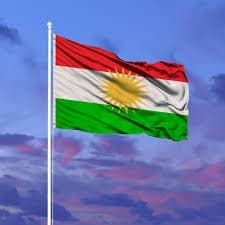
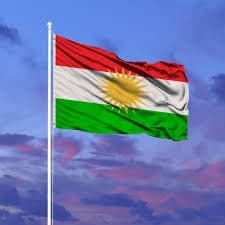
This prediction market topic concerns the possibility of an independent Kurdish state being declared within Iran's borders before June 30, 2026. It specifically tracks whether a recognized Kurdish opposition group or official will formally announce the creation of a new sovereign state and claim governing authority over territory in Iran. The resolution depends on declarations from specific organizations: PJAK (Party for a Free Life in Kurdistan), the Democratic Party of Iranian Kurdistan (PDKI), Komala, the Kurdistan Freedom Party (PAK), or a broadly recognized successor. The Iranian Kurdish independence movement is a long-standing political and sometimes armed struggle for self-determination by the Kurdish population in northwestern Iran, a region often referred to as Eastern Kurdistan or Rojhelat. Unlike the autonomous Kurdistan Region in Iraq, Iranian Kurds have no formal self-rule and face significant political and cultural restrictions from the central government in Tehran. Interest in this topic stems from regional instability, the historical precedent of Kurdish autonomy in Iraq, and ongoing low-level conflict between Iranian security forces and Kurdish militant groups. Observers monitor whether internal pressures within Iran or external regional dynamics could create a window for a dramatic unilateral declaration of independence, similar to the 2017 Kurdish independence referendum in Iraq.
The modern Kurdish struggle in Iran has roots in the early 20th century following the collapse of the Ottoman Empire and the centralization of the Persian state under Reza Shah Pahlavi. The most significant historical precedent is the Republic of Mahabad, declared on January 22, 1946. This short-lived Kurdish state, supported by the Soviet Union, existed for less than a year in northwestern Iran before being overthrown by the Iranian army after Soviet forces withdrew. The republic was led by Qazi Muhammad and its founding is a central reference point for Kurdish nationalist aspirations. Following the 1979 Iranian Revolution, Kurdish parties initially supported the overthrow of the Shah but quickly clashed with the new Islamic Republic, which rejected their demands for autonomy. A major Kurdish uprising was brutally suppressed by 1983. Throughout the 1980s and 1990s, Kurdish parties maintained guerrilla campaigns from bases in northern Iraq. A period of ceasefire and political engagement followed in the late 1990s and early 2000s, but this broke down due to continued repression and the execution of Kurdish activists. The 2017 independence referendum in Iraqi Kurdistan, while not directly involving Iranian Kurds, reinvigorated debates about sovereignty and demonstrated the potential for a unilateral move, even if it failed to achieve international recognition.
A declaration of Kurdish independence from Iran would trigger a severe regional crisis. Iran would almost certainly respond with overwhelming military force to crush the secession, likely leading to a significant armed conflict and humanitarian disaster in the Kurdish regions. Such an event would destabilize the entire Middle East, potentially drawing in neighboring Turkey and Iraq, both of which have their own large Kurdish populations and fears of separatist movements. For Iran, losing control over Kurdistan would represent a major territorial and symbolic blow to the Islamic Republic, potentially encouraging other ethnic minorities like the Azeris or Baloch to pursue similar goals. It would also threaten Iran's strategic position and internal security architecture. For the approximately 8-10 million Kurdish citizens of Iran, the consequences would be immediate and profound, ranging from military crackdowns to mass displacement. Internationally, it would force countries to choose between supporting the principle of territorial integrity or the right to self-determination, creating diplomatic fractures, particularly among states with Kurdish minorities.
As of early 2024, the situation remains one of persistent low-level conflict and political stalemate. Iranian security forces continue periodic operations against Kurdish militant groups in the border mountains. The Kurdish opposition parties remain based in the Kurdistan Region of Iraq, where they operate politically but face pressure from both the Iraqi federal government and the Kurdistan Regional Government to avoid actions that provoke Iran. The widespread protests across Iran in 2022-2023, which saw significant participation in Kurdish cities, have subsided following a harsh state crackdown. No major Kurdish group has recently signaled an imminent move toward declaring independence; public statements still generally emphasize demands for cultural rights, federalism, or regime change in Tehran rather than outright secession. However, the underlying grievances and the organizational infrastructure for resistance persist.
PJAK is ideologically aligned with the PKK's leftist, confederalist ideology and has closer ties to Kurdish groups in Turkey and Syria. The PDKI is a older, more traditional Kurdish nationalist party with a history dating to 1945; it generally advocates for Kurdish autonomy within Iran and has a different organizational structure and historical alliances.
No country has recognized or supported the creation of an independent Kurdish state in Iran. The international community, including regional powers and Western states, consistently affirms support for Iran's territorial integrity, largely due to geopolitical stability concerns and relations with Tehran.
The Kurdish population is concentrated in the northwestern provinces of Iran, primarily Kurdistan Province, Kermanshah Province, Ilam Province, and West Azerbaijan Province. These areas are contiguous with Kurdish regions in Iraq and Turkey.
The referendum inspired Iranian Kurdish nationalists and demonstrated a model for a unilateral independence vote. However, its subsequent failure and the swift retaking of territory by the Iraqi government also served as a cautionary tale about the risks of declaring independence without broad international or regional support.
The Islamic Republic's constitution recognizes Kurds as a distinct ethnic group but grants no territorial autonomy. Policy involves a combination of severe security measures against dissent, limited cultural rights (such as Kurdish language media with state oversight), and economic neglect of Kurdish regions compared to Persian-majority areas.
Educational content is AI-generated and sourced from Wikipedia. It should not be considered financial advice.

No related news found
Add this market to your website
<iframe src="https://predictpedia.com/embed/ZUECjL" width="400" height="160" frameborder="0" style="border-radius: 8px; max-width: 100%;" title="Kurds declare independence from Iran?"></iframe>