$80.76K
1
5

Trader mode: Actionable analysis for identifying opportunities and edge
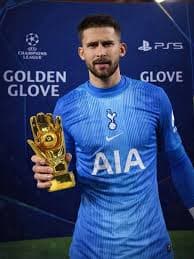
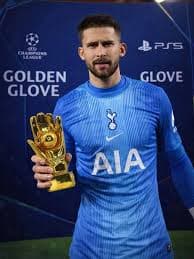
This market will resolve to the goalkeeper who records the clean sheets through all main tournament rounds of the 2025-26 UEFA Champions League competition. In the event of a tie, this market will resolve according to the official leader as determined by UEFA Champions League rules. If multiple leaders are announced then this market will resolve to the player whose listed last name comes first alphabetically. If the 2025-26 Champions League competition is cancelled, postponed after June 31, 20
Prediction markets currently give Declan Rice about a 1 in 3 chance of getting the most yellow cards in next season's Champions League. This means traders see him as a possible contender, but far from a sure thing. The market is essentially saying there are several other players who could just as easily end up with the highest tally. It reflects a specific forecast about aggressive midfield play and referee attention over the entire tournament.
Rice is a central defensive midfielder for Arsenal, a position that requires constant tackles and tactical fouls to break up opposition attacks. His playing style naturally leads to frequent bookings. Arsenal is also expected to make a deep run in the competition, which means Rice could play up to 13 high-stakes matches, giving him more opportunities to earn cards than players on teams that get eliminated early.
However, the 35% probability shows the market accounts for strong competition. Players like Real Madrid's Eduardo Camavinga or Manchester City's Rodri, who play similar roles for other top clubs, are also likely candidates. The history of this award shows it often goes to a midfielder from a finalist team, but it's notoriously unpredictable because a single reckless game can put any player in the lead.
The group stage draw on August 29th will be the first major signal. A difficult "group of death" with aggressive opponents could increase the likelihood of card-heavy matches for Rice. His performance and discipline in Arsenal's early Premier League matches, starting in mid-August, will also provide clues about his form and aggression level heading into Europe. The tournament's knockout stages, beginning in February 2026, are where pressure and tactical fouls often increase, making any player's card count volatile.
Markets for seasonal sports outcomes like this are educated guesses based on player role and team prospects, but they involve significant luck. Injuries, unexpected team eliminations, or even a referee's strictness in a single game can completely change the outcome. For niche markets like "most yellow cards," the collective intelligence is good at identifying the pool of likely candidates, but pinpointing the single winner months in advance is very difficult. The current odds are best read as a snapshot of who the most probable contenders are, not a confident forecast of the ultimate winner.
The Polymarket contract for Declan Rice recording the most yellow cards in the 2025-26 UEFA Champions League is priced at 35%. This indicates the market views his chances as low, but not negligible. He is the current favorite among a field of roughly ten listed players, with competitors like Rodri and Jude Bellingham trading between 10-20%. The $160,000 in total volume shows moderate trader interest for a niche sports derivative this far from resolution.
Rice's position as market leader is a function of his role and his team's expected tournament run. As Arsenal's primary defensive midfielder, he is tasked with disruptive play in high-stakes matches. Arsenal is projected to be a Champions League contender, meaning Rice could play up to 13 matches if the team reaches the later stages. More minutes against elite competition directly increase card risk. His Premier League disciplinary record provides a baseline, he received 7 yellow cards in the 2023-24 league season, demonstrating a consistent profile.
Historical patterns for this award also inform the pricing. The winner typically comes from a team that advances deep into the knockout rounds, not just a player with a reckless style. This favors central midfielders and defenders from elite clubs, a category Rice fits precisely. The market is effectively betting on Arsenal's tournament longevity combined with Rice's specific defensive duties.
The primary variable is Arsenal's Champions League trajectory. An unexpected early exit in the Round of 16 would severely cap Rice's potential card count, making his current 35% price unsustainable. Conversely, a deep run solidifies his case. Player suspension is a direct risk, a red card or accumulation ban would temporarily remove him from the pool of eligible games.
Injuries to key teammates could also alter his role and aggression. The odds will see the most movement during the knockout phase in early 2026, as the field of potential winners narrows to players on remaining teams. Watch for matches where Arsenal is an underdog, as Rice may be forced into more tactical fouls, a scenario that would cause his contract price to spike.
AI-generated analysis based on market data. Not financial advice.
5 markets tracked

No data available
| Market | Platform | Price |
|---|---|---|
![]() | Poly | 27% |
![]() | Poly | 21% |
![]() | Poly | 19% |
![]() | Poly | 14% |
![]() | Poly | 8% |
$80.76K
1
5
The UEFA Champions League Most Clean Sheets market predicts which goalkeeper will record the most shutouts during the 2025-26 tournament. A clean sheet occurs when a goalkeeper's team prevents the opposition from scoring for an entire match. This market resolves based on official UEFA statistics through all main tournament rounds, from the group stage to the final. In case of a tie, the official UEFA leader determines the outcome. If UEFA names multiple leaders, the goalkeeper with the alphabetically first last name wins. This specific market focuses on the 2025-26 season, a single-elimination competition involving Europe's top club teams. The goalkeeper with the most clean sheets is often a key indicator of a team's defensive strength and overall tournament success. Historically, goalkeepers from teams that advance deep into the knockout stages have the best chance to win this title, as they play more matches. The award recognizes individual excellence within a team context, highlighting the goalkeeper's role in organizing the defense and making critical saves. Interest in this market comes from football fans, sports bettors, and fantasy football players who analyze team defenses, goalkeeper form, and tournament schedules. The competition is closely watched because it involves elite players from clubs like Manchester City, Real Madrid, and Bayern Munich. Performance can be influenced by factors such as team tactics, defensive injuries, and the difficulty of the group stage draw.
The UEFA Champions League, originally known as the European Cup, began in 1955. The concept of tracking goalkeeper clean sheets gained prominence with the increased statistical analysis of football in the 1990s. UEFA started publishing official tournament statistics, including clean sheets, on its website and in match reports, providing a verifiable record for such markets. Historically, goalkeepers from the tournament's winning team often lead the clean sheets table because they play the maximum number of matches. For example, Keylor Navas recorded 9 clean sheets for Real Madrid during their 2015-16 winning campaign. The 2018-19 season saw Alisson Becker of Liverpool lead with 6 clean sheets, a relatively low number that reflected a high-scoring tournament. The record for most clean sheets in a single Champions League campaign is 9, shared by several goalkeepers including Santiago Cañizares for Valencia in 2000-01 and Edwin van der Sar for Manchester United in 2008-09. These records show that achieving more than 8 clean sheets is exceptional and usually requires a team to reach the final. The tie-breaking mechanism based on UEFA's official designation is a standard practice in prediction markets to ensure clarity and alignment with the sport's governing body.
This market matters because it reflects a fundamental aspect of football success: defensive reliability. For clubs, a goalkeeper capable of keeping many clean sheets is invaluable, often meaning the difference between winning a trophy and an early exit. This can affect player valuations, contract negotiations, and team transfer strategies. A goalkeeper leading this statistic enhances their reputation, potentially leading to individual awards like the Yashin Trophy or a place in UEFA's Team of the Year. For broadcasters and sponsors, standout defensive performances create narratives around resilience and tactical discipline, which engage audiences differently than goal-scoring highlights. The market also has economic significance for the sports betting and fantasy football industries, where clean sheets are a key scoring metric. Millions of fans participate in fantasy Champions League games where goalkeeper selections are directly influenced by clean sheet potential. The outcome can influence a goalkeeper's legacy, placing them in conversations about the best in their position for that specific season.
The 2024-25 UEFA Champions League is ongoing, serving as the immediate precursor to the 2025-26 season covered by this market. The group stage draw for the 2025-26 tournament will occur in August 2025, which will be a critical moment for evaluating this market. Team transfers in the summer of 2025 could change starting goalkeepers for major contenders. The form of key players like Ederson and Thibaut Courtois in their respective domestic leagues during the 2024-25 season will provide early indicators of their potential for the following European campaign.
A clean sheet is awarded to a goalkeeper who plays the entire match without conceding a goal. If a goalkeeper is substituted or sent off, they do not get a clean sheet regardless of the final score. Only goals conceded during active play count; goals in a penalty shootout after extra time do not affect clean sheet status.
UEFA publishes official player statistics, including clean sheets, on the UEFA.com website within the Champions League section. The data is updated after each matchday. This official source is used to resolve prediction markets and fantasy football leagues.
Yes, this is common. For instance, Ederson won the Champions League with Manchester City in 2023 but did not lead the clean sheets table. The leader that season was André Onana, then of Inter Milan, with 8 clean sheets. Team success and individual defensive records are related but distinct achievements.
No. According to the market description, only clean sheets recorded 'through all main tournament rounds' count. This explicitly includes the group stage, round of 16, quarter-finals, semi-finals, and final. Matches in the preliminary qualifying rounds are not counted for this specific award.
The market resolves according to the official leader as determined by UEFA Champions League rules. UEFA's tie-breaking procedure is not publicly detailed for this statistic but likely involves considering minutes played or stages reached. If UEFA declares multiple leaders, the tie is broken alphabetically by the player's last name.
Educational content is AI-generated and sourced from Wikipedia. It should not be considered financial advice.


No related news found
Add this market to your website
<iframe src="https://predictpedia.com/embed/ZwVz__" width="400" height="160" frameborder="0" style="border-radius: 8px; max-width: 100%;" title="UEFA Champions League: Most Clean Sheets (GK)"></iframe>