$80.41K
1
5

$80.41K
1
5
Trader mode: Actionable analysis for identifying opportunities and edge
This market will resolve according to the team that wins the 2026 MLB National League Central division. In the event of a tie, this market will resolve according to the official winner as determined by MLB rules. If multiple winners are announced then this market will resolve to the team whose listed nickname comes first alphabetically. If at any point it becomes impossible for a listed team to be named the 2026 National League Central division champion per the rules of the MLB (e.g., they are
Prediction markets currently give the Chicago Cubs about a 45% chance to win the National League Central division in 2026. This means traders see it as nearly a coin flip, with the Cubs being the most likely single team but far from a sure thing. The remaining probability is spread across the other four teams in the division: the Milwaukee Brewers, St. Louis Cardinals, Cincinnati Reds, and Pittsburgh Pirates. This reflects a collective view that the division is fairly open, but the Cubs have a slight edge.
Two main factors are shaping these odds. First, the Cubs have a strong core of young position players, like Dansby Swanson and Seiya Suzuki, who are under contract through 2026. The front office has shown a willingness to spend on pitching, which is the team's biggest need. Second, the competition has questions. The Brewers may lose key pitchers to free agency. The Cardinals are trying to rebound from a poor season. The Reds and Pirates have promising young talent but are less proven. The market is betting the Cubs' combination of current talent and financial resources gives them a small advantage in a division without a clear powerhouse.
The biggest factor that will move these odds is team activity this coming offseason. Watch for the Cubs to sign a top-tier starting pitcher, which would likely increase their probability. Also monitor whether the Brewers trade Corbin Burnes or another star, which would hurt their chances. The Cardinals' moves to fix their pitching staff will be important. Finally, the development of young players on all teams during the 2025 season will provide clues about their 2026 readiness. A major injury to a star player on any team next year could also shift the outlook.
Prediction markets are generally decent at forecasting sports outcomes this far in advance, but they are not perfect. They effectively aggregate opinions from many fans and analysts. For baseball divisions, the sheer number of games (162) reduces some randomness, making team strength a more reliable predictor than in single-elimination playoffs. However, a lot can change in two years with trades, injuries, and player development. These odds are a snapshot of current expectations, not a final verdict. They are most useful for understanding how informed observers weigh the current strengths and weaknesses of each team's future.

The prediction market for the 2026 NL Central champion is in its early stages, with thin liquidity and a clear favorite. The Chicago Cubs hold a 45% implied probability to win the division. This price suggests bettors see the Cubs as the most likely winner, but the odds assign less than a coin-flip chance, indicating an open race. The Milwaukee Brewers and St. Louis Cardinals are the next closest contenders, priced around 20-25% each. The Cincinnati Reds and Pittsburgh Pirates are distant longshots, with single-digit probabilities. With over 200 days until resolution and only $80,000 in total volume, these initial odds are more indicative of preseason sentiment than a mature market consensus.
The Cubs' frontrunner status is built on their strong 2024 finish and a core of young, controllable talent. Players like Shota Imanaga, Justin Steele, and Seiya Suzuki are under contract through 2026, providing a stable foundation. The market is betting that President of Baseball Operations Jed Hoyer will aggressively supplement this core in the coming offseasons, given the team's financial resources and competitive window. The Brewers' odds reflect skepticism about their ability to remain atop the division following the potential departure of key players like Corbin Burnes and Brandon Woodruff. The Cardinals' price, unusually low for a perennial contender, is a direct reaction to their pitching struggles and aging roster, signaling a belief that a significant retooling is needed.
Player movement between now and the 2026 season will cause major price shifts. The Cubs' odds are vulnerable if they fail to sign a top-tier starting pitcher or a middle-of-the-order bat in free agency. Conversely, a major acquisition would solidify their position. The Cardinals' entire valuation hinges on their offseason strategy. A successful overhaul of their rotation would make their current 25% price look like a bargain and trigger a swift market correction. The Reds and Pirates are wild cards. If either team's highly-touted prospect group, led by Elly De La Cruz for Cincinnati and Paul Skenes for Pittsburgh, matures ahead of schedule in 2025, their 2026 championship equity will rise sharply. The trade deadline in July 2025 will be the first major catalyst, as teams declare themselves buyers or sellers for the following season.
AI-generated analysis based on market data. Not financial advice.
This prediction market focuses on identifying which Major League Baseball team will win the National League Central division during the 2026 regular season. The market resolves based on the official MLB standings at the conclusion of the 162-game schedule, with tiebreakers determined by league rules. The NL Central is one of six divisions in MLB, comprising the Chicago Cubs, Cincinnati Reds, Milwaukee Brewers, Pittsburgh Pirates, and St. Louis Cardinals. Interest in this market stems from the division's competitive volatility and the long-term strategic planning of its teams, which involves multi-year player contracts, farm system development, and front-office decisions made years in advance. Analysts and fans are already evaluating each team's trajectory toward 2026, considering current rosters, prospect pipelines, and financial flexibility. The market allows participants to speculate on which organization's rebuilding or contention window will align most successfully with the 2026 campaign.
The National League Central was formed in 1994 as part of MLB's realignment into three divisions per league. The St. Louis Cardinals have been the division's most successful franchise, winning 12 division titles since 1994, including three consecutive from 2019 to 2022. The Chicago Cubs broke a 108-year World Series drought with a division title and championship in 2016, a peak built through a complete organizational rebuild initiated by President Theo Epstein starting in 2011. The Milwaukee Brewers, after decades of middling performance, emerged as a consistent contender in the late 2010s under David Stearns, winning division titles in 2018, 2021, and 2023 through a focus on pitching development and analytics. The Cincinnati Reds and Pittsburgh Pirates have experienced longer competitive cycles. The Reds' last division title was in 2012, while the Pirates' last was in 1992, before the division's creation, when they were in the NL East. This history of cyclical dominance and prolonged rebuilds informs the long-term forecasting required for a 2026 prediction.
The outcome of the 2026 NL Central race has significant financial implications for the involved franchises. Winning the division guarantees a spot in the MLB postseason, which generates millions in additional revenue from ticket sales, merchandise, and broadcast rights. For smaller-market teams like Pittsburgh, Milwaukee, and Cincinnati, a division title can dramatically impact annual revenue and help justify public funding for stadium improvements. For the league, a competitive division with multiple viable contenders sustains fan engagement across a large geographic region of the Midwest. A protracted rebuild or lack of competitiveness by 2026 could lead to decreased attendance and local television viewership, affecting the economic health of the clubs and their regional sports networks.
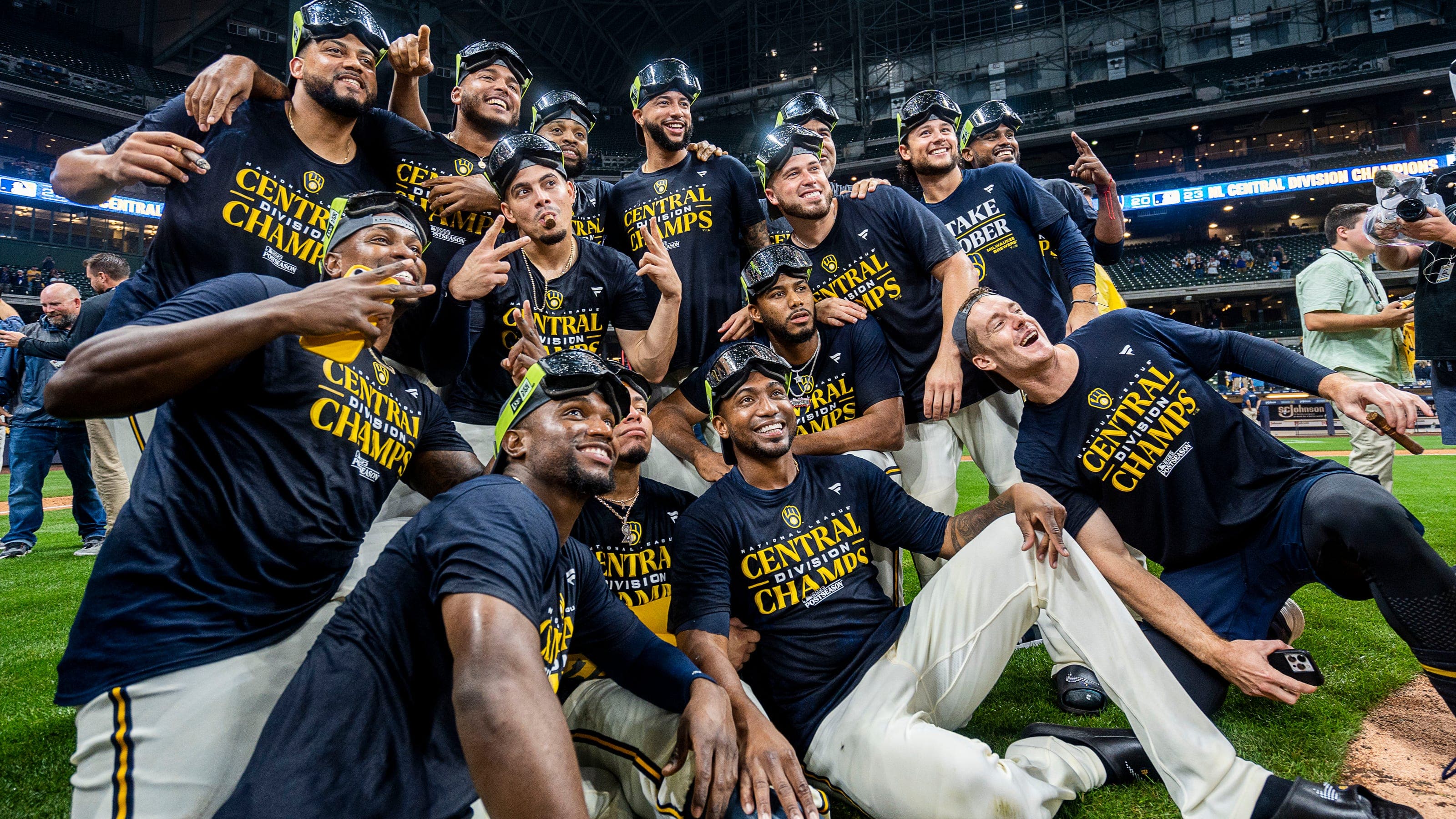
As of the end of the 2023 season, the Milwaukee Brewers are the defending NL Central champions. The St. Louis Cardinals, after a disappointing 2023, are expected to be aggressive in retooling their pitching staff. The Chicago Cubs showed improvement in 2023 and are viewed as a team on the rise. The Cincinnati Reds completed the 2023 season with a promising core of young players, while the Pittsburgh Pirates continue to focus on developing their highly-ranked farm system. The offseason leading into the 2024 season will feature critical transactions that set the foundation for the 2026 campaign.
As of late 2023, the Pittsburgh Pirates and Cincinnati Reds are frequently ranked with top-10 farm systems by publications like MLB Pipeline. The Pirates' system, featuring pitchers Paul Skenes and Jared Jones, is built to supply their MLB roster by 2026. The quality of these systems is a primary factor in long-term predictions.
If two or more teams are tied for a division lead at season's end, the winner is first determined by head-to-head record during the regular season. If a tie remains, it progresses to intra-division record. These rules, not a one-game playoff, determine the official division champion for markets like this one.
The Brewers face the challenge of sustaining success after the departure of executive David Stearns and potential roster changes. Key players like Corbin Burnes and Brandon Woodruff are approaching free agency after the 2024 season, which could necessitate a significant retooling or rebuild before 2026.
Elite college draftees typically reach MLB 2-3 years after being drafted, while high school players often take 4-5 years. Top picks from the 2022 and 2023 drafts, such as the Pirates' Paul Skenes (2023) or the Reds' Cam Collier (2022), are projected to be established major leaguers by the 2026 season, directly impacting these teams.
Beginning in 2023, MLB implemented a balanced schedule where teams play fewer games against division rivals. This change reduces intra-division games from 76 to 52 per team. By 2026, this will be fully entrenched, meaning a team's record against the entire league, not just the Central, will carry more weight in the division race.
Educational content is AI-generated and sourced from Wikipedia. It should not be considered financial advice.
5 markets tracked

No data available
| Market | Platform | Price |
|---|---|---|
![]() | Poly | 45% |
![]() | Poly | 27% |
![]() | Poly | 22% |
![]() | Poly | 20% |
![]() | Poly | 5% |


No related news found
Add this market to your website
<iframe src="https://predictpedia.com/embed/_KnZLO" width="400" height="160" frameborder="0" style="border-radius: 8px; max-width: 100%;" title="Pro Baseball: 2026 NL Central Champion "></iframe>