
$1.16M
1
1

1 market tracked

No data available
| Market | Platform | Price |
|---|---|---|
![]() | Poly | 16% |
Trader mode: Actionable analysis for identifying opportunities and edge
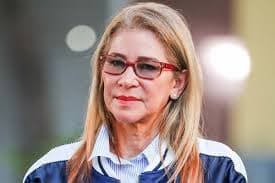
This market will resolve to "Yes" if Cilia Flores is released from custody by the listed date, 11:59 PM ET. Otherwise, this market will resolve to "No". If Cilia Flores is released but remains under house arrest, the market will still resolve to "Yes". If Cilia Flores is released on parole, bond, or any other condition that results in them leaving state custody, the market will resolve to "Yes". Transporting Cilia Flores to another location of custody (e.g., a different prison, court, or hosp
Prediction markets currently give roughly a 1 in 6 chance that Cilia Flores, the wife of Venezuelan President Nicolás Maduro, will be released from custody by the end of 2026. With about 84% of traders betting against her release, the collective intelligence sees her remaining detained as the much more probable outcome. This low probability suggests traders see significant legal and political obstacles to her freedom in the near term.
Cilia Flores, a powerful political figure in her own right, was arrested in March 2025 on corruption charges. The case is part of a broader crackdown by Venezuelan authorities, which has targeted several high-profile officials. Traders likely see her continued detention as a signal from the government that even figures close to Maduro are not immune from prosecution, at least for now.
The low probability for release also reflects the complex political calculus. Releasing Flores could be seen as a sign of weakness or inconsistency in the anti-corruption campaign. Alternatively, keeping her detained may serve to demonstrate the rule of law, or could be tied to internal power dynamics within the ruling party. The market’s skepticism suggests traders believe the government has more to gain politically by maintaining her detention than by arranging her release in the next two years.
The market resolves at the end of 2026, so the timeline is long. The most important events will be legal proceedings. Any major court hearings, appeals, or verdicts in her case could shift the odds. A dismissal of charges or a surprising acquittal would likely cause the "Yes" probability to spike.
Political developments are equally critical. Watch for any significant shifts in Maduro’s political standing or government reshuffles. If the anti-corruption drive loses momentum or if there is a major political negotiation where her release is used as a bargaining chip, the market could reassess the likelihood of her leaving custody.
Prediction markets have a mixed but often insightful record on political and legal outcomes in opaque regimes. They aggregate many viewpoints, but their accuracy can be limited by a lack of transparent information. In Venezuela, where judicial processes are heavily influenced by politics, the market is essentially forecasting a political decision disguised as a legal one. This makes the forecast speculative, but the very low probability indicates a strong consensus among informed traders about the current political winds. The high trading volume shows many people are paying attention, which generally improves the signal, but surprises are always possible in such environments.
Prediction markets assign a low 16% probability that Cilia Flores, the wife of Venezuelan President Nicolás Maduro, will be released from custody by December 31, 2026. This price indicates traders view her release as unlikely within this nearly three-year timeframe. With $1.2 million in volume, this is a highly liquid market, suggesting significant capital and attention are focused on this political outcome. The low probability reflects a consensus that her legal situation will remain unresolved or that she will remain detained.
The primary factor is the geopolitical context of her detention. Cilia Flores was arrested in Aruba in 2024 on an international warrant, reportedly related to corruption and money laundering charges. Her status is directly tied to the stability of the Maduro regime and its interactions with the United States and other nations. The 16% price suggests traders believe Venezuela lacks sufficient leverage or willingness to negotiate her release, viewing her as a high-value political prisoner. Historical patterns show that figures connected to sanctioned regimes often face prolonged detentions, especially when charges are backed by multiple countries. The market is pricing in continued diplomatic stalemate.
A major shift would require a geopolitical deal. If the Maduro government offers significant concessions, such as agreeing to freer elections or cooperating on drug interdiction efforts, the U.S. or Dutch authorities might consider releasing Flores. Conversely, a dramatic escalation, like Venezuela taking foreign hostages, could increase pressure for a prisoner swap. The 2026 deadline allows for multiple election cycles in involved countries, including the 2024 U.S. election. A change in U.S. administration could alter foreign policy toward Venezuela, potentially reopening negotiations. The market’s low probability means any credible news of back-channel talks would likely cause the “Yes” share price to rise sharply.
AI-generated analysis based on market data. Not financial advice.
$1.16M
1
1
This prediction market focuses on whether Cilia Flores, the wife of Venezuelan President Nicolás Maduro, will be released from custody by a specified deadline. Cilia Flores, a prominent political figure in her own right, was detained in early 2024 on corruption charges. The market resolves to 'Yes' if she is physically released from state custody, including scenarios like house arrest, parole, or bond. The outcome hinges on complex legal proceedings and political negotiations within Venezuela's turbulent justice system. Her detention is part of a broader anti-corruption campaign that has targeted high-profile officials, but many observers view these actions as politically motivated. The case has drawn international attention due to Flores's status as Venezuela's First Lady and her significant influence within the ruling United Socialist Party of Venezuela (PSUV). Interest in her potential release stems from its implications for Maduro's political stability, internal party dynamics, and Venezuela's relations with foreign governments monitoring the rule of law.
The arrest of a sitting president's spouse is exceptionally rare in Venezuela. The most relevant precedent is the 2017 arrest of two nephews of First Lady Cilia Flores, Franqui Francisco Flores de Freitas and Efrain Antonio Campo Flores, on drug trafficking charges in the United States. They were convicted in New York in 2018. Domestically, high-profile corruption arrests have typically targeted opposition figures or former Chavista officials who fell out of favor, such as Oil Minister Tareck El Aissami, who was arrested in March 2024 just before Flores. The current wave of arrests is framed as part of 'Operation Hand of Paper,' an investigation into the misappropriation of at least $3 billion from PDVSA. This campaign began in March 2023 and has netted over 60 officials, but skeptics note it accelerated after the opposition's strong showing in the 2024 primary election. Historically, Venezuelan anti-corruption drives have often been used to sideline political rivals within the ruling coalition, a practice dating back to the early years of Hugo Chávez's presidency.
The outcome of this case has direct implications for Venezuela's political stability. If Flores remains detained, it could signal a genuine, though selective, attempt to address corruption, or it could reveal deep fractures within the PSUV. Her release would likely be interpreted as a restoration of the status quo, demonstrating the limits of judicial independence. Economically, the government hopes the anti-corruption campaign will improve its negotiating position with international creditors and oil partners by projecting an image of reform. Socially, the population watches closely whether powerful figures face consequences, affecting public trust in institutions already eroded by hyperinflation and scarcity. The case also matters for foreign relations, particularly with the United States, which has offered sanctions relief in exchange for electoral concessions. How Maduro handles his wife's legal situation is seen as a test of his willingness to adhere to legal processes, a factor in ongoing diplomatic talks.
As of late April 2024, Cilia Flores remains in custody at the headquarters of the Bolivarian National Intelligence Service (SEBIN) in Caracas, known as El Helicoide. Her legal team has filed multiple appeals for her release, arguing procedural violations and lack of evidence. The prosecution, led by Attorney General Tarek William Saab, has opposed these motions, stating the investigation is ongoing. No trial date has been set. Recent reports from local media suggest behind-the-scenes negotiations between PSUV power brokers and judicial authorities, but no official statements have confirmed a pending release. The government continues its public anti-corruption campaign with weekly announcements of new arrests.
Cilia Flores was formally charged with association to commit a crime, money laundering, and appropriation of public assets. The charges stem from the 'Operation Hand of Paper' investigation into a scheme that allegedly siphoned billions from state oil company PDVSA through irregular currency operations.
No. The arrest of Cilia Flores is the first instance in Venezuela's modern history where a sitting president's spouse has been taken into custody on criminal charges. It is an event without precedent in the country's political tradition.
She is detained at El Helicoide, the main facility of the Bolivarian National Intelligence Service (SEBIN) in Caracas. This location is commonly used for high-profile political detainees, though her legal status differs from that of political prisoners.
Analysts are divided. Some argue the crackdown is an internal power play, while others suggest it could be a performative gesture to secure sanctions relief from the U.S. by demonstrating a fight against corruption. The U.S. State Department has not directly linked sanctions policy to this specific case.
House arrest in Venezuela typically involves confinement to a private residence under guard, with restrictions on communications and visitors. It is considered a form of custody, so if Flores is transferred to house arrest, the prediction market would resolve to 'Yes' as she would leave a state detention center.
The case is led by the Venezuelan Public Ministry, headed by Attorney General Tarek William Saab. The investigative police body, the CICPC, and anti-corruption units are also involved in gathering evidence for the prosecution.
Educational content is AI-generated and sourced from Wikipedia. It should not be considered financial advice.
No related news found
Add this market to your website
<iframe src="https://predictpedia.com/embed/_RkW_M" width="400" height="160" frameborder="0" style="border-radius: 8px; max-width: 100%;" title="Maduro's Wife Cilia Flores released from custody by...?"></iframe>