$19.70K
1
15

$19.70K
1
15
Trader mode: Actionable analysis for identifying opportunities and edge
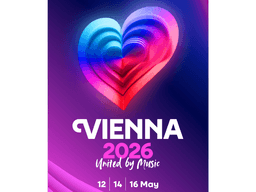
This market will resolve to "Yes" for the listed countries whose candidates for Eurovision 2026 advance according to the results of the Eurovision Second Semi-Final, scheduled for May 12, 2026. If at any point it is impossible for the listed candidate to advance from the Eurovision 2026 Second Semi-Final based on the rules of the competition (i.e. they are eliminated), this market may immediately resolve to "No". If this competition is not held or no contestants advance by June 30, 2026, 11:59
AI-generated analysis based on market data. Not financial advice.
This prediction market focuses on which countries will advance from the Second Semi-Final of the Eurovision Song Contest 2026. The market resolves to 'Yes' for each listed country whose candidate qualifies for the Grand Final based on the results of the semi-final scheduled for May 12, 2026. Eurovision is an annual international song competition organized by the European Broadcasting Union (EBU). The 2026 contest will follow the established format where participating countries, except the host nation and the 'Big Five' financial contributors, must compete in one of two semi-finals. The ten highest-scoring entries from each semi-final advance. The specific countries competing in the Second Semi-Final for 2026 will be determined by a draw in early 2026. Interest in this market stems from Eurovision's massive global audience, which exceeded 160 million viewers in 2023, and the passionate fan engagement surrounding qualification outcomes. Bettors and fans analyze historical voting patterns, pre-contest song releases, and national selection results to predict which acts will succeed. The semi-final stage is particularly volatile, as it often features many countries with lower historical success rates competing for limited spots, making predictions challenging and the market dynamic.
The semi-final system was introduced in 2004 to manage a growing number of participating countries, which had reached 36 that year. Before this, all countries except the previous year's lowest-scoring nations competed in the single final. The two-semi-final format debuted in 2008. The specific composition of each semi-final is decided by a draw, but the EBU uses a seeding system to separate countries with strong historical voting alliances, a practice informally known as 'pot allocation.' This aims to prevent blocks of politically or culturally aligned countries from all competing in the same semi-final and skewing the results. The Second Semi-Final has developed its own identity. For example, in the 2023 contest, the Second Semi-Final was noted for its particularly strong competition, featuring eventual winner Loreen from Sweden and other high-placing finalists like Israel and Belgium. Historically, certain countries have shown patterns of success or struggle in this round. For instance, Georgia has failed to qualify from its last five semi-final appearances as of 2024, while Serbia has qualified from seven of its last eight semi-finals.
Qualification for the Eurovision Grand Final carries significant national prestige and provides a substantial economic and promotional boost. For a country's artist and song, reaching the final guarantees exposure to the contest's peak global audience, which can launch international music careers. Past qualifiers like Netta from Israel and Måneskin from Italy saw their global streaming numbers surge after their Eurovision performances. For the host broadcaster, having an entry in the final drives higher domestic viewership and advertising revenue. Failure to qualify is often viewed as a national disappointment and can lead to public criticism of the national broadcaster and its selection process. In some cases, non-qualification has prompted countries to withdraw temporarily from the contest or completely overhaul their national selection methods. The results also feed into broader cultural and political narratives about European integration and soft power, with qualification sometimes interpreted as a sign of a country's cultural appeal or diplomatic standing within the European sphere.
As of late 2024, the specific participants for the Eurovision 2026 Second Semi-Final are unknown. The host city for Eurovision 2026 has not been selected, as the host is traditionally the winner of the preceding year's contest. The lineup of competing countries and the draw that places them into the First or Second Semi-Final will occur in early 2026. National broadcasters are in the earliest stages of planning their selection processes for a 2026 representative. Some countries, like Sweden with Melodifestivalen, have fixed annual selection shows, while others may hold internal artist selections. The rules governing the 2026 semi-finals are expected to remain consistent with the 2024 format, featuring a 50/50 split between national jury and public televote.
Countries are divided into pots based on historical voting patterns before a random draw places them into the First or Second Semi-Final. This 'pot system' aims to separate countries that frequently vote for each other, promoting fairer competition. The host country and 'Big Five' (France, Germany, Italy, Spain, United Kingdom) are pre-allocated to the final and do not compete in semi-finals.
If a country withdraws after the semi-final lineup is announced, the schedule and participant list are adjusted by the EBU. The withdrawal does not automatically grant another country a qualification spot. The semi-final would proceed with fewer participants, but the number of qualifiers (typically 10) usually remains the same.
No. The EBU states that the voting results in all stages of the Eurovision Song Contest, including the semi-finals, are final and cannot be appealed. The independent voting auditor, currently the company EY, verifies the integrity of the voting process, but the point totals as announced are definitive.
No country is permanently assigned to a specific semi-final. The draw each year is random, subject to the pot allocation rules. A country that competes in the Second Semi-Final one year could be drawn into the First Semi-Final the following year.
After the participants are known, the producers of the show, supervised by the EBU, decide the running order. They sequence the acts to create a varied and engaging television show, considering song tempo, genre, and stage production. The draw only determines which half of the show an act performs in, not the exact position.
Educational content is AI-generated and sourced from Wikipedia. It should not be considered financial advice.
15 markets tracked

No data available
| Market | Platform | Price |
|---|---|---|
![]() | Poly | 95% |
![]() | Poly | 89% |
![]() | Poly | 81% |
![]() | Poly | 75% |
![]() | Poly | 72% |
![]() | Poly | 70% |
![]() | Poly | 69% |
![]() | Poly | 66% |
![]() | Poly | 61% |
![]() | Poly | 59% |
![]() | Poly | 54% |
![]() | Poly | 52% |


No related news found
Add this market to your website
<iframe src="https://predictpedia.com/embed/_niJYI" width="400" height="160" frameborder="0" style="border-radius: 8px; max-width: 100%;" title="Eurovision 2026: Second Semi-Final"></iframe>