Events
GroupPOLYMARKET
Event GroupPOLYMARKETPolitics
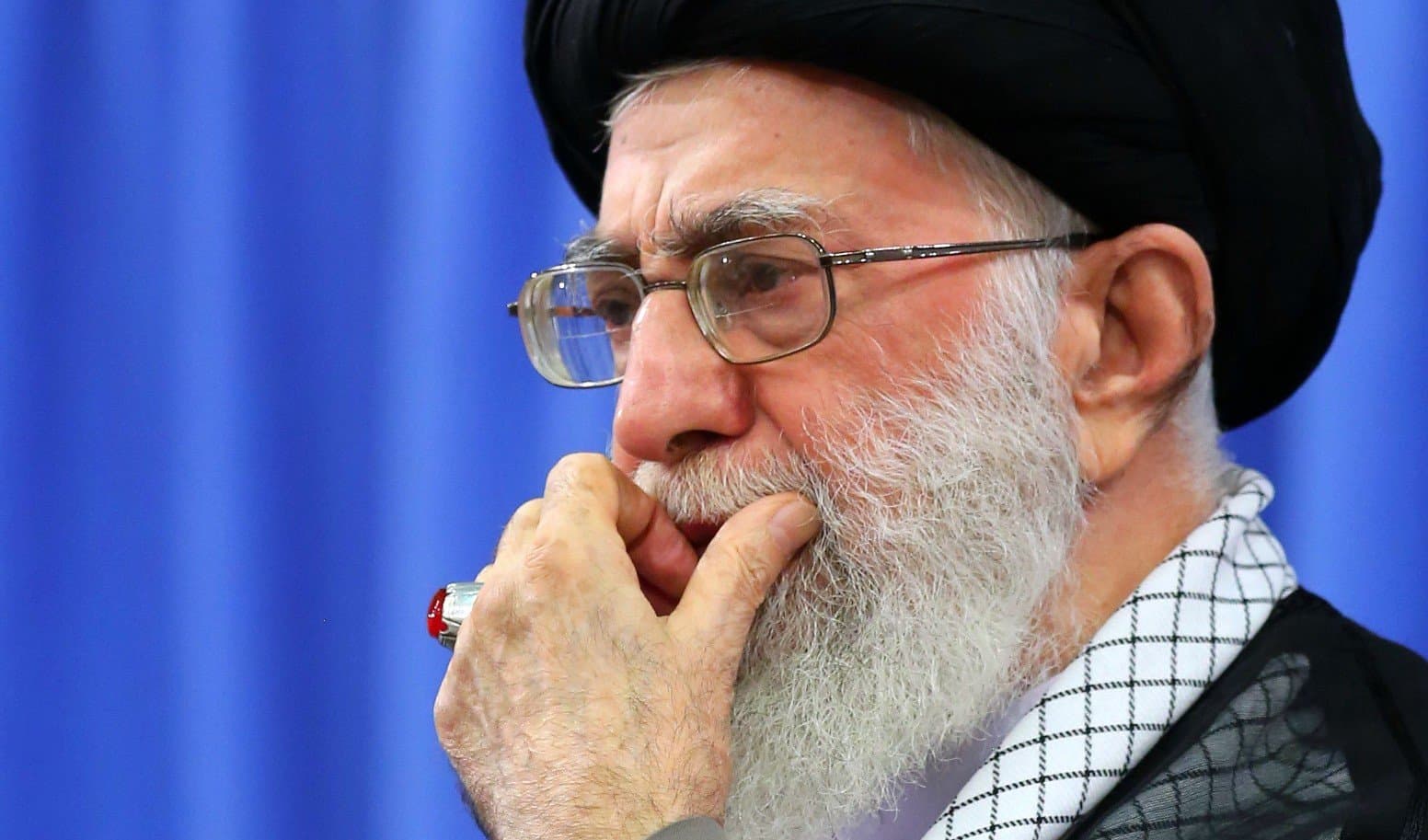
Nothing Ever Happens: Khamenei
Total Volume
$891.18K
Events
1
Markets
1
Nothing Ever Happens: Khamenei
Platform StatsQuick Platform Comparison
Polymarket
1
markets · $891.18K
Kalshi
0
markets · $0.00
Price Spread
0.0%avg
max 0.0%
Arbitrage
0
of 0 cross-platform
Volume DistributionTotal: $891.18K
100%
Polymarket leads
Price ChartMatched Markets Price Graph
1 market tracked
Nothing Ever Happens: Khamenei
No data available
Single-Platform Markets(1)
| Market | Platform | Price |
|---|---|---|
| Poly | 9% |
AI Analysis
Trader mode: Actionable analysis for identifying opportunities and edge
9%
Top Probability
$891.18K
Volume
1
Markets
1
Platforms
About This Event
This market will resolve to “No” if any of the following conditions are met between market creation and March 31, 2026, 11:59 ET: - Khamenei out as Supreme Leader of Iran - Khamenei leaves Iran Otherwise, this market will resolve to “Yes”. Khamenei out as Supreme Leader of Iran: This market will resolve to "No" if Iran's Supreme Leader, Ali Khamenei, is removed from power for any length of time during this market’s above-specified time frame. Khamenei will be considered to be removed from pow
What Prediction Markets Are Forecasting
Prediction markets currently give about a 9% chance that Iran's Supreme Leader, Ali Khamenei, will be removed from power or leave Iran before the end of March 2026. In simpler terms, traders see this as a roughly 1 in 11 chance. The overwhelming consensus, with 91% odds, is that Khamenei will remain in his position and in the country. This shows a high degree of confidence that the current political structure in Iran will stay stable over the next two years.
Why the Market Sees It This Way
The low probability of change is based on a few clear factors. First, Khamenei, who is 85, has been the Supreme Leader since 1989. This role is the highest authority in Iran's political system, combining religious and state power. The institutions built around this office, especially the Islamic Revolutionary Guard Corps, are deeply invested in maintaining the status quo.
Second, there is no clear public succession plan or known rival with the power to force a change. While there is frequent speculation about Khamenei's health, he has remained publicly active. Past periods of reported illness have not led to any overt power struggles, suggesting the system is designed to project stability until a formal transition becomes necessary.
Finally, despite significant public discontent and protest movements within Iran, these have not directly threatened the Supreme Leader's position. The mechanisms of state control have so far been effective at containing dissent without destabilizing the very top of the power structure.
Key Dates and Events to Watch
There are no scheduled elections or events that would directly force a change. The main factor to watch is any official news regarding Khamenei's health or hospitalization. A significant, prolonged absence from public view could shift the predictions.
Other potential triggers include any major, sustained internal unrest that directly challenges the leadership, or an unexpected geopolitical event that fractures the ruling elite. The market resolves at the end of March 2026, so any developments will be assessed against that deadline.
How Reliable Are These Predictions?
Prediction markets are generally reliable at aggregating collective judgment on political stability questions, especially when they concern well-defined events. They often outperform polls and pundits. However, their accuracy depends on traders having good information.
In this case, the inner workings of Iran's leadership are opaque. The market's 91% probability reflects the visible stability of the system, but it cannot account for completely hidden events, like a sudden health crisis behind closed doors. The prediction is a strong bet on continuity, but it carries the uncertainty inherent in forecasting an authoritarian state.
Current Market Outlook
The Polymarket contract "Nothing Ever Happens: Khamenei" is trading at 9 cents, which prices in a 91% probability that Supreme Leader Ali Khamenei will remain in power and inside Iran through March 31, 2026. A 91% chance indicates the market views his continued rule as nearly certain. The opposing "No" share, representing his removal or departure, trades at 91 cents. With nearly $900,000 in volume, this is a heavily traded market with a strong consensus.
Key Factors Driving the Odds
The extreme confidence in Khamenei's stability stems from Iran's political structure and recent history. The 85-year-old Supreme Leader controls the Revolutionary Guard, the judiciary, and state media. His position is constitutionally the highest authority, making a formal removal almost inconceivable under current law. Historical precedent also guides this pricing. Khamenei has held the role for 35 years, surviving the 2009 Green Movement protests, nationwide unrest in 2022, and significant international pressure. Markets are pricing in the regime's proven capacity for internal repression and its lack of a clear, immediate succession crisis. The odds reflect a bet on institutional inertia over dramatic political rupture.
What Could Change These Odds
The primary catalyst for a major price shift would be a direct and credible threat to Khamenei's life or health. His advanced age makes a sudden deterioration in his medical condition a tangible, though unpredictable, risk. Widespread internal rebellion that fractures the loyalty of the Revolutionary Guard could also force a reassessment, but past protests have been contained without threatening the core leadership. An external event, such as a regional war or a targeted military strike, presents a low-probability tail risk. The market will react sharply to any official news regarding his hospitalization or any visible challenge to his authority from within the regime's power centers. Until such a signal emerges, the high probability of "Yes" is likely to hold.
AI-generated analysis based on market data. Not financial advice.