$365.45K
1
5

$365.45K
1
5
Trader mode: Actionable analysis for identifying opportunities and edge
This market will resolve to “Yes” if the finalized USD exchange rate on Bonbast is equal to or above the specified price for any day between market creation and March 31, 2026. Otherwise, this market will resolve to “No”. This market will resolve according to the daily finalized free-market USD exchange rate as displayed on Bonbast (https://www.bonbast.com/graph/usd), which publishes prices in Iranian toman, where 1 Iranian toman equals 10 Iranian rials (IRR). A daily figure will be considered
AI-generated analysis based on market data. Not financial advice.
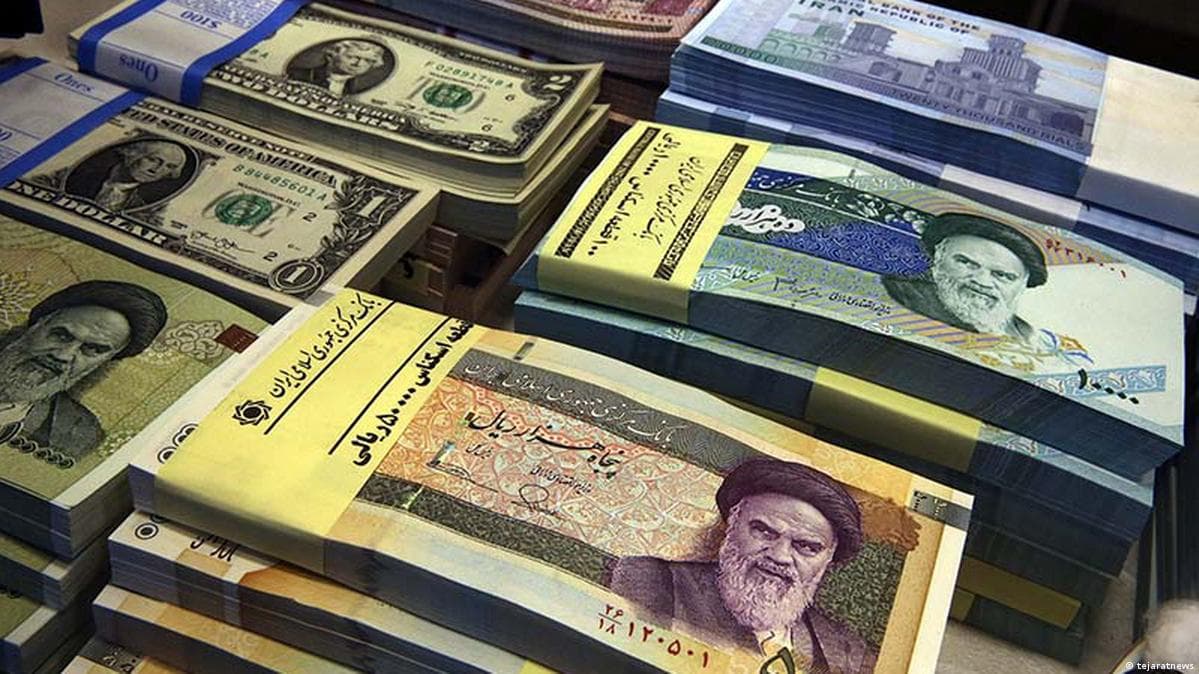
This prediction market focuses on whether the US dollar will reach a specific exchange rate against the Iranian rial by March 31, 2026. The market resolves based on the daily finalized free-market exchange rate published by Bonbast, a website that tracks unofficial currency rates in Iran. Bonbast displays prices in Iranian toman, where 1 toman equals 10 rials, so a rate of 100,000 toman per dollar corresponds to 1,000,000 rials per dollar. The question is fundamentally about the continued depreciation of Iran's national currency amid persistent economic pressures. The Iranian rial has lost over 90% of its value against the dollar in the past decade, driven by a combination of international sanctions, domestic economic mismanagement, high inflation, and political uncertainty. People monitor this rate as a real-time barometer of economic distress and the effectiveness, or lack thereof, of government monetary policy. The free-market rate often diverges significantly from the government's official rate, which is reserved for imports of essential goods, creating a multi-tiered currency system that fuels corruption and economic inequality. Interest in this specific forecast stems from investors, analysts, and ordinary Iranians who must navigate an economy where currency stability is a constant concern for savings, business planning, and the cost of living.
The severe devaluation of the Iranian rial is a phenomenon spanning decades, but it accelerated dramatically after 2018. In 2015, following the Joint Comprehensive Plan of Action (JCPOA), the rial stabilized around 32,000 to the dollar. This changed when the United States unilaterally withdrew from the nuclear deal in May 2018 under President Donald Trump and reimposed crippling secondary sanctions. The rial went into freefall, losing about 60% of its value within a year, trading at over 120,000 rials to the dollar by late 2018. The government responded by creating a complex multi-exchange-rate system and cracking down on the unofficial market, but these measures failed to halt the decline. A major devaluation occurred in May 2020 when the government officially devalued the rial for essential imports, effectively unifying two official rates but still maintaining a gap with the free market. By September 2022, amid nationwide protests, the rate surpassed 300,000 rials per dollar. This historical pattern shows the currency is highly sensitive to geopolitical shocks, domestic unrest, and the perceived prospects for sanctions relief, with each crisis triggering a new leg down in its value.
The exchange rate is not just a financial number in Iran. It is a direct determinant of inflation, as the country imports a wide range of goods. A falling rial makes everything from medicine to machinery more expensive, eroding living standards and pushing more people into poverty. This economic pain has repeatedly spilled over into social unrest, as seen in nationwide protests in 2017, 2019, and 2022, where economic grievances were a central catalyst. For the government, a weak currency drains foreign reserves needed to subsidize essential imports like food and medicine, forcing difficult fiscal choices. It also undermines long-term investment, as both domestic and foreign businesses face impossible planning horizons due to currency volatility. The rate is therefore a key indicator of the regime's stability and its ability to manage the economy under extreme external pressure.
As of early 2024, the Iranian rial remains under intense pressure. In January 2024, it briefly crossed 600,000 rials to the dollar on the free market, a new historic low. The Central Bank has intermittently intervened by supplying dollars to the market to slow the decline, but these measures provide only temporary relief. Regional tensions, particularly the conflict in Gaza and related military actions, have introduced new uncertainty, with markets fearing potential escalation and further economic isolation. Negotiations to revive the 2015 nuclear deal, which could lead to sanctions relief, are effectively stalled, offering no near-term prospect for a fundamental improvement in the currency's outlook.
The rial is Iran's official currency. The toman is an informal unit equal to 10 rials. Many Iranians quote prices in toman in daily life. Bonbast and other exchange sites display prices in toman, so a rate of 100,000 toman per dollar means 1,000,000 rials per dollar.
The government maintains a lower official rate to provide subsidized US dollars for importing essential goods like food and medicine, aiming to control costs. However, limited access to foreign currency means most individuals and businesses must use the free market, where the rate is set by supply and demand, leading to a significant gap between the two rates.
US sanctions restrict Iran's ability to sell oil and access the global financial system. This drastically reduces the country's supply of US dollars and other hard currencies. With less foreign currency entering the economy, demand for dollars on the free market far exceeds supply, driving the rial's value down.
No, Bonbast is an independent website. It aggregates data from the unofficial currency trading markets in Iran. While not officially sanctioned, it is widely used and its rates are accepted as a reliable indicator of the real-world exchange rate, as it reflects actual transaction prices.
A continued fall leads to higher import costs, fueling more inflation. It erodes savings, increases poverty, and can trigger social unrest. The government may respond with stricter currency controls, crackdowns on the free market, or further depletion of its foreign reserves in a bid to stabilize the rate.
Educational content is AI-generated and sourced from Wikipedia. It should not be considered financial advice.
5 markets tracked

No data available
| Market | Platform | Price |
|---|---|---|
![]() | Poly | 7% |
![]() | Poly | 5% |
![]() | Poly | 4% |
![]() | Poly | 4% |
![]() | Poly | 1% |


No related news found
Add this market to your website
<iframe src="https://predictpedia.com/embed/_wNcqI" width="400" height="160" frameborder="0" style="border-radius: 8px; max-width: 100%;" title="Will USD hit ___ Iranian rials by March 31?"></iframe>