Events
GroupPOLYMARKET

Event GroupPOLYMARKETPolitics
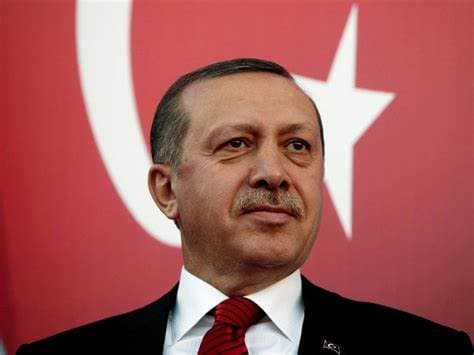
Erdoğan out by end of 2026?
Total Volume
$201.83K
Events
1
Markets
1
Erdoğan out by end of 2026?
Platform StatsQuick Platform Comparison
Polymarket
1
markets · $201.83K
Kalshi
0
markets · $0.00
Price Spread
0.0%avg
max 0.0%
Arbitrage
0
of 0 cross-platform
Volume DistributionTotal: $201.83K
100%
Polymarket leads
Price ChartMatched Markets Price Graph
1 market tracked
Erdoğan out by end of 2026?
No data available
Single-Platform Markets(1)
| Market | Platform | Price |
|---|---|---|
| Poly | 8% |
AI Analysis
Trader mode: Actionable analysis for identifying opportunities and edge
8%
Top Probability
$201.83K
Volume
1
Markets
1
Platforms
About This Event
This market will resolve to "Yes" if the President of the Republic of Türkiye Recep Tayyip Erdoğan is removed from power for any length of time between July 24, and December 31, 2026, 11:59 PM ET. Otherwise, this market will resolve to "No". Erdoğan will be considered to be removed from power if he resigns, is detained, or otherwise loses his position or is prevented from fulfilling his duties as President of Türkiye within this market's timeframe. The primary resolution source for this market
What Prediction Markets Are Forecasting
Prediction markets currently give about an 8% chance that Turkish President Recep Tayyip Erdoğan will leave office before the end of 2026. In simple terms, traders see this as a very unlikely event, estimating roughly a 1 in 12 chance. This shows strong collective confidence that Erdoğan will remain in power through this period.
Why the Market Sees It This Way
The low probability is based on several factors. First, Erdoğan holds significant institutional power. He won a decisive re-election in May 2023, securing another five-year term that runs until 2028. The Turkish political system, especially after constitutional changes in 2017, concentrates authority in the presidency, making a sudden, involuntary exit difficult.
Second, there is no clear, immediate successor or rival with enough consolidated support to force a change outside of a scheduled election. While Turkey faces economic challenges like high inflation, opposition parties have struggled to maintain a unified front against Erdoğan's ruling AK Party.
Finally, history supports stability in the near term. Erdoğan has been Turkey's dominant political figure for over two decades, surviving mass protests, an attempted coup in 2016, and economic crises. Markets are betting on his proven resilience.
Key Dates and Events to Watch
The next major electoral test is the local elections on March 31, 2024. A severe loss for the AK Party, especially in key cities like Istanbul and Ankara, could signal weakening political control, but it would not directly force Erdoğan from the presidency.
Beyond that, the timeline is quiet regarding formal mechanisms for removal. Observers will watch for signs of serious health issues, though the government tightly controls such information. Any major escalation of Turkey's economic problems or a significant fracture within the AK Party itself could increase political uncertainty, but neither scenario is currently seen as likely to trigger a departure before 2027.
How Reliable Are These Predictions?
Prediction markets are generally reliable for forecasting political stability in systems with strong incumbents, often performing well when asking "if" a leader will fall rather than "when." Their track record in similar contexts, like forecasting low odds for a sudden leadership change in Russia, has been decent.
The main limitation here is the potential for black swan events—unforeseen health, military, or deep internal party crises that are difficult to price. The 8% probability essentially represents the market's estimate for these unpredictable shocks. For planned, electoral transitions, these markets are more accurate, but for unexpected removals, the uncertainty is much higher.
Current Market Outlook
Polymarket traders assign an 8% probability that President Recep Tayyip Erdoğan will leave office before the end of 2026. This price indicates the market views his removal as a remote possibility. For context, an 8% chance is equivalent to a 1 in 12 longshot, signaling strong confidence in political continuity. The market has attracted nearly $200,000 in volume, showing serious interest despite the low implied odds.
Key Factors Driving the Odds
The pricing reflects Erdoğan’s entrenched political control. He secured a new five-year term in the May 2023 presidential election, extending his rule into 2028. His coalition holds a parliamentary majority, and no national election is scheduled before 2028. Historical precedent also weighs heavily. Erdoğan has survived mass protests, an attempted coup in 2016, and severe economic crises without losing power. The market effectively prices the high institutional and legal barriers to an unscheduled removal. Recent legal reforms have further centralized authority under the presidency, making constitutional removal via parliament practically impossible.
What Could Change These Odds
A significant shift in these odds would require a sudden, destabilizing event. The most plausible catalyst is a severe deterioration in Turkey’s economy, which could trigger unrest that pressures the ruling coalition. Annual inflation exceeded 75% in May 2024, and a sustained economic collapse could fracture political support. Another potential risk is a health crisis concerning the 70-year-old president, though his office tightly controls such information. External shocks, like a major geopolitical conflict involving Turkey, could also create unforeseen pressure. The market will likely remain stable near current levels barring a major, visible crisis that threatens the ruling party’s unity or public order.
AI-generated analysis based on market data. Not financial advice.