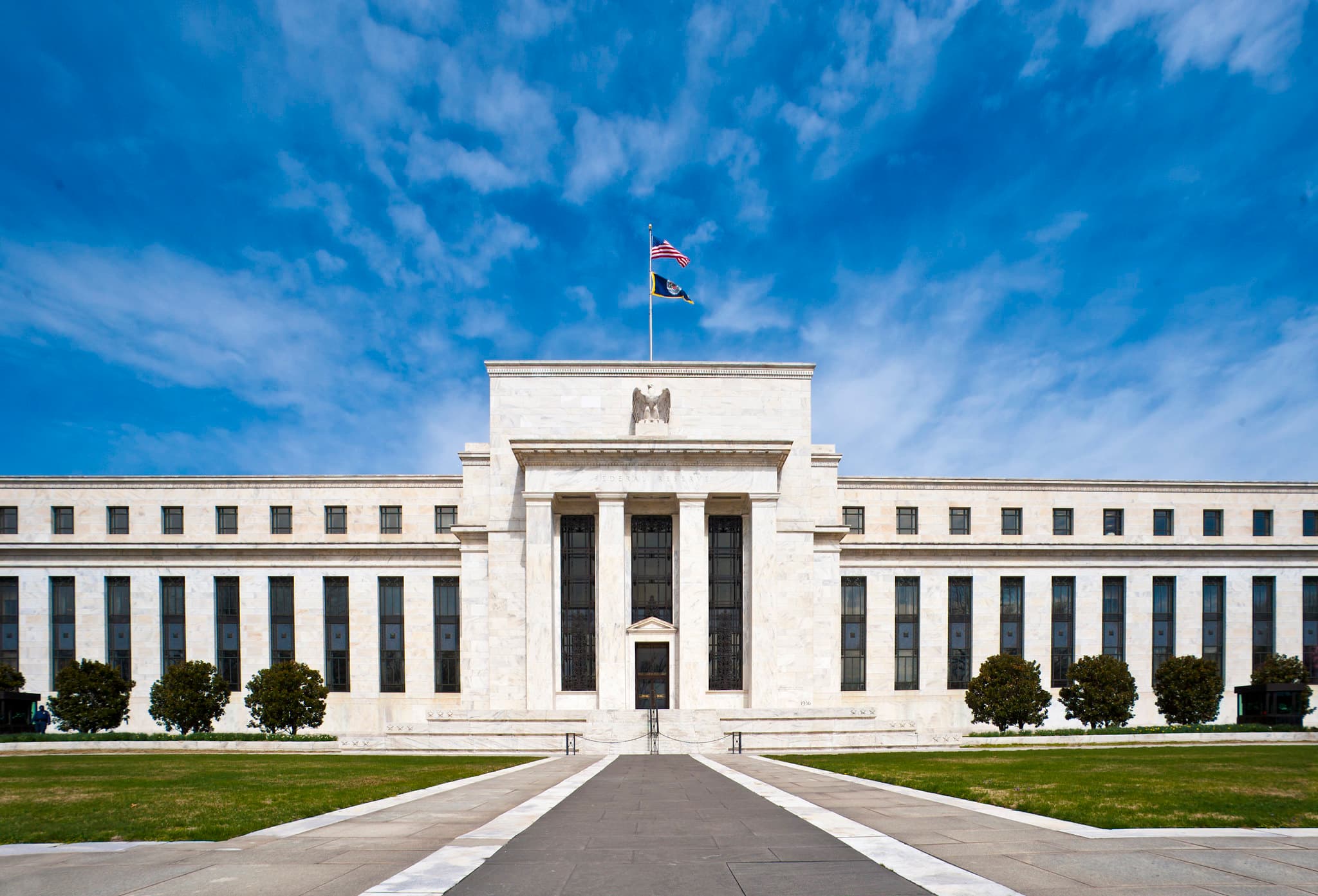
Fed abolished before 2027?
PM $8.2K
1
1
Fed abolished before 2027?
PM $8.2K
1
1
AI Analysis
Trader mode: Market mechanics, assumptions and risks
PM $8.2K
Reported volume · provider units
1
Saved contracts
0
Reviewed equivalent pairs
Source snapshot: Oct 16, 2026, 3:00 AM UTC
About This Event
This market will resolve to "Yes" if the United States Federal Reserve is formally abolished by December 31, 2026 11:59pm ET. Otherwise, this market will resolve to "No". The primary resolution source for this market will be information from the US federal government, however a consensus of credible reporting will also be used.
This saved analysis is awaiting a background update. Its prices and claims may be outdated; compare them with the dated market data above.
Current Market Outlook
Polymarket prices "Fed abolished before 2027" at 6%, meaning traders see roughly a 1-in-17 chance the Federal Reserve ceases to exist by December 31, 2026. That's a long shot, but not zero, and the market's thin $4K volume means the price carries limited conviction. For context, a 6% probability is the kind of number you'd expect for an event that requires a constitutional-scale shift in US governance, not just a policy change.
Key Factors Driving the Odds
The Fed's elimination isn't a normal legislative outcome. Abolishing the central bank would require an act of Congress, likely a supermajority to overcome a filibuster, plus presidential signature. The current political environment makes that structurally difficult. Even with Republican control of both chambers in 2025, Fed abolition has never been a mainstream GOP priority. Figures like Rand Paul have pushed "Audit the Fed" bills for years, but those stop far short of dissolution.
The Federal Reserve's legal status also complicates abolition. It operates under a 1913 statute, and unwinding its functions, from monetary policy to bank supervision and payment systems, would create immediate chaos in Treasury markets. No serious legislative draft exists, and the Fed's lender-of-last-resort role became more entrenched after 2008 and 2020.
What Could Change These Odds
A catalyst would need to be extreme. A debt-ceiling standoff that spirals into a Treasury default could fuel anti-Fed sentiment, but even then, abolition wouldn't be the likely response. The more plausible path involves a constitutional challenge to Fed independence, though courts have consistently upheld its structure. Watch for the Financial Stability Oversight Council's annual report in late 2026 and any Fed leadership vacancies that invite political pressure. If a major presidential candidate runs explicitly on abolishing the Fed, the market could move to 10-15%, but that's speculative.
The 6% price is honest. It reflects a tail risk, not a trend. Anyone betting "Yes" is wagering on a political earthquake that has no current legislative vehicle, no public consensus, and no institutional backers with real power. The market says this stays a fringe idea, and the fundamentals agree.
AI-generated analysis based on market data. Not financial advice.
Saved Aug 25, 2026 UTCThis saved content is awaiting a background update. It may contain outdated claims; use the dated market data and provider rules for the latest available information.
Overview
The United States Federal Reserve, the central banking system established in 1913, is the subject of a prediction market asking whether it will be formally abolished by December 31, 2026. The Fed's core functions include setting monetary policy, supervising and regulating banks, maintaining financial stability, and providing financial services. These responsibilities make it one of the most powerful and consequential institutions in the global economy. The market's resolution depends on official US federal government actions or a consensus of credible reporting, meaning a formal legislative repeal or executive action would be required. Since the Fed was created by an act of Congress, abolishing it would similarly require an act of Congress, making the probability of such an event extremely low in the near term. Interest in abolishing the Fed has been a recurring theme in American political discourse, particularly among libertarian and conservative circles. The Federal Reserve has faced criticism from those who argue that its monetary policy leads to inflation, business cycles, and wealth inequality. In recent years, high inflation during 2021-2023, peaking at 9.1% in June 2022, reignited debates over the Fed's role. Some prominent politicians, including former presidential candidate Ron Paul, have long advocated for ending the Fed, and more recently, figures like Vivek Ramaswamy have called for drastic changes, including abolishing the Fed and returning to a gold standard. However, the practical hurdles are immense. A constitutional amendment is not required, but a simple majority in both houses of Congress and the President's signature would be necessary. Given the Fed's deep integration into the global financial system, its role in managing the dollar, and its lender-of-last-resort functions, abolition would likely cause severe economic disruption. No major political party has adopted Fed abolition as a platform, and even the most critical lawmakers propose reforms rather than outright abolition. The market's 'No' resolution appears highly likely, but the question remains a fascinating lens into political and economic extremes. Why are people interested in this market? Prediction markets attract participants who want to hedge against tail risks or express views on political outcomes. The question touches on broader concerns about inflation, government overreach, and the stability of the financial system. For many, the market serves as a barometer of political sentiment regarding the Fed's future, even if the odds are overwhelmingly in favor of the status quo.
Historical Context
The Federal Reserve was created on December 23, 1913, when President Woodrow Wilson signed the Federal Reserve Act into law. The act was a response to a series of financial panics, most notably the Panic of 1907, which demonstrated the need for a central authority to provide liquidity and stabilize the banking system. The Fed's structure, with 12 regional banks and a Board of Governors in Washington, D.C., was designed to balance regional interests with centralized oversight. Over the decades, the Fed's powers expanded significantly, particularly during the Great Depression and after the 2008 financial crisis, when it took on broader roles in financial regulation. Calls for abolishing the Fed have existed since its inception. In the 1930s, some populists blamed the Fed for the Depression, but it was not until the late 20th century that abolition became a mainstream fringe idea. The 1970s stagflation, high inflation, and the 2008 crisis fueled new critiques. In 2009, Ron Paul's 'Audit the Fed' bill gained significant public support, and although it did not pass, it led to a compromise audit provision in the Dodd-Frank Act. The Fed's critics argue that its policies create asset bubbles, benefit Wall Street, and erode the purchasing power of the dollar. However, the Fed's defenders point to its role in managing interest rates, responding to recessions, and preventing bank runs. Historically, no serious effort to abolish the Fed has come close to succeeding. The most notable legislative attempts include the Federal Reserve Abolition Act, introduced by Ron Paul in 1999 and again in 2011, which never advanced. The idea has gained traction in times of economic distress, but it remains a political non-starter in mainstream politics. The Fed's authority is deeply embedded in the global financial system, and its abolition would require a fundamental restructuring of the US monetary system, likely with unpredictable consequences.
Why It Matters
The question of abolishing the Federal Reserve goes beyond a single policy debate. It touches on the very nature of fiat money, central banking, and the government's role in the economy. If the Fed were abolished, the US would lose its ability to conduct independent monetary policy, which would have immediate and severe effects on interest rates, inflation, and employment. The dollar's status as the world's reserve currency could be jeopardized, leading to a global economic upheaval. Even the possibility of such a move creates uncertainty, which can affect financial markets and business decisions. For ordinary Americans, the Fed's actions directly impact their daily lives: mortgage rates, credit card interest, savings yields, and the cost of goods. Abolishing the Fed would likely lead to a return to some form of commodity standard or a purely congressional monetary policy, both of which are untested in modern economies. The debate also reflects broader societal tensions about trust in institutions, the distribution of wealth, and the balance of power between the federal government and the private sector. Regardless of the outcome, the conversation about the Fed's future shapes public opinion and policy directions for years to come.
Frequently Asked Questions
Can the Federal Reserve be abolished?
Yes, in theory, the Federal Reserve can be abolished through an act of Congress, as it was created by the Federal Reserve Act of 1913. However, such a move would require a majority in both the House and Senate and the President's signature, and it would likely cause severe economic disruption.
AI-written background. References identify the evidence used; Wikipedia links under Learn More are additional reading. Prices and provider rules are dated snapshots. This is not financial advice.
Market Insights
Price gaps of 2 pp+
0
Reviewed equivalent pairs
0
No currently reviewed equivalent pairs with both binary Yes prices are available.
Price differences do not establish arbitrage. Check each pair's review, current order prices, fees and settlement rules.