$41.44K
1
1

$41.44K
Trader mode: Actionable analysis for identifying opportunities and edge
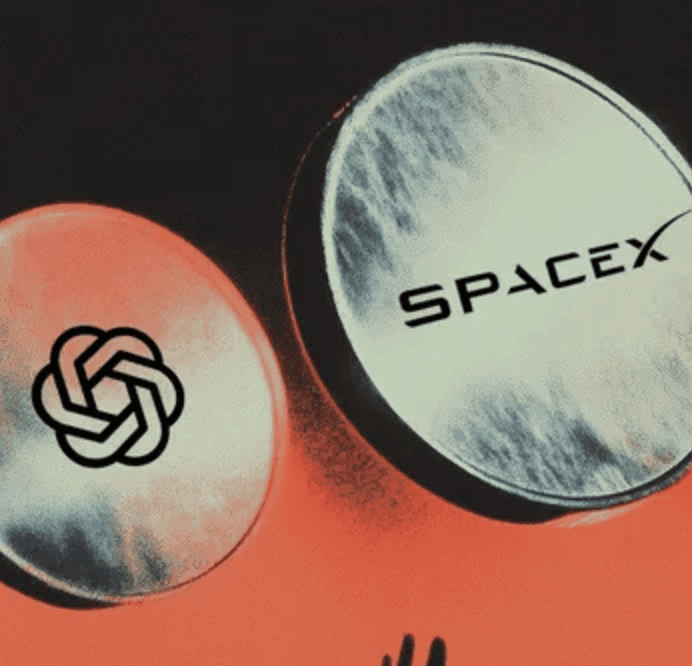
This market will resolve to "SpaceX" if SpaceX (Space Exploration Technologies Corp.) completes an Initial Public Offering (IPO) before OpenAI completes an IPO by December 31, 2027, 11:59 PM ET, as confirmed by official company announcements and credible news sources. This market will resolve to "OpenAI" if OpenAI completes an Initial Public Offering (IPO) before SpaceX completes an IPO by December 31, 2027, 11:59 PM ET, as confirmed by official company announcements and credible news sources.
Prediction markets currently give SpaceX a strong lead in this race. Traders collectively estimate there is an 80% chance that SpaceX will go public before OpenAI does. In simpler terms, this means the market sees about a 4 in 5 likelihood that Elon Musk's rocket company will have its stock market debut first. This shows a high, though not absolute, level of confidence in that outcome, with OpenAI seen as the clear underdog before the end of 2027.
The high probability for SpaceX is based on a few clear factors. First, SpaceX has been around since 2002 and has a more traditional, capital-intensive business model in aerospace. Going public is a classic way for such companies to raise the enormous funds needed for projects like Starship and Starlink. There has been persistent speculation and reported internal discussions about a SpaceX IPO for years, especially as its Starlink satellite internet service reaches profitability.
In contrast, OpenAI's structure and recent turmoil make an IPO seem more distant. OpenAI started as a non-profit in 2015 and later created a "capped-profit" arm. This unique hybrid structure is not typical for public markets. More importantly, the company's governance was shaken by the brief ousting and return of CEO Sam Altman in late 2023, revealing instability that public investors typically avoid. While OpenAI is a leader in AI, its path to a standard IPO appears more complex and less certain than SpaceX's.
There are no fixed IPO dates for either company, so the timeline depends on corporate decisions. For SpaceX, the main signal to watch is the financial performance and spin-out potential of Starlink. If SpaceX announces that Starlink has achieved consistent, strong profitability on its own, it could be a major step toward an IPO for either the entire company or that specific unit. Any official filing with the Securities and Exchange Commission (SEC) would be the definitive event.
For OpenAI, watch for any major changes to its corporate governance and profit structure. If the company announces a full restructuring into a traditional for-profit corporation, it would significantly increase its IPO chances. Also, monitor its revenue growth from products like ChatGPT Enterprise and its API. Sustained high revenue could build pressure to go public, but the company must solve its governance questions first.
Prediction markets are generally useful for aggregating diverse opinions on future corporate events, but this specific question has limited historical parallels. Markets have been decent at forecasting the timing of major IPOs when there is substantial public speculation and clear financial milestones. However, both these companies are unusual. SpaceX is a private behemoth in a unique industry, and OpenAI has a novel corporate form. The biggest limitation is that the decision rests entirely with a small group of executives and board members, whose motivations may not be purely financial. A sudden strategic shift by either Elon Musk or Sam Altman could quickly upend the current market consensus.
Prediction markets assign an 80% probability that SpaceX will complete an IPO before OpenAI. This price indicates a strong consensus that Elon Musk's aerospace company is the clear frontrunner in this race. With the contract resolving at the end of 2027, the market sees a SpaceX public listing as a likely event within the next few years, while viewing an OpenAI IPO as a distant and uncertain prospect.
SpaceX's dominant pricing stems from its mature business trajectory and clear financial signals. The company has actively conducted secondary sales, with its valuation exceeding $200 billion in recent private transactions. This established pattern of liquidity events for early investors and employees is a direct precursor to a public offering. Furthermore, SpaceX's core Starlink satellite internet division has reached operational profitability, providing a tangible revenue stream that public market investors can evaluate. In contrast, OpenAI's structure and strategy present significant barriers. The company's unique capped-profit model, governed by a non-profit board, was explicitly designed to prioritize safety over investor returns. This governance makes a traditional IPO structurally challenging. While OpenAI generates substantial revenue, its leadership has consistently stated that an IPO is not a current goal.
The primary catalyst for a shift toward OpenAI would be a fundamental change in its corporate governance. If the board were to restructure to prioritize shareholder value, perhaps under pressure from major investors like Microsoft, the IPO timeline could accelerate. For SpaceX, the main risk is Elon Musk's repeated statements that he will not IPO until Starlink's revenue is predictably strong and the Mars colonization program is more advanced. A significant delay in these milestones, or a decision to spin off Starlink alone as a public entity, could reset market expectations. Key dates to watch are any official S-1 filings with the SEC, which would provide a definitive 3-4 month lead time before an IPO. Until such a filing appears for either company, SpaceX will likely maintain its heavy favorite status.
AI-generated analysis based on market data. Not financial advice.
1 market tracked

No data available
| Market | Platform | Price |
|---|---|---|
![]() | Poly | 77% |
1
1
This prediction market asks which of two prominent private technology companies, SpaceX or OpenAI, will complete an initial public offering first. An IPO is when a private company sells shares to the public for the first time on a stock exchange. The market resolves by December 31, 2027, based on official announcements and credible news reports. Both companies are leaders in their respective fields, with SpaceX dominating commercial spaceflight and OpenAI pioneering generative artificial intelligence. They are also among the most valuable privately held companies globally, making their potential transition to public markets a significant financial event. Investor interest stems from the rarity of such high-profile technology IPOs, the substantial wealth creation they could generate, and the broader implications for their industries. The question reflects speculation about each company's financial readiness, strategic priorities, and the market conditions that might prompt a public listing.
SpaceX was founded by Elon Musk in 2002 with the goal of reducing space transportation costs. The company remained privately held, relying on contracts from NASA and commercial clients, along with private investment rounds. A significant precedent was set in 2020 when SpaceX began discussing a potential spin-off and IPO for its Starlink broadband division. CEO Elon Musk stated in 2021 that SpaceX would likely not IPO until the Starship rocket system was flying regularly to Mars, pushing any timeline far into the future. OpenAI was founded in 2015 as a non-profit research laboratory. In 2019, it created a capped-profit subsidiary, OpenAI LP, to attract investment while trying to uphold its founding charter. This hybrid structure was unique and complicated any straightforward path to a public offering. Microsoft's multi-billion dollar investments, beginning in 2019 and expanding in 2023, provided OpenAI with substantial capital without requiring an IPO. The history of both companies shows a consistent pattern of accessing large-scale private funding, reducing the traditional pressure to go public for capital reasons.
The order of these IPOs would signal which transformative technology the public markets deem more mature and investable first: space infrastructure or advanced artificial intelligence. A SpaceX IPO, particularly for Starlink, would create a publicly traded pure-play in satellite internet and space access, giving ordinary investors exposure to an industry historically dominated by governments. An OpenAI IPO would be one of the most significant public debuts for an AI company, setting valuation benchmarks for the entire sector and testing investor appetite for a business whose product capabilities and regulatory environment are still evolving. The outcome affects employees holding equity, venture capital firms awaiting returns, and competitors in both industries. It also influences capital allocation across the tech sector, as a successful IPO can funnel more investment into similar companies.
As of mid-2024, neither company has filed a registration statement (S-1) with the U.S. Securities and Exchange Commission, which is the formal first step toward an IPO. SpaceX continues to develop its Starship rocket, with test flights ongoing from Boca Chica, Texas. The company is focusing on achieving Starlink cash flow positivity. OpenAI is expanding its enterprise product offerings and navigating global AI regulation. Both companies continue to raise capital through private means, with SpaceX conducting periodic secondary sales for employees and investors, and OpenAI arranging tender offers for shares.
CEO Elon Musk has stated he wants the company's Mars-focused Starship vehicle to be operational before considering an IPO for the core launch business. He has expressed a desire to avoid the short-term profit pressures of public markets while pursuing long-term, high-risk goals.
Yes. Company leadership has repeatedly discussed the possibility of spinning off the Starlink satellite internet business for a public offering. This is considered the most likely path for any SpaceX-related IPO in the near term.
OpenAI consists of the original non-profit OpenAI Inc., which controls a for-profit subsidiary called OpenAI LP. This capped-profit structure, with investors' returns limited, was designed to balance fundraising with a mission-focused charter, complicating a traditional IPO.
Frequent private sales or tender offers, like those conducted by SpaceX and OpenAI, allow early investors and employees to gain liquidity. This can reduce immediate pressure for an IPO, as it provides an alternative exit path without the regulatory burden of being a public company.
Likely triggers include a major need for capital not satisfied by private markets, a desire to use public stock for acquisitions, pressure from early investors seeking returns, or a strategic decision to increase transparency and public profile.
Educational content is AI-generated and sourced from Wikipedia. It should not be considered financial advice.

No related news found
Add this market to your website
<iframe src="https://predictpedia.com/embed/b5Jy1n" width="400" height="160" frameborder="0" style="border-radius: 8px; max-width: 100%;" title="Will SpaceX or OpenAI IPO first?"></iframe>