$1.02K
1
1

1 market tracked

No data available
| Market | Platform | Price |
|---|---|---|
![]() | Poly | 6% |
Trader mode: Actionable analysis for identifying opportunities and edge
This market will resolve to "Yes" if Jerome Powell serves any time in a federal, state, or local U.S. jail or prison between market creation and December 31, 2026, 11:59 PM ET. Otherwise, this market will resolve to "No". The primary resolution source for this market will be official information from the U.S. Government, however a consensus of credible reporting may also be used.
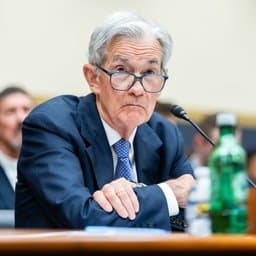
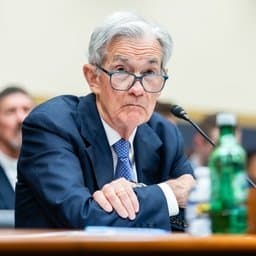
Prediction markets assign a very low probability to the prospect of Federal Reserve Chair Jerome Powell being incarcerated before the end of 2026. On Polymarket, the "Yes" share trades at approximately 6%, implying the market sees about a 94% chance this event does not occur. A 6% probability suggests the market views this outcome as highly unlikely, though not entirely impossible, often pricing in extreme tail-risk scenarios or speculative narratives rather than a base-case expectation.
The primary factor suppressing the probability is the nature of the position and the legal framework surrounding it. The Federal Reserve Chair is a central banking official, not a political appointee typically embroiled in criminal liability related to their official duties. Historical precedent is stark, there is no instance of a sitting Fed Chair being jailed for actions taken in their official capacity. Furthermore, Powell's tenure has been marked by standard, if aggressive, monetary policy actions like interest rate hikes to combat inflation, which are legal exercises of the Fed's mandate, not criminal acts.
Second, the specific legal threshold for jailing a high-profile figure like Powell would require a proven, prosecutable crime. Current political rhetoric criticizing the Fed's policies does not equate to evidence of criminal wrongdoing. Markets are effectively pricing in the significant insulation and legal protections afforded to the institution and its leadership.
The odds could see volatility from two main catalysts. The first is an unexpected, severe legal investigation into the Federal Reserve or Powell personally, perhaps related to financial market oversight, ethics, or personal conduct unrelated to monetary policy. An official announcement of a federal probe, though unlikely, would cause the probability to spike.
The second catalyst is political. Should there be a dramatic shift in the U.S. administration and Congress post-2024 elections, resulting in highly adversarial hearings and concerted efforts to criminalize policy decisions, speculative trading could increase. However, the legal bar for imprisonment remains exceedingly high, making any sustained price increase above 15-20% unlikely without concrete judicial developments. The market will remain sensitive to any direct headlines mentioning "investigation" or "charges" against Powell.
AI-generated analysis based on market data. Not financial advice.
$1.02K
1
1
This prediction market addresses the possibility of Jerome Powell, the 16th Chair of the Federal Reserve, serving time in a U.S. jail or prison before the end of 2026. The market resolves based on official government information or credible reporting confirming any incarceration. Jerome Powell has served as Fed Chair since 2018, having been initially appointed by President Donald Trump and subsequently renominated by President Joe Biden. His tenure has been marked by historically aggressive monetary policy actions, including rapid interest rate hikes to combat post-pandemic inflation, which reached a 40-year high in 2022. Interest in this topic stems from intense political scrutiny of the Federal Reserve's actions, historical precedents of legal challenges against central bankers, and broader debates about central bank independence and accountability. While no formal criminal investigations targeting Powell have been announced, speculation arises from political rhetoric, the Fed's significant influence over the economy, and historical instances where financial regulators have faced legal consequences. The market essentially gauges perceived legal and political risk surrounding one of the world's most powerful economic officials during a period of economic uncertainty.
The historical context for this prediction involves the legal and political challenges faced by high-ranking U.S. financial officials. A direct precedent is rare for a sitting Federal Reserve Chair, but other financial regulators have faced legal consequences. In 1996, former Federal Reserve Bank of New York President E. Gerald Corrigan was investigated, though not charged, by the Office of the Comptroller of the Currency for his role in the Bank of Credit and Commerce International scandal. More broadly, in 2011, the Financial Crisis Inquiry Commission referred several executives from major financial institutions to the Justice Department for potential criminal prosecution related to the 2008 crisis, though no high-level convictions resulted. The concept of central bank independence, which insulates monetary policy from direct political control, is a post-World War II norm. Challenges to this independence, whether through political pressure or legal action, have occurred during periods of economic stress, such as the 1970s when President Nixon pressured Fed Chair Arthur Burns to keep interest rates low. The modern Fed's regulatory failures, such as its oversight lapses prior to the 2008 crisis and the 2023 collapses of Silicon Valley Bank and Signature Bank, have also led to congressional investigations and calls for accountability, setting a stage for scrutiny.
The potential incarceration of a sitting Federal Reserve Chair would represent an unprecedented crisis for the U.S. and global financial system. It would immediately trigger severe market volatility, as investors would face extreme uncertainty about the future path of monetary policy and the stability of the world's most important central bank. The credibility of the U.S. dollar and the Treasury market, the bedrock of global finance, could be called into question. Politically, such an event would shatter the long-standing norm of central bank independence, potentially leading to a politicization of monetary policy that could fuel inflation and undermine economic stability for years. The social impact would be profound, as public trust in major institutions, already strained, would likely deteriorate further. Downstream consequences could include capital flight, a destabilizing search for alternative reserve currencies, and a deep recession as confidence in the management of the U.S. economy evaporates.
As of mid-2024, Jerome Powell continues to serve as Chair of the Federal Reserve. There are no publicly known criminal investigations or charges pending against him. The Federal Reserve is under ongoing congressional scrutiny, particularly from the House Financial Services Committee, regarding its supervision of banks and its monetary policy decisions. Political criticism of Powell continues from both sides of the aisle, focusing on inflation management and regulatory oversight, but this has not escalated to formal legal proceedings. The prediction market exists in a context of speculation rather than any active legal case.
No sitting Chair of the Federal Reserve has ever served time in jail. The institution has maintained a strong tradition of legal and political independence since its founding in 1913, with its leaders typically facing political pressure rather than criminal prosecution.
In a hypothetical scenario, legal theories could include allegations of negligence or breach of fiduciary duty related to bank supervision, particularly following the 2023 regional bank failures. However, proving criminal intent for monetary policy decisions, which involve complex economic judgments, would be an exceptionally high legal bar.
The U.S. Department of Justice, through its Public Integrity Section, has jurisdiction over potential federal crimes. Congress, through committees like Senate Banking and House Financial Services, has investigative oversight authority but cannot bring criminal charges.
Financial markets would likely experience extreme volatility and a sharp sell-off. Treasury yields could spike due to uncertainty, the dollar could weaken, and global risk assets would face severe pressure as confidence in U.S. institutional stability collapsed.
A Fed Chair can be removed by the President of the United States 'for cause' under the Federal Reserve Act, a standard that is legally ambiguous but higher than 'at will.' This is a political process, distinct from criminal incarceration, which would require arrest, conviction, and sentencing through the judicial system.
Educational content is AI-generated and sourced from Wikipedia. It should not be considered financial advice.
Share your predictions and analysis with other traders. Coming soon!

No related news found
Add this market to your website
<iframe src="https://predictpedia.com/embed/bEE1a-" width="400" height="160" frameborder="0" style="border-radius: 8px; max-width: 100%;" title="Jerome Powell in jail before 2027?"></iframe>