$11.99K
1
8

$11.99K
1
8
Trader mode: Actionable analysis for identifying opportunities and edge
This market will resolve according to the number of pieces of legislation that are signed into law between April 1, 2026, 12:00 AM and April 30, 2026, 11:59 PM ET. Qualifying legislation may include joint resolutions and must pass both the House and the Senate, and must be signed by the President. Legislation that becomes law without a signature while Congress remains in session, or becomes law through veto override, as well as Presidential pocket vetoes that expire, will not qualify. The p
AI-generated analysis based on market data. Not financial advice.
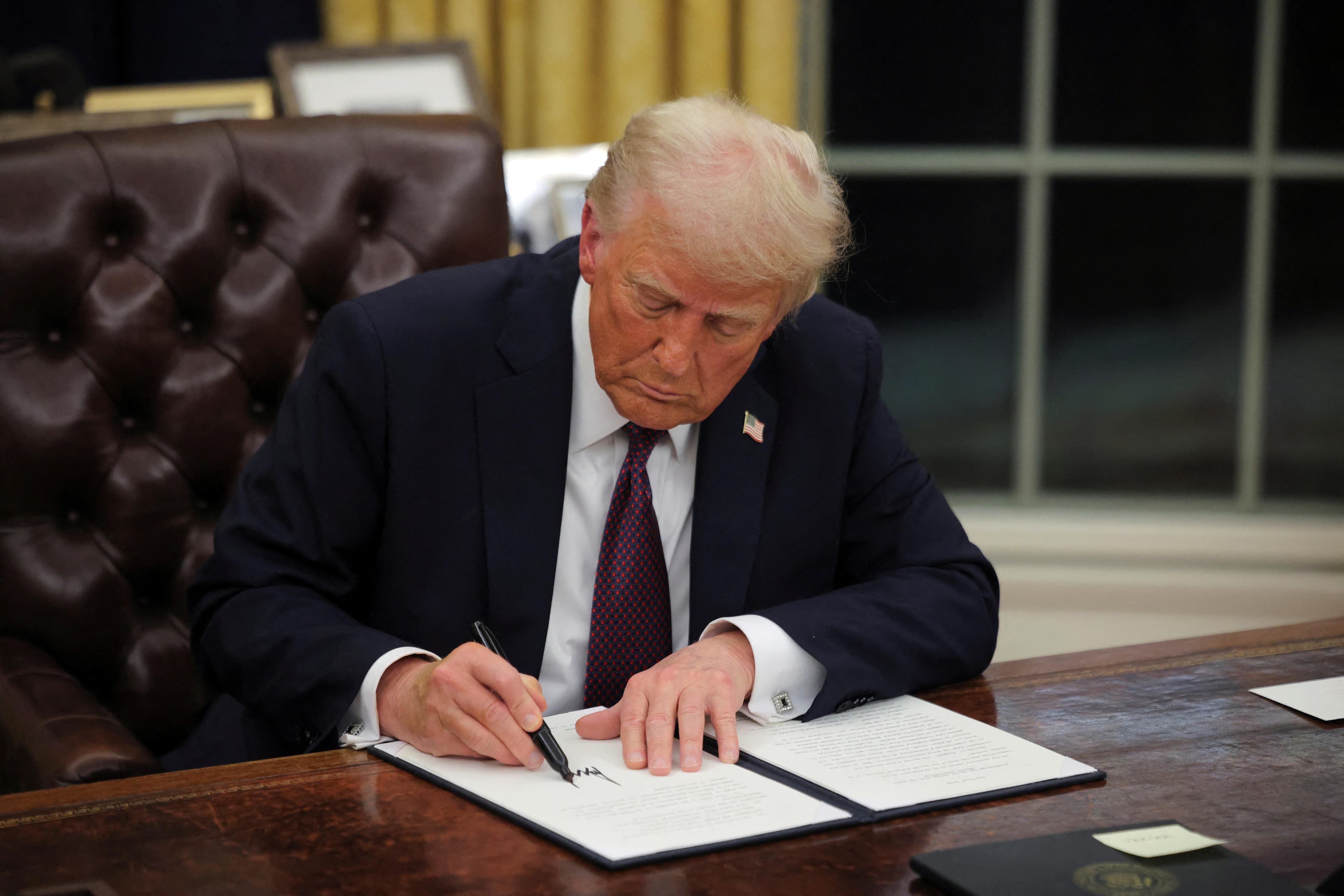
This prediction market focuses on the legislative output of the Trump administration during March 2026. It specifically tracks how many bills or joint resolutions pass both chambers of Congress and receive the President's signature within that calendar month. The resolution criteria are precise, excluding bills that become law without a signature, through veto overrides, or via pocket veto expiration. This creates a narrow measure of successful, cooperative lawmaking between the executive and legislative branches. The topic is significant because presidential signing rates can indicate the administration's legislative priorities, the level of cooperation with Congress, and the overall productivity of the federal government during a specific period. Interest in this metric stems from political analysts, historians, and market participants who study governance patterns. A high number could signal a productive session or a focus on smaller, bipartisan measures. A low number might indicate legislative gridlock, political conflict, or a focus on executive actions instead of congressional bills. The month of March is often a period where Congress aims to pass appropriations bills before fiscal deadlines, which could influence the volume of legislation reaching the President's desk.
Historical data on bill signings shows considerable monthly variation. For example, in December 2022, President Biden signed 94 bills, many of which were bundled appropriations measures to fund the government. In contrast, August typically sees few signings as Congress is in recess. The Trump administration's first term provides a relevant precedent. In March 2017, Trump signed 11 bills into law. This included the first significant legislation of his term, a joint resolution nullifying a U.S. Department of Education accountability rule. In March 2018, he signed 14 bills, and in March 2019, he signed 9 bills. The month of March often coincides with the need to pass full-year appropriations bills if the fiscal year began the previous October under a continuing resolution. This historical pattern suggests March can be a moderately active month, especially if there are pending budgetary deadlines. The modern era has generally seen a decline in the total number of laws passed per Congress compared to the mid-20th century, making the passage of any legislation noteworthy.
The number of bills signed into law is a concrete metric of governmental functionality. A consistently low output can signal chronic gridlock, where partisan divisions prevent Congress from addressing national issues, from infrastructure to healthcare. This can lead to governance by executive order and agency regulation, which are more easily reversed by subsequent administrations. For citizens and businesses, legislative productivity affects policy stability and long-term planning. Industries from technology to agriculture rely on clear, durable laws rather than temporary administrative guidance. A productive March could indicate successful negotiation on must-pass items like government funding, which prevents shutdowns and provides certainty for federal agencies and contractors. Conversely, a month with zero or one signing might point to deep political dysfunction, potentially rattling financial markets and shaking public confidence in governing institutions.
As of early 2025, the political composition of the 119th Congress that will be seated in January 2025 is unknown, as it will be determined by the November 2024 elections. The partisan control of the House and Senate will be the dominant factor shaping the legislative agenda for March 2026. President Trump, if re-elected in November 2024, would be in the second year of his potential second term, a period historically associated with increased legislative activity compared to the first year. Key issues likely to drive legislation include the expiration of provisions from the 2017 Tax Cuts and Jobs Act, ongoing appropriations, and potential reforms in areas like immigration or energy policy.
There is no true typical number, as signings are highly seasonal and political. Presidents may sign dozens of bills in December during omnibus spending periods, and only one or two in August. Modern presidents average between 4 and 8 substantive bill signings per month outside of these peak periods.
Yes. The prediction market rules qualify any piece of legislation that passes both the House and Senate and is signed by the President. This includes minor and commemorative bills, such as those naming federal buildings or awarding congressional gold medals.
If the President does not sign a bill within 10 days (excluding Sundays) and Congress remains in session, the bill becomes law automatically. This market explicitly excludes such bills, counting only those where the President affirmatively signs the legislation.
Congressional recesses, like a spring break, would reduce the number of working days to pass legislation, likely lowering the potential volume of bills that could be sent to the President's desk for signature during that month.
The official source is the White House website's 'Bills Signed' page. The Government Publishing Office also publishes the Statutes at Large, and the Congress.gov website tracks a bill's status from introduction to becoming Public Law.
Educational content is AI-generated and sourced from Wikipedia. It should not be considered financial advice.
8 markets tracked

No data available
| Market | Platform | Price |
|---|---|---|
![]() | Poly | 36% |
![]() | Poly | 35% |
![]() | Poly | 30% |
![]() | Poly | 21% |
![]() | Poly | 14% |


No related news found
Add this market to your website
<iframe src="https://predictpedia.com/embed/bIPmFf" width="400" height="160" frameborder="0" style="border-radius: 8px; max-width: 100%;" title="How many pieces of legislation will Trump sign into law in April?"></iframe>