This event has ended. Showing historical data.
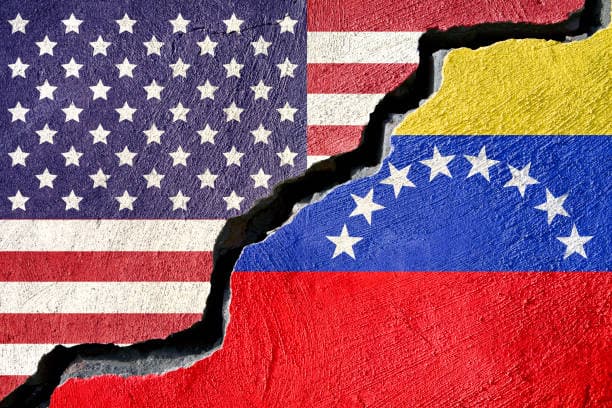
Will the US officially declare war on Venezuela by...?
$1.24M
1
1
Will the US officially declare war on Venezuela by...?
$1.24M
1
1
AI Analysis
Trader mode: Actionable analysis for identifying opportunities and edge
About This Event
This market will resolve to "Yes" if the United States formally declares war on Venezuela through an act of Congress between December 15 and December 31, 2025, 11:59 PM ET. Otherwise, this market will resolve to "No." To qualify, Congress must pass a formal declaration of war, consistent with its constitutional authority under Article I, Section 8. Authorizations for the use of military force (AUMFs), executive orders, presidential statements, or military actions do not qualify unless accompani
Current Market Outlook
The market is pricing a 2% chance that the US will officially declare war on Venezuela by June 30, 2026. That is effectively a near-zero probability. Prediction markets are saying this outcome is not going to happen, and they are betting real money on that view.
The market on Polymarket has seen $1.2M in volume, which is high liquidity for a niche geopolitical question. The specific December 15-31, 2025 window market appears to have already resolved or is so thinly traded it barely registers. The June 2026 market is the one with actual action.
Key Factors Driving the Odds
The US has not formally declared war since World War II. Congress has authorized military force multiple times since then (2001 AUMF, 2002 Iraq AUMF), but those are not formal declarations of war. The constitutional bar is high: Article I, Section 8 requires a majority vote in both chambers and a presidential signature.
Venezuela is a collapsed state with a humanitarian crisis, but US policy has focused on sanctions, diplomatic pressure, and support for opposition figures like Juan Guaido. The Biden administration has shown no appetite for military intervention anywhere, let alone in a country with Russian and Chinese backing. The US military has no public contingency plans for invading Venezuela.
The 2% price reflects the market's view that this would require a catastrophic trigger: a direct attack on US soil by Venezuelan state forces, a major regional war involving US allies, or a complete breakdown of the Maduro regime into civil war that draws in US forces. None of those are priced as likely.
What Could Change These Odds
A military clash in the Caribbean or a Venezuelan attack on US energy assets in the region would spike the probability. But even then, the US would likely respond with airstrikes or special operations, not a formal declaration of war.
The 2026 deadline matters. If the Republican Party wins the White House and both chambers of Congress in 2024, hawkish voices pushing for regime change could gain traction. But a formal declaration would still require a political consensus that does not exist.
The market is correctly pricing this as a tail risk. Anyone betting on "Yes" at 2% is buying a lottery ticket, not making a serious investment.
AI-generated analysis based on market data. Not financial advice.
Overview
This prediction market asks whether the United States will formally declare war on Venezuela through an act of Congress between December 15 and December 31, 2025. A formal declaration of war requires a majority vote in both the House of Representatives and the Senate, followed by the president's signature, as outlined in Article I, Section 8 of the U.S. Constitution. This market specifically excludes authorizations for the use of military force (AUMFs), executive orders, presidential statements, or military actions unless they are accompanied by a formal declaration. The question arises amid ongoing tensions between the U.S. and Venezuela, particularly regarding the disputed 2024 presidential election, U.S. sanctions, and Venezuela's political and economic crisis. Since 2019, the U.S. has recognized opposition leader Juan Guaidó as Venezuela's legitimate interim president, though that recognition has waned. The Biden administration has maintained sanctions while exploring diplomatic channels. The likelihood of a formal declaration of war is extremely low, given that the U.S. has not formally declared war since World War II, with the last declaration occurring in 1942 against Romania, Hungary, and Bulgaria. Instead, modern U.S. military engagements have been authorized through AUMFs, such as the 2001 AUMF against terrorists and the 2002 AUMF against Iraq. The narrow two-week window in December 2025 makes a declaration even more improbable, as it would require rapid congressional action during a period typically focused on budget negotiations and year-end legislative business. However, speculation about a potential conflict has been fueled by Venezuela's military buildup, U.S. naval exercises in the Caribbean, and hawkish statements from some U.S. politicians. The market reflects a niche but politically charged scenario that captures broader anxieties about U.S. interventionism and the stability of Latin American democracies.
Historical Context
The United States has formally declared war only 11 times in its history, all between 1812 and 1942. The last declarations were against Japan (December 8, 1941), Germany and Italy (December 11, 1941), and Bulgaria, Hungary, and Romania (June 5, 1942). Since then, every major U.S. military engagement has been conducted under authorizations for the use of military force (AUMFs) or United Nations resolutions. The 1964 Gulf of Tonkin Resolution authorized the Vietnam War, the 1991 AUMF authorized the Gulf War, the 2001 AUMF authorized the war in Afghanistan, and the 2002 AUMF authorized the Iraq War. None of these were formal declarations of war. The last time Congress seriously considered a formal declaration was in 1991 during the Gulf War, but it ultimately passed an AUMF instead. U.S.-Venezuela relations have been strained since Hugo Chávez took office in 1999. Chávez nationalized oil assets, criticized U.S. foreign policy, and aligned with Cuba and Iran. Under Maduro, the relationship deteriorated further after the 2013 presidential election and the 2014 protests. In 2017, the U.S. imposed sanctions on Venezuelan officials, and in 2019, the U.S. recognized Juan Guaidó as interim president following disputed elections. The U.S. also imposed oil sanctions in 2019, cutting off Venezuela's primary export. In 2023, the Biden administration temporarily eased some sanctions after the Barbados Agreement between Maduro and the opposition, but reimposed them in 2024 after Maduro failed to meet electoral commitments. The 2024 Venezuelan presidential election, held on July 28, 2024, resulted in Maduro claiming victory amid widespread allegations of fraud. The U.S. and many other countries rejected the results and recognized opposition candidate Edmundo González as the legitimate winner. Protests erupted, and the Maduro government cracked down, arresting opposition figures and journalists. The U.S. responded with additional sanctions and has since maintained a hardline stance.
Why It Matters
A formal declaration of war against Venezuela would have enormous economic and geopolitical consequences. Venezuela sits on the largest proven oil reserves in the world, estimated at over 300 billion barrels. A war could disrupt global oil markets, driving up prices and affecting economies worldwide. The U.S. imported about 200,000 barrels per day from Venezuela in 2023, down from over 1 million barrels per day in the 1990s. A conflict could also destabilize neighboring countries, including Colombia, Brazil, and Guyana, which are already dealing with migration flows from Venezuela. Over 7.7 million Venezuelans have fled the country since 2014, creating the largest displacement crisis in the Western Hemisphere. Politically, a declaration of war would require bipartisan support that currently does not exist. It would also set a major precedent, as the U.S. has not formally declared war in over 80 years. Critics argue that such a move would violate international law and the UN Charter, while supporters say it is necessary to restore democracy and stop human rights abuses. The Maduro government has been accused of crimes against humanity by the International Criminal Court and the UN Fact-Finding Mission, including extrajudicial executions, torture, and political persecution. A war could also escalate tensions with Russia and China, both of which have economic and military ties to Venezuela. Russia has provided loans, weapons, and military advisors, while China has invested billions in Venezuelan oil and infrastructure. The downstream consequences of a U.S. declaration of war would be felt for decades, affecting global energy markets, international law, and the future of U.S. military intervention.
Educational content is AI-generated and sourced from Wikipedia. It should not be considered financial advice.