$152.94K
1
1

1 market tracked

No data available
| Market | Platform | Price |
|---|---|---|
![]() | Poly | 5% |
$152.94K
1
1
Trader mode: Actionable analysis for identifying opportunities and edge
This market will resolve to "Yes" if Claudia Sheinbaum Pardo announces she is resigning as President of Mexico or otherwise ceases to be President of Mexico for any length of time by June 30, 2026, 11:59 PM ET. Otherwise, this market will resolve to "No". An announcement of Claudia Sheinbaum’s resignation/removal before this market's end date will immediately resolve this market to "Yes", regardless of when the announced resignation/removal goes into effect. The primary resolution source for t
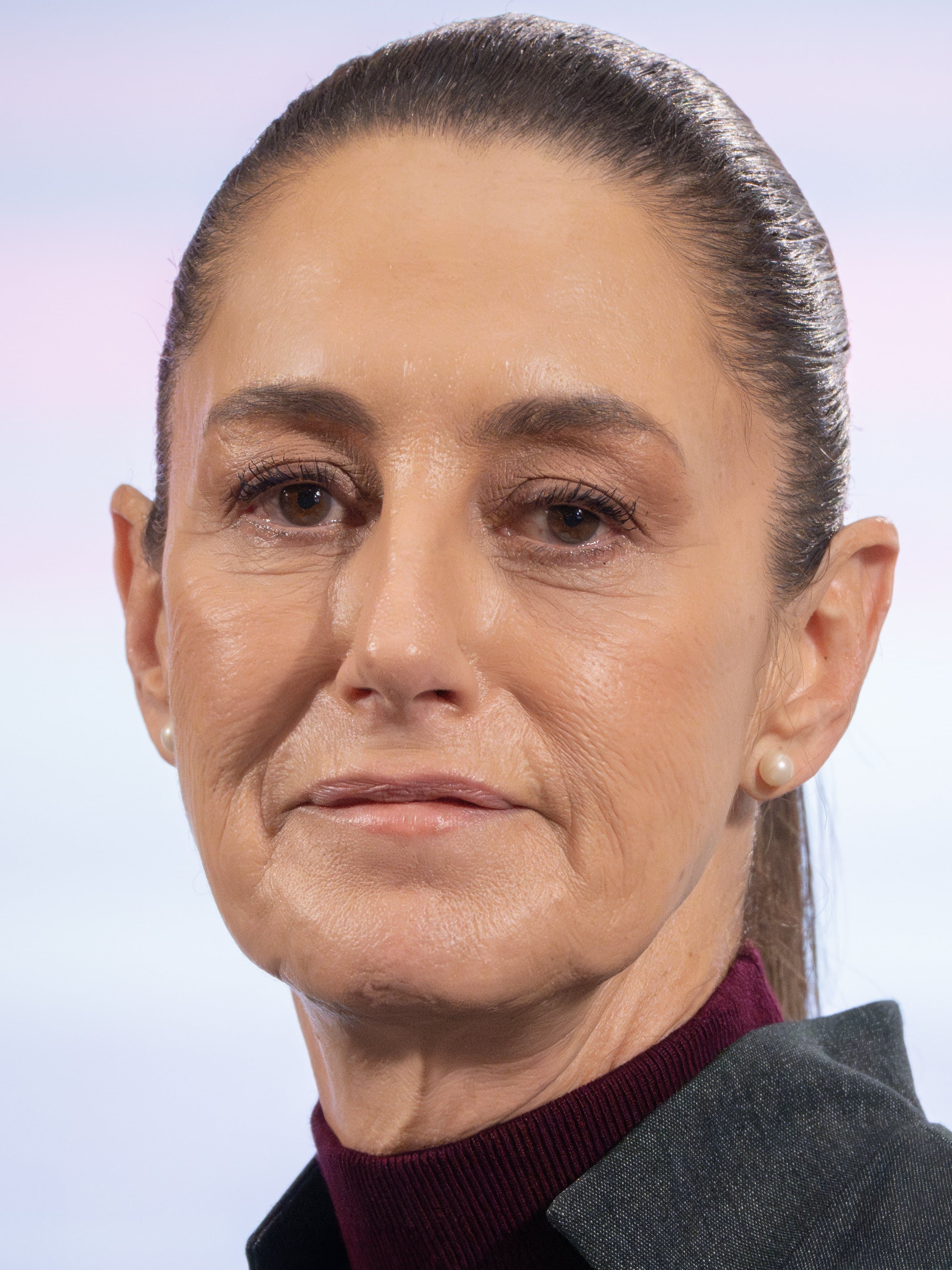
Prediction markets currently give about a 5% chance that Claudia Sheinbaum will leave the presidency of Mexico before June 30, 2026. In simpler terms, traders see this as very unlikely, estimating roughly a 1 in 20 possibility. This shows strong collective confidence that Sheinbaum will complete the first half of her six-year term, which began in October 2024.
Several factors explain the low probability. First, Sheinbaum won the 2024 election by a large margin, securing a stable mandate. Her party, MORENA, also holds significant power in Congress, which makes governing easier and reduces immediate political pressure for resignation.
Second, Mexican presidents have historically served out their terms. The last president to resign was in 1920. The modern political system has established strong norms against early removal, barring an extreme crisis.
Finally, no major scandal or serious health issue has emerged that would threaten her position. While she faces challenges like security policy and relations with the United States, these are seen as normal governing pressures, not existential threats to her presidency.
The market resolves on June 30, 2026, so any major shift would need to occur before then. Key moments that could change predictions include midterm elections for Congress in 2027, though they fall after this market closes. More immediately, watch for developments in two areas.
Significant, sustained drops in her public approval ratings could signal trouble. More directly, any formal investigation into her administration or a major health disclosure would be critical events. The market would react quickly to such concrete news.
Markets are generally reliable for forecasting political stability in established democracies, often outperforming polls for yes/no outcomes like this. However, they can be poor at predicting rare, unexpected events, sometimes called "black swans." A 5% probability acknowledges that while a resignation is very unlikely, unforeseen personal or political earthquakes could happen. For context, similar markets on other world leaders serving their terms have typically been accurate when confidence is this high.
Prediction markets assign a 5% probability to Claudia Sheinbaum leaving the Mexican presidency before June 30, 2026. This price, equivalent to 5 cents per share for a "Yes" outcome, signals overwhelming confidence in her completing this initial phase of her six-year term. A 5% chance is the market's way of pricing a tail risk, an event considered possible but highly unlikely under normal political conditions. The market has attracted $151,000 in volume, indicating serious trader interest in this specific political stability question.
The primary factor is Mexico's modern political history. No constitutionally elected Mexican president has resigned or been removed from office since the democratic transition. Sheinbaum, who won the 2024 election by a large margin, is the successor to the still-popular Andrés Manuel López Obrador and leads a dominant political coalition. Her party controls Congress, providing a stable legislative base. The 5% price reflects known but low-probability risks rather than an expectation of imminent crisis. Markets are effectively betting on institutional continuity.
The odds would shift dramatically only under a severe, unforeseen shock. A major health crisis for Sheinbaum could force a resignation. A significant, destabilizing scandal directly implicating the president, though currently absent from the political scene, could trigger constitutional removal processes. Widespread social unrest that fractures her governing coalition could also increase pressure. These scenarios are not supported by current evidence, which is why the price remains anchored near its floor. The market will be most sensitive to direct announcements concerning her status or major impeachment proceedings in Congress.
This contract is trading exclusively on Polymarket. The absence of a comparable market on Kalshi or other U.S.-regulated platforms limits arbitrage opportunities and suggests the niche nature of the query. The single-platform liquidity of $151,000 is sufficient for meaningful position-taking but indicates this is a specialist political forecast rather than a broad macroeconomic indicator. All price discovery is happening in one venue, making the 5% probability the consensus view without a competing benchmark.
AI-generated analysis based on market data. Not financial advice.
This prediction market asks whether Claudia Sheinbaum Pardo will cease to be President of Mexico before June 30, 2026. The market resolves to 'Yes' if she announces her resignation or is removed from office for any length of time by that date. An announcement of her resignation or removal before the deadline would immediately resolve the market to 'Yes', even if the actual departure takes effect later. The question reflects political analysis about the stability of Sheinbaum's presidency, which began on October 1, 2024, following her election victory in June 2024. She is the first woman and the first Jewish person to be elected president of Mexico, representing the ruling National Regeneration Movement (MORENA) party. Her presidency follows the six-year term of her political mentor, Andrés Manuel López Obrador (AMLO), whose policies and high approval ratings shaped the political environment she inherited. Interest in this market stems from several factors, including Mexico's history of presidential stability since the 1930s, the significant challenges Sheinbaum faces, and the potential for political realignment. Mexico has not seen a president resign or be removed from office since the establishment of the modern political system. The last president to leave office prematurely was Porfirio Díaz in 1911 following the Mexican Revolution. The market gauges confidence in Sheinbaum's ability to navigate complex issues like organized crime violence, economic relations with the United States, and managing the legacy of her popular predecessor. It also considers constitutional provisions; the Mexican Constitution grants the president a single six-year term with no possibility of re-election, making an early exit a rare and significant event.
Modern Mexican history provides critical context for this prediction. The last president to leave office before the end of his term was Porfirio Díaz, who resigned in 1911 amid the Mexican Revolution. The political system that emerged from the revolution was dominated for 71 years by the Institutional Revolutionary Party (PRI), which maintained strict control over presidential succession. Since 1934, every Mexican president has served out his full six-year sexenio. This record of stability is a key historical backdrop. The concept of presidential removal is defined by the 1917 Constitution. Article 86 states the president's term is six years, and Article 83 prohibits re-election. Articles 108-114 outline the process of political trial (juicio político) for serious offenses, which can result in removal and disqualification from public office. This process has never been successfully used against a sitting president. The closest historical precedent for political disruption was the 1994 assassination of presidential candidate Luis Donaldo Colosio, which shocked the nation but did not interrupt a presidential term. More recently, the 2012-2018 presidency of Enrique Peña Nieto of the PRI was marked by low approval ratings and widespread protests over corruption and violence, yet he completed his term. This history suggests a high institutional barrier to a president leaving office early.
The question of a president leaving office early matters because it would represent a profound rupture in Mexico's modern political order. A resignation or removal would trigger immediate constitutional succession. The line of succession, outlined in Article 84, first calls for the Secretary of the Interior to serve as interim president, followed by the president of the Senate, then the president of the Chamber of Deputies, if the interior secretary is unavailable. Congress would then appoint a substitute president to serve the remainder of the term. Such a sequence would create significant political and economic uncertainty. Financial markets would likely react negatively to the instability, potentially affecting the Mexican peso, sovereign debt, and foreign investment. Domestically, it could exacerbate existing security crises, as criminal organizations might seek to exploit a moment of governmental transition. Politically, it could lead to a realignment within the ruling MORENA party and the broader political spectrum, potentially altering policy directions on energy, social programs, and relations with the United States. For ordinary citizens, an early presidential departure could shake confidence in democratic institutions and the rule of law, especially if it resulted from a severe political crisis rather than a voluntary resignation for personal reasons.
Claudia Sheinbaum began her six-year term as President of Mexico on October 1, 2024. As of early 2025, she remains in office with no formal, credible movements within Congress or her party seeking her resignation or removal. Her administration is in its early stages, focusing on policy implementation and defining its relationship with the previous administration of López Obrador, who remains an active political figure. The opposition, led by Xóchitl Gálvez, has been critical but has not initiated impeachment proceedings. The primary challenges Sheinbaum faces are ongoing, including cartel violence and managing economic policy. No events have occurred that directly threaten her immediate continuation in office.
No sitting president of Mexico has ever been successfully impeached and removed from office through the constitutional process of 'juicio político'. The modern political system, established after the Mexican Revolution, has seen every president since 1934 complete their full six-year term.
If the president resigns, Article 84 of the Mexican Constitution outlines the succession. The Secretary of the Interior would assume the presidency on an interim basis. The Congress would then convene and, with a majority vote of its present members, appoint a substitute president to serve for the remainder of the original six-year term.
No. Article 83 of the Mexican Constitution explicitly prohibits the re-election of the president. The presidential term is a single six-year period, known as the sexenio. This is a key difference from systems like the United States and a reason why early departure is so significant, as it would cut short the only term a person can serve.
Educational content is AI-generated and sourced from Wikipedia. It should not be considered financial advice.

No related news found
Add this market to your website
<iframe src="https://predictpedia.com/embed/beAm7Z" width="400" height="160" frameborder="0" style="border-radius: 8px; max-width: 100%;" title="Claudia Sheinbaum out as President of Mexico by...?"></iframe>