$70.30K
1
1

1 market tracked

No data available
| Market | Platform | Price |
|---|---|---|
![]() | Poly | 0% |
$70.30K
1
1
Trader mode: Actionable analysis for identifying opportunities and edge
This market will resolve to “Yes” if the US State Department issues a level 4 “Do Not Travel” travel advisory for the Mexican State of Jalisco by the listed date, 11:59 PM ET. Otherwise, this market will resolve to “No”. Travel advisory levels will be considered on a state-by-state basis, as displayed on the US State Department’s Travel Advisory website for Mexico (https://travel.state.gov/en/international-travel/travel-advisories/mexico.html). The overall travel advisory level for Mexico will
Prediction markets currently give about a 15% chance that the US State Department will issue its strictest "Do Not Travel" warning for Jalisco, Mexico, by February 28. This means traders see it as roughly a 1 in 7 possibility. The market reflects a consensus that an upgrade to Level 4 is not the most likely outcome in the next few days, but it is a real possibility being actively priced in.
Two main factors explain the low but non-zero probability. First, Jalisco already has a serious Level 3 "Reconsider Travel" advisory, which was reaffirmed in late 2023. An upgrade to Level 4 would signal a major, rapid deterioration in security conditions that the US deems unacceptable for any travel.
Second, Jalisco is home to the powerful Jalisco New Generation Cartel (CJNG). While violence linked to organized crime is a persistent issue, it has not recently triggered a sudden, blanket "Do Not Travel" order from the US for the entire state. The market odds suggest traders believe the current volatile but familiar situation may not cross the specific threshold for a Level 4 designation within this short timeframe.
The deadline itself, February 28, is the primary date. The State Department updates travel advisories continuously based on intelligence and conditions, so any new warning could come at any time before the cutoff.
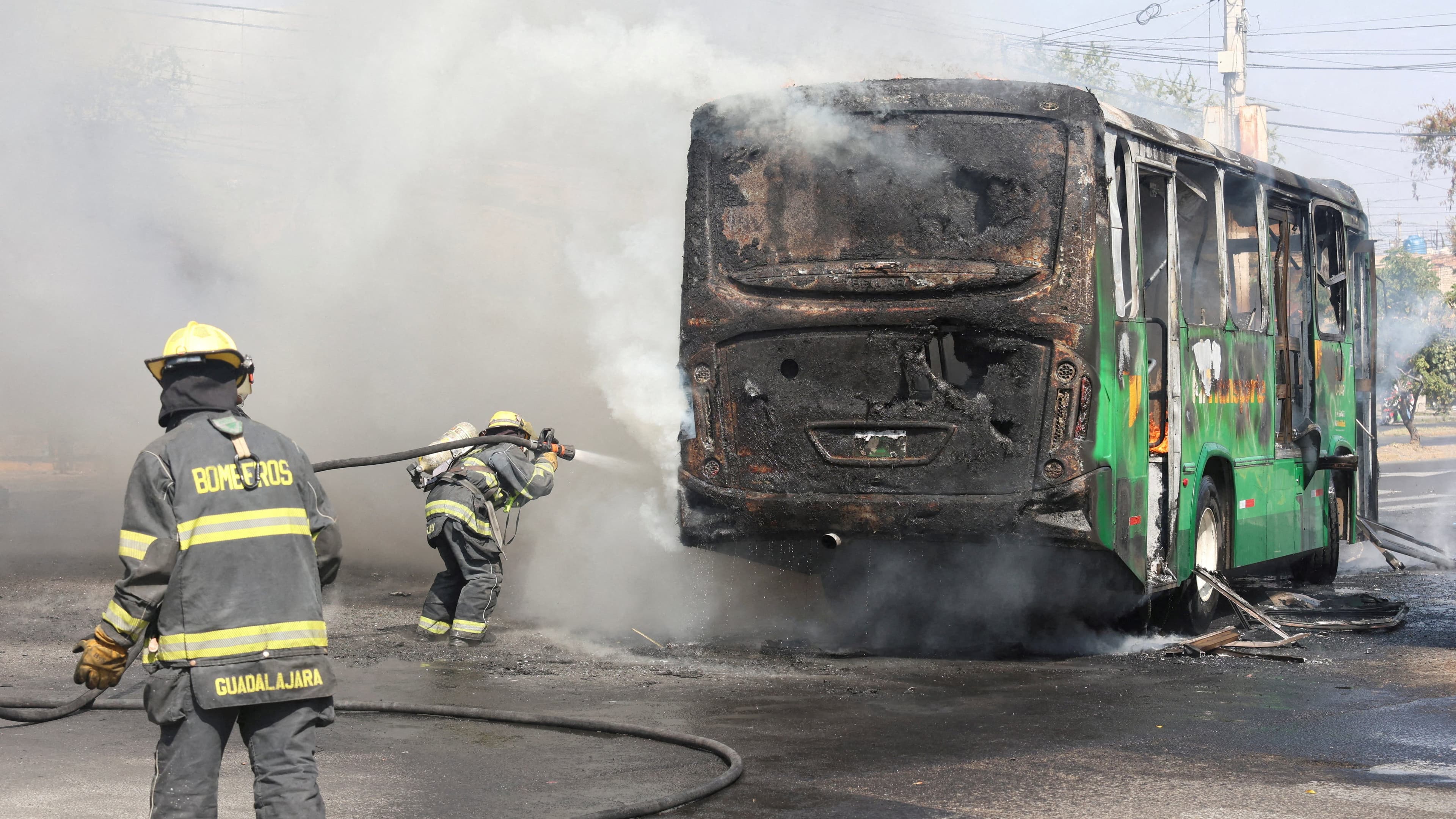
A key signal to watch is official US government communication. A security alert from the US Embassy in Mexico or a public statement from the State Department expressing extreme concern about Jalisco could precede a formal advisory change. Significant, reported cartel clashes targeting general public areas or major tourist zones in cities like Guadalajara or Puerto Vallarta could also increase the likelihood of an upgrade.
Prediction markets have a mixed record on very specific, short-term government actions like this. They are good at aggregating available public information and intelligence from news reports. However, the final decision rests with a government agency that may have non-public information. Markets can sometimes miss sudden, discretionary decisions made behind closed doors. For this type of event, the 15% probability is a useful snapshot of informed opinion, but it carries more uncertainty than predictions about larger, more transparent processes like elections.
The Polymarket contract for a US "Do Not Travel" advisory on Jalisco by February 28 is currently priced at 1 cent, indicating a near-zero 1% probability. This price reflects market certainty that the State Department will not upgrade its warning for the Mexican state before the deadline. With the resolution date passed, the market is functionally settled on a "No" outcome, awaiting official confirmation.
The market's decisive pricing stems from the State Department's established advisory framework and recent regional updates. Jalisco, home to Guadalajara and Puerto Vallarta, has maintained a "Level 3: Reconsider Travel" advisory since August 2023. A sudden escalation to Level 4 would require a significant, acute security deterioration, which recent diplomatic and crime reports have not indicated. The department's last Mexico-wide update in December 2023 made no changes to Jalisco's status. Furthermore, Level 4 advisories are typically reserved for states like Tamaulipas or Colima where criminal group conflict directly and frequently impacts travelers and major highways, a condition not currently assessed for Jalisco.
For this specific contract, the odds are effectively fixed as the event deadline has passed. However, understanding what could prompt a future advisory change is valuable. A major, publicly verified attack on US tourists in a Jalisco resort area or a formal US intelligence warning about imminent threats in the state would be necessary catalysts. The strategic importance of Guadalajara as a business hub and Puerto Vallarta's reliance on tourism create economic and diplomatic pressure against a Level 4 designation unless security conditions drastically worsen. Monitoring the State Department's consistent quarterly review cycle for travel advisories provides a better timeline for any potential future changes than a random end-of-month deadline.
AI-generated analysis based on market data. Not financial advice.
This prediction market topic concerns whether the United States Department of State will issue its highest-level travel warning, a Level 4 'Do Not Travel' advisory, for the Mexican state of Jalisco by February 28. The State Department issues travel advisories for every country and, in some cases like Mexico, for individual states. These advisories assess risks such as crime, terrorism, civil unrest, and health issues. A Level 4 advisory is the most severe, indicating a greater likelihood of life-threatening risks and instructing Americans not to travel to that location. The advisory level for Jalisco is currently Level 3, 'Reconsider Travel,' due to crime and kidnapping. The market resolves based on the specific state-level advisory posted on the State Department's official Mexico travel advisory page. Interest in this market stems from monitoring escalating security conditions in a major tourist and economic hub. Jalisco is home to Guadalajara, Mexico's second-largest metropolitan area, and the popular coastal destination of Puerto Vallarta. A change to Level 4 would represent a significant escalation in the U.S. government's risk assessment, potentially affecting tourism, business travel, and diplomatic relations. Observers track crime statistics, high-profile incidents, and official statements from both governments for signals of a potential upgrade.
The U.S. State Department has issued travel warnings for parts of Mexico for decades, but the current four-tier system (Levels 1-4) was implemented in January 2018. This system allows for state-by-state assessments within countries facing regionalized risks. Jalisco has long been a focal point due to the rise of the CJNG. The cartel emerged around 2010 from the remnants of the Milenio Cartel and rapidly expanded its influence. In 2015, the CJNG demonstrated its capability by shooting down a Mexican military helicopter, an event that shocked security analysts. The U.S. government has repeatedly sanctioned CJNG leadership and offered multimillion-dollar rewards for their capture. In October 2022, the State Department elevated Jalisco from a Level 2 'Exercise Increased Caution' to the current Level 3 'Reconsider Travel,' citing crime and kidnapping. This followed a period of increased violence, including the 2022 arrest of a CJNG leader in Jalisco that triggered widespread retaliation. Historically, other Mexican states like Colima, Tamaulipas, and Guerrero have been placed under Level 4 advisories, providing a precedent for such an action against Jalisco if conditions deteriorate further.
A Level 4 advisory for Jalisco would have immediate economic consequences. The state received approximately 22 million tourists in 2023, with a significant portion from the United States. Major cruise lines, airlines, and tour operators often cancel or reroute itineraries based on Level 4 advisories, directly impacting local hotels, restaurants, and service workers. Puerto Vallarta's economy is particularly dependent on international tourism. Politically, such an advisory would be a public rebuke of the security policies of both Governor Alfaro and President López Obrador, potentially straining diplomatic relations. It could increase pressure on the Mexican federal government to adopt more aggressive security measures in the region. For U.S. citizens, it would trigger official warnings against travel and could affect travel insurance validity. For the approximately 30,000 American expats estimated to live in the Guadalajara area and around Lake Chapala, a Level 4 advisory creates uncertainty about safety and could complicate consular services.
As of late January 2024, the U.S. State Department maintains a Level 3 'Reconsider Travel' advisory for Jalisco. The advisory specifically warns of crime and kidnapping, noting that violent crime and gang activity are common. In early January 2024, U.S. Secretary of State Antony Blinken met with Mexican President López Obrador in Mexico City to discuss security cooperation, among other issues. Recent months have seen continued violence in Jalisco, including clashes between criminal groups and authorities. No official statement from the State Department has indicated an imminent review or change to Jalisco's advisory level. Market participants are monitoring for any high-profile security incidents involving U.S. citizens or diplomatic personnel in the state, which could precipitate a rapid reassessment.
A Level 4 advisory is the U.S. State Department's highest warning. It means there is a greater likelihood of life-threatening risks, the U.S. government's ability to assist citizens in danger is severely limited, and all travel to that location is officially advised against. It often results in the authorized departure of non-emergency U.S. government personnel and their families.
As of January 2024, the U.S. State Department advises 'Do Not Travel' (Level 4) to six Mexican states: Colima, Guerrero, Michoacán, Sinaloa, Tamaulipas, and Zacatecas. This is due to crime and kidnapping. Many other states, including Jalisco, are at Level 3.
According to the current U.S. advisory, Puerto Vallarta is in Jalisco, which is under a Level 3 'Reconsider Travel' warning due to crime. The advisory does not make exceptions for specific cities within the state. Travelers are advised to exercise extreme caution, stay in tourist zones, and be aware of their surroundings.
The State Department reviews and updates each country's travel advisory information at least once every 12 months. However, advisories can be updated at any time based on new threat information or rapidly deteriorating conditions, meaning changes can happen without a set schedule.
The primary security threat in Jalisco, as cited by the U.S. State Department, is violent crime linked to transnational criminal organizations, particularly the Jalisco New Generation Cartel (CJNG). Kidnapping, homicide, extortion, and armed confrontations between criminal groups and authorities occur throughout the state.
Educational content is AI-generated and sourced from Wikipedia. It should not be considered financial advice.

No related news found
Add this market to your website
<iframe src="https://predictpedia.com/embed/bhcSzW" width="400" height="160" frameborder="0" style="border-radius: 8px; max-width: 100%;" title="US issues Do-Not-Travel advisory for Jalisco by February 28?"></iframe>