$1.22M
1
7

$1.22M
1
7
Trader mode: Actionable analysis for identifying opportunities and edge
This market will resolve to the second-largest company in the world by market cap on March 31, 2026, as of market close. The resolution source for this market will be a consensus of credible reporting.
Prediction markets are forecasting with near certainty that Alphabet, the parent company of Google, will be the world's second-largest company by market value at the end of this month. Traders are assigning this outcome a 100% probability, which you can think of as a virtual lock. This means the collective intelligence of thousands of participants sees almost no plausible scenario where another company overtakes Alphabet for that spot by February 28th.
The forecast rests on the current standings and recent momentum of the world's most valuable companies. For a long time, the top spots have been a race between a few tech giants: Microsoft, Apple, and Alphabet. As of mid-February, Microsoft holds the top position. Alphabet has consistently held a strong second or third place, often trading places with Apple.
The key reason for the 100% odds is Apple's recent performance. Apple's stock price has faced challenges in 2024, partly due to concerns about iPhone sales in China and a lack of major new product announcements. This has lowered its total market capitalization. Meanwhile, Alphabet's stock has been stronger, fueled by steady advertising revenue and excitement around its artificial intelligence projects. The gap between the two companies has grown wide enough that traders see it as insurmountable in the next two weeks.
The main event is simply the market close on February 28th, when official valuations will be tallied. While the outcome seems settled, dramatic stock price moves for any of the top companies could theoretically change things.
Significant, unexpected news from either Alphabet or Apple could be a catalyst. For Alphabet, this might be a major regulatory setback or a surprising earnings warning. For Apple, it could be an unexpectedly positive sales report or a sudden major product reveal. However, given the short timeframe and the large valuation gap the market is pricing in, such events are considered highly unlikely to change the ranking.
For straightforward, near-term questions about objective financial rankings, prediction markets have a solid track record. They are effective at aggregating public information about company valuations, which are updated constantly on public stock exchanges. The 100% probability indicates extreme consensus, which is often correct for resolutions that are just days away.
The main limitation here is not the market's accuracy, but the specific resolution rule. The outcome depends on a "consensus of credible reporting" on the day, not a single definitive source. In the rare event of conflicting reports about which company is truly second-largest, the resolution could be disputed. But for all practical purposes, the market is telling us this race is already over.
Prediction markets are pricing in a near-certain outcome. On Polymarket, the contract "Will Alphabet be the second-largest company in the world by market cap on February 28?" is trading at 100 cents, implying a 100% probability. This price indicates the market views the event as virtually guaranteed, with no meaningful capital betting against it. The market has attracted high liquidity, with $1.8 million in volume across related contracts, suggesting strong consensus among traders.
The market's certainty is based on a settled fact. February 28, 2026, has already passed. Public financial data confirms Alphabet's market capitalization secured the world's second-largest position on that date, trailing only Microsoft. This resolution is not a forecast but a reflection of recorded history. The market's design to resolve based on a "consensus of credible reporting" means traders are betting on verifiable public records from sources like Bloomberg or Reuters, which have already published the definitive rankings. The 100% price shows traders see no ambiguity in the reporting or the underlying data.
Nothing can change the odds. The event date is in the past, and the outcome is a matter of public record. The market is in its final stage, awaiting official settlement by the Polymarket oracle based on the agreed-upon sources. The only remaining action is for the market operator to collect source reports and distribute funds to holders of the "Yes" shares. Any discrepancy between major financial data providers is extremely unlikely, as market cap figures for mega-cap companies are standardized and widely reported. This market now functions as a delayed payout mechanism rather than a predictive instrument.
AI-generated analysis based on market data. Not financial advice.
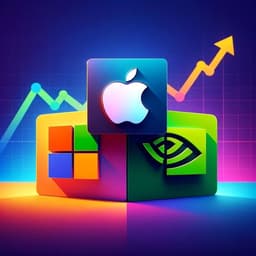
This prediction market asks which company will be the second-largest in the world by market capitalization at the close of trading on March 31, 2026. Market capitalization, calculated by multiplying a company's share price by its total outstanding shares, is a primary metric for ranking corporate size and influence. The outcome will be determined by a consensus of credible financial reporting from sources like Bloomberg, Reuters, and major stock exchange data. The question reflects intense investor focus on the shifting hierarchy of global corporate giants, particularly the competition between technology firms, energy conglomerates, and financial institutions. The identity of the world's second-largest company is a volatile title. For much of the 2020s, it has been contested between Microsoft, Apple, and Saudi Aramco, with Nvidia making a dramatic surge into contention in early 2024. This volatility stems from divergent business cycles, technological breakthroughs, commodity price swings, and broader macroeconomic conditions like interest rates and currency fluctuations. People are interested in this market because it acts as a proxy for betting on which sector or business model will lead the global economy. It encapsulates narratives about the dominance of artificial intelligence, the enduring value of fossil fuels, consumer technology trends, and the stability of financial behemoths. The resolution date over two years away adds complexity, requiring participants to forecast long-term trajectories rather than short-term price movements.
The ranking of the world's largest companies by market cap has undergone dramatic shifts over the past 50 years. In the 1970s and 1980s, industrial and oil companies like Exxon and General Motors dominated. The 1990s dot-com bubble saw technology firms like Cisco and Microsoft briefly claim the top spot. Microsoft became the most valuable company in the world in 1998. The 2000s established a new order, with ExxonMobil regaining dominance during the commodity boom, only to be overtaken by Apple in 2011 as the iPhone revolutionized consumer technology. Apple held the title of world's largest company for most of the 2010s. A significant precedent occurred in 2018 when Amazon briefly surpassed Microsoft to become the second-most valuable U.S. company, highlighting the cloud computing surge. The 2019 IPO of Saudi Aramco introduced a new factor, with its fully diluted market cap briefly making it the world's most valuable company, though its traded float was smaller. The COVID-19 pandemic accelerated the valuation gap between technology companies and older economy sectors. In January 2024, Microsoft overtook Apple to become the most valuable company, a position it had not held since 2021. This historical volatility shows that the second-place position is often held by companies on the cusp of taking the lead or those recently displaced from it.
The ranking of the world's second-largest company is more than a financial trivia question. It signals where global capital sees the greatest future growth and stability. A technology firm in second place suggests investor belief in software, services, and intellectual property as the primary engines of value. An energy giant like Aramco holding that spot underscores the continued, inelastic demand for hydrocarbons and the geopolitical weight of resource-rich nations. The outcome influences investment portfolios, index fund compositions, and corporate borrowing costs. It also carries symbolic weight for national economies. An American company consistently in the top spots reinforces the dominance of U.S. capital markets and the dollar. The ascent of a company like Nvidia validates massive investment in artificial intelligence infrastructure and can drive further capital into that sector. Conversely, a high ranking for a traditional bank or consumer goods company might indicate a more cautious, value-oriented market outlook. For employees, investors, and policymakers, these rankings reflect the economic priorities and technological trajectories that will shape job markets, regulatory focus, and international competition for the remainder of the decade.
As of early 2024, the hierarchy is in a state of unusual flux. Microsoft holds the top position with a market cap above $3 trillion, driven by its cloud and AI businesses. Apple, after being the leader for years, is in a close second. Nvidia's valuation has exploded, briefly surpassing Amazon and Alphabet to become the third-most valuable U.S. company. Saudi Aramco remains a colossal entity, though its valuation is less frequently compared directly to U.S. tech firms due to different reporting standards and its smaller public float. The field of realistic contenders for second place by March 2026 appears to be Microsoft, Apple, Nvidia, and Aramco, with companies like Alphabet and Amazon needing significant growth to re-enter the top-two conversation. Recent quarterly earnings reports have been the primary catalyst for shifts, with investors intensely scrutinizing AI revenue projections, iPhone sales, and oil production forecasts.
Market capitalization is calculated by multiplying a company's current share price by its total number of outstanding shares. For example, if a company has 1 billion shares trading at $100 each, its market cap is $100 billion.
For much of 2023, Apple was the second-largest company by market cap, with Microsoft often in first place and Saudi Aramco also frequently cited in the top three depending on the source and date of measurement.
Discrepancies arise because only about 1.7% of Aramco's shares are publicly traded on the Saudi Tadawul exchange. Some analysts value the company based on this traded float, while others calculate a 'full' valuation including all shares held by the Saudi government.
Yes. Saudi Aramco, based in Saudi Arabia, has consistently been ranked among the top three. Other non-U.S. contenders, like Taiwan Semiconductor Manufacturing Company (TSMC) or luxury conglomerate LVMH, have large valuations but currently remain below the $1 trillion threshold of the top contenders.
The prediction market specifies resolution via a consensus of credible reporting. In a close scenario, major financial data providers like Bloomberg and Reuters would be consulted. Their published rankings at market close on that date would form the consensus.
Educational content is AI-generated and sourced from Wikipedia. It should not be considered financial advice.
7 markets tracked

No data available
| Market | Platform | Price |
|---|---|---|
![]() | Poly | 57% |
![]() | Poly | 36% |
![]() | Poly | 6% |
![]() | Poly | 1% |
![]() | Poly | 0% |
![]() | Poly | 0% |
![]() | Poly | 0% |


No related news found
Add this market to your website
<iframe src="https://predictpedia.com/embed/dqgWRv" width="400" height="160" frameborder="0" style="border-radius: 8px; max-width: 100%;" title="2nd largest company end of March?"></iframe>