$225.81K
1
1

1 market tracked

No data available
| Market | Platform | Price |
|---|---|---|
![]() | Poly | 31% |
Trader mode: Actionable analysis for identifying opportunities and edge
This market will resolve to "Yes" if Donald Trump meets with Delcy Rodríguez by the specified date, 11:59 PM ET. Otherwise, this market will resolve to "No". An exchange of words, handshake, direct conversation, or other clear personal interaction between the named individuals will qualify as a meeting. Merely standing in proximity, making eye contact, or being present in the same room or event without direct interaction will not qualify. A meeting is defined as any encounter where both listed
Prediction markets currently give a meeting between Donald Trump and Venezuelan Vice President Delcy Rodríguez roughly a 1 in 3 chance of happening by March 31. This means traders collectively see such a meeting as unlikely, but not impossible. The market reflects significant skepticism that the two will have a direct, qualifying interaction within the next five weeks.
The low probability stems from political and diplomatic realities. Delcy Rodríguez is a top official in the socialist government of Nicolás Maduro, which the United States has not formally recognized since 2019. The U.S. instead recognizes the opposition-led National Assembly as the legitimate authority. A high-profile meeting between Trump and Rodríguez would mark a dramatic and unexpected shift in U.S. policy.
Furthermore, Trump’s current focus is on his presidential campaign and domestic legal matters. Engaging in a controversial diplomatic move with a Venezuelan leader often criticized by his own political base could be seen as a high-risk, low-reward action. Historically, U.S. outreach to Venezuela’s government has typically occurred through lower-level channels or backdoor diplomacy, not a direct vice-presidential meeting.
The deadline for this market is March 31. Watch for any scheduled international summits or diplomatic conferences where both figures might be present, such as the United Nations General Assembly or regional forums. However, no major events are scheduled that would naturally bring them together. A sudden announcement of a Trump media appearance or a shift in U.S. sanctions policy toward Venezuela could also signal a change in posture. The most likely trigger would be an official statement from either side confirming planned talks.
Markets are generally reliable at aggregating known political constraints, and the odds here align with expert analysis of the diplomatic situation. For specific, binary events like a scheduled meeting between two high-profile figures, prediction markets have a mixed record. They are good at assessing stable political environments, but can be less accurate if a sudden, secretive diplomatic breakthrough occurs. The moderate amount of money wagered suggests informed interest, but the possibility of an unexpected political maneuver means the 33% chance still carries real uncertainty.
Prediction markets assign a 33% probability that Donald Trump will meet with Venezuelan Vice President Delcy Rodríguez by March 31, 2026. This price, trading at 33¢ on a $1.00 contract, indicates the market views a meeting as unlikely but not impossible. With over $225,000 in volume, the market has attracted significant speculative interest, suggesting traders see meaningful uncertainty in the outcome.
The low probability reflects the complex diplomatic and political constraints. Delcy Rodríguez is a senior official in the Nicolás Maduro government, which the United States has not formally recognized since 2019. A direct meeting with a major U.S. presidential candidate would be a stark diplomatic shift. Historical precedent is also a factor. During his first term, Trump’s administration recognized opposition leader Juan Guaidó as Venezuela’s legitimate president and imposed heavy sanctions on Maduro’s regime. A meeting with Rodríguez would contradict that established policy and could provoke significant domestic political backlash during an election cycle.
The primary catalyst for a major price shift would be a clear signal from the Trump campaign regarding its Venezuela policy. If Trump or senior advisors publicly suggest openness to engaging with the Maduro government to address issues like oil prices or migration, the probability would likely rise. Conversely, a reaffirmation of the previous policy of non-recognition and support for the opposition would push odds lower. The market will also react to external events, such as a sudden crisis in Venezuela or a geopolitical development that forces the issue onto the U.S. agenda before the resolution date. The long time horizon, over two years, means numerous unforeseen political developments could alter the calculus.
AI-generated analysis based on market data. Not financial advice.
$225.81K
1
1
This prediction market focuses on whether former U.S. President Donald Trump will hold a personal meeting with Delcy Rodríguez, the Vice President of Venezuela, by a specified deadline. The market resolves based on verifiable, direct interaction between the two individuals, excluding passive presence at the same event. The topic intersects U.S. domestic politics, foreign policy toward Venezuela, and the potential reshaping of hemispheric relations should Trump return to office. Interest stems from Trump's historical approach to Venezuela, which included recognizing opposition leader Juan Guaidó as interim president in 2019 and imposing significant oil sanctions, contrasted with Rodríguez's role as a top official in the Nicolás Maduro government, which the U.S. has considered illegitimate. Recent diplomatic shifts, including the Biden administration's engagement with Maduro's government on issues like migration and oil, have altered the landscape, making a potential future Trump-Rodríguez meeting a speculative flashpoint. Observers are monitoring whether Trump's campaign rhetoric suggests a policy reversal or a continuation of his previous maximum pressure stance.
U.S.-Venezuela relations have been strained for over two decades, intensifying after Hugo Chávez's election in 1998. The Trump administration marked the most confrontational period. In January 2019, following Maduro's disputed re-election, the U.S., led by Trump, recognized National Assembly head Juan Guaidó as Venezuela's legitimate interim president. This was coordinated with over 50 other nations. The U.S. imposed sanctions on state oil company PDVSA, freezing $7 billion in assets and aiming to cut off the government's primary revenue source. In 2020, the U.S. Department of Justice indicted Maduro and other top officials, including Delcy Rodríguez's brother Jorge, on narcoterrorism charges, offering a $15 million reward for information leading to Maduro's arrest. Direct high-level contact between the Trump administration and Maduro's inner circle was virtually non-existent, with communication occurring through intermediaries or public statements. The Biden administration changed tactics in 2022, sending senior officials to Caracas for direct talks with Maduro's government, culminating in a prisoner swap for seven Americans and, in October 2023, a six-month suspension of some oil sanctions after the government and opposition agreed to electoral guarantees. This established a precedent for U.S. engagement with senior Maduro officials that did not exist during Trump's term.
A meeting between Trump and Delcy Rodríguez would have immediate geopolitical consequences. It would signal a potential end to the U.S. policy of non-recognition of the Maduro government that has been bipartisan, though differently executed, since 2019. For Venezuela, it could pre-negotiate terms for sanctions relief and access to global oil markets, which are critical for its collapsing economy. For the U.S., it would represent a dramatic foreign policy reversal by a leading presidential candidate, affecting alliances with Latin American partners like Colombia and Brazil, who have opposed the Maduro government. Domestically, such a meeting would provoke intense debate. Supporters might argue it represents a pragmatic dealmaker approach to secure concessions on oil production or migration control. Critics would likely frame it as legitimizing an authoritarian regime accused of human rights abuses and drug trafficking. The outcome could influence global energy markets, as Venezuela holds the world's largest proven oil reserves, and its production levels are sensitive to U.S. sanctions policy.
As of mid-2024, the Biden administration's six-month suspension of key oil and gas sanctions on Venezuela, issued in October 2023, expired in April without renewal. The U.S. cited the Maduro government's failure to meet commitments for a fair presidential election, scheduled for July 28, 2024. The U.S. has reimposed restrictions on Venezuela's oil sector, though it left open a 45-day wind-down period for existing business. The Maduro government has proceeded with disqualifying major opposition candidates, including María Corina Machado and her replacement, Corina Yoris. Donald Trump, as the presumptive Republican nominee, has made ambiguous statements about Venezuela, telling Time magazine he would 'maybe' meet with Maduro but also criticizing Biden's sanctions relief. No public contact between Trump and any senior Maduro government official has been reported.
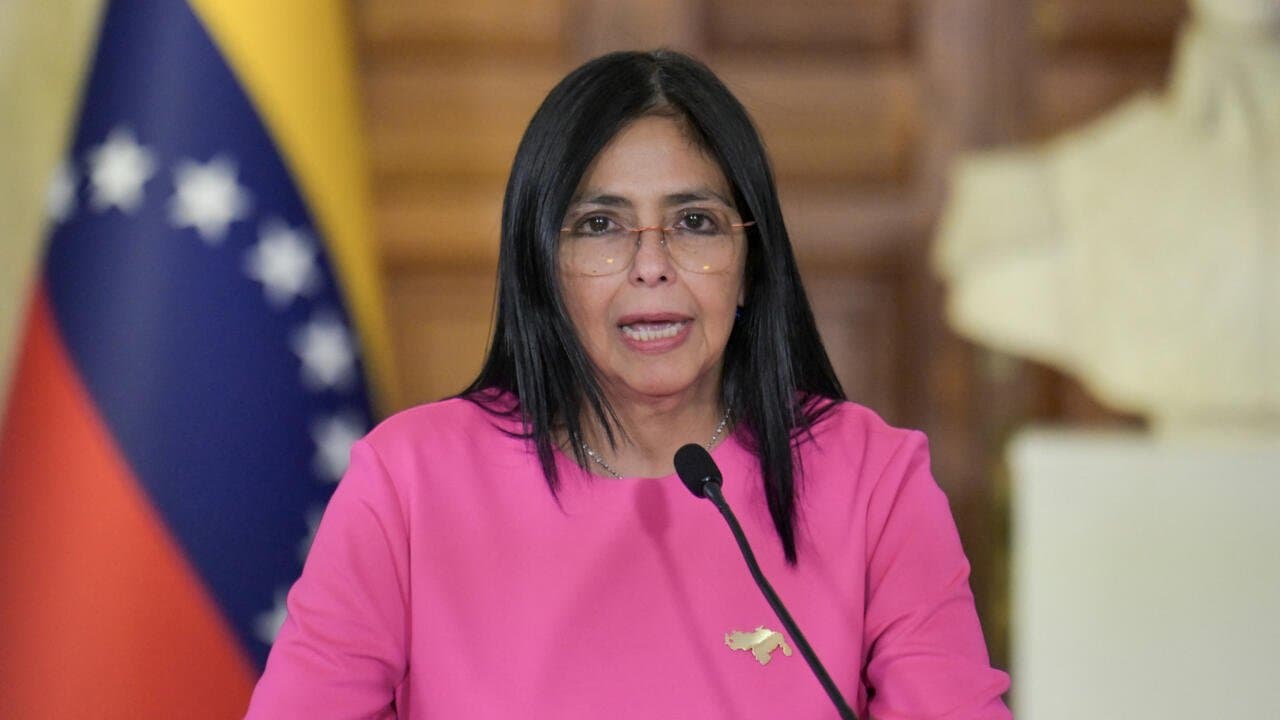
Delcy Rodríguez is the Executive Vice President of Venezuela, the second-highest office in the government of Nicolás Maduro. She previously served as Foreign Minister from 2017 to 2022 and is a close political ally of Maduro. The U.S. Department of the Treasury has sanctioned her for activities related to undermining democratic processes.
President Trump's policy centered on 'maximum pressure' to remove Nicolás Maduro from power. This included recognizing opposition leader Juan Guaidó as interim president in January 2019, imposing severe sanctions on Venezuela's state oil company PDVSA, and indicting Maduro on narcoterrorism charges. The policy aimed to cripple the government's finances and force a political transition.
No sitting U.S. president has met with Nicolás Maduro since he took office in 2013. The last meeting between U.S. and Venezuelan heads of state was between President Barack Obama and Hugo Chávez at the Summit of the Americas in 2009. High-level diplomatic contact resumed under Biden, with White House and State Department officials traveling to Caracas for direct talks with Maduro's team.
Potential reasons include negotiating a deal on oil production to influence global prices, securing cooperation on stemming migration flows to the U.S. southern border, or pursuing a foreign policy achievement distinct from his first term. Such a meeting could signal a shift toward pragmatic engagement based on current geopolitical and economic interests rather than the ideological opposition of his first administration.
The market specifies that a qualifying meeting requires a clear personal interaction, such as an exchange of words, a handshake, or a direct conversation. Merely being in the same room, making eye contact, or appearing at the same event without direct engagement does not count. The interaction must be verifiable through video, photographs, or credible official reports.
Educational content is AI-generated and sourced from Wikipedia. It should not be considered financial advice.

No related news found
Add this market to your website
<iframe src="https://predictpedia.com/embed/e7MbIV" width="400" height="160" frameborder="0" style="border-radius: 8px; max-width: 100%;" title="Will Trump meet with Delcy Rodríguez by...?"></iframe>